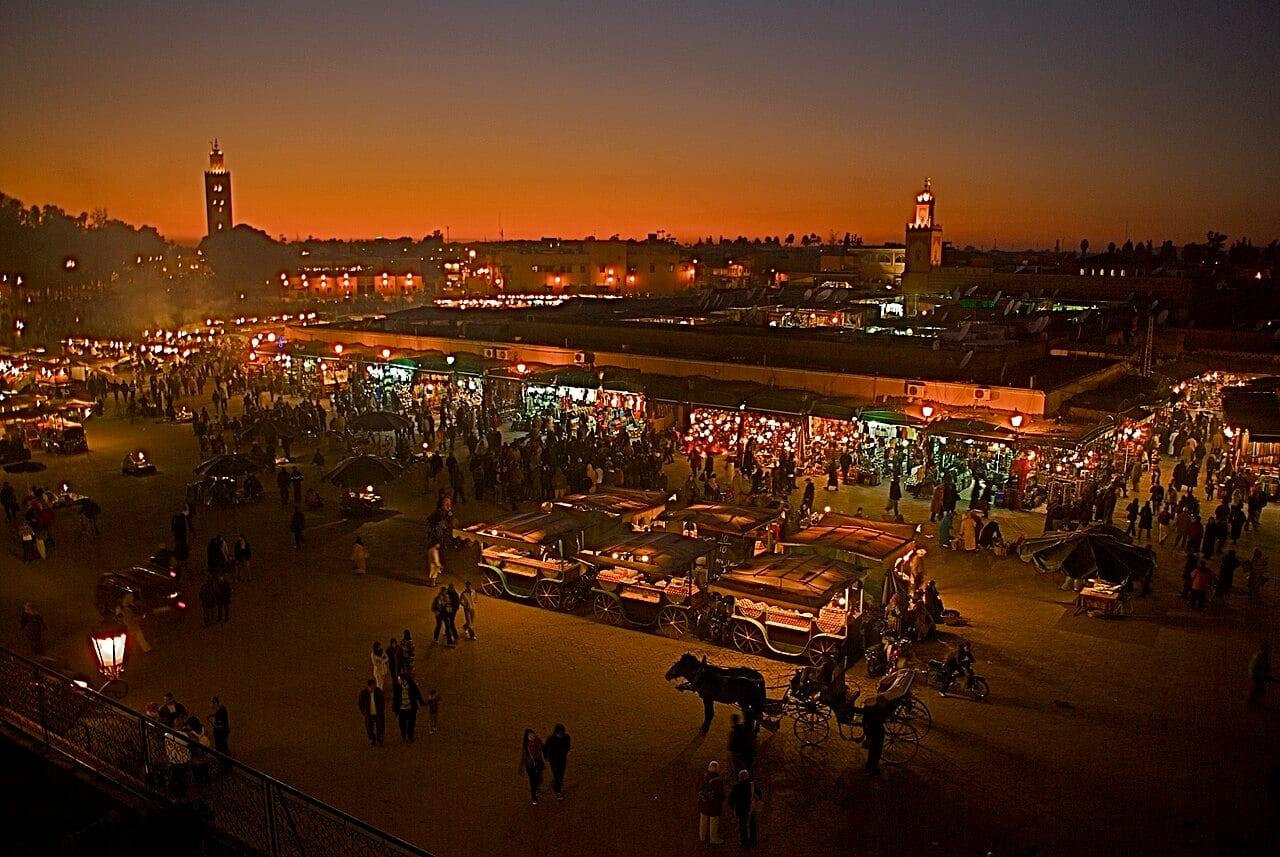
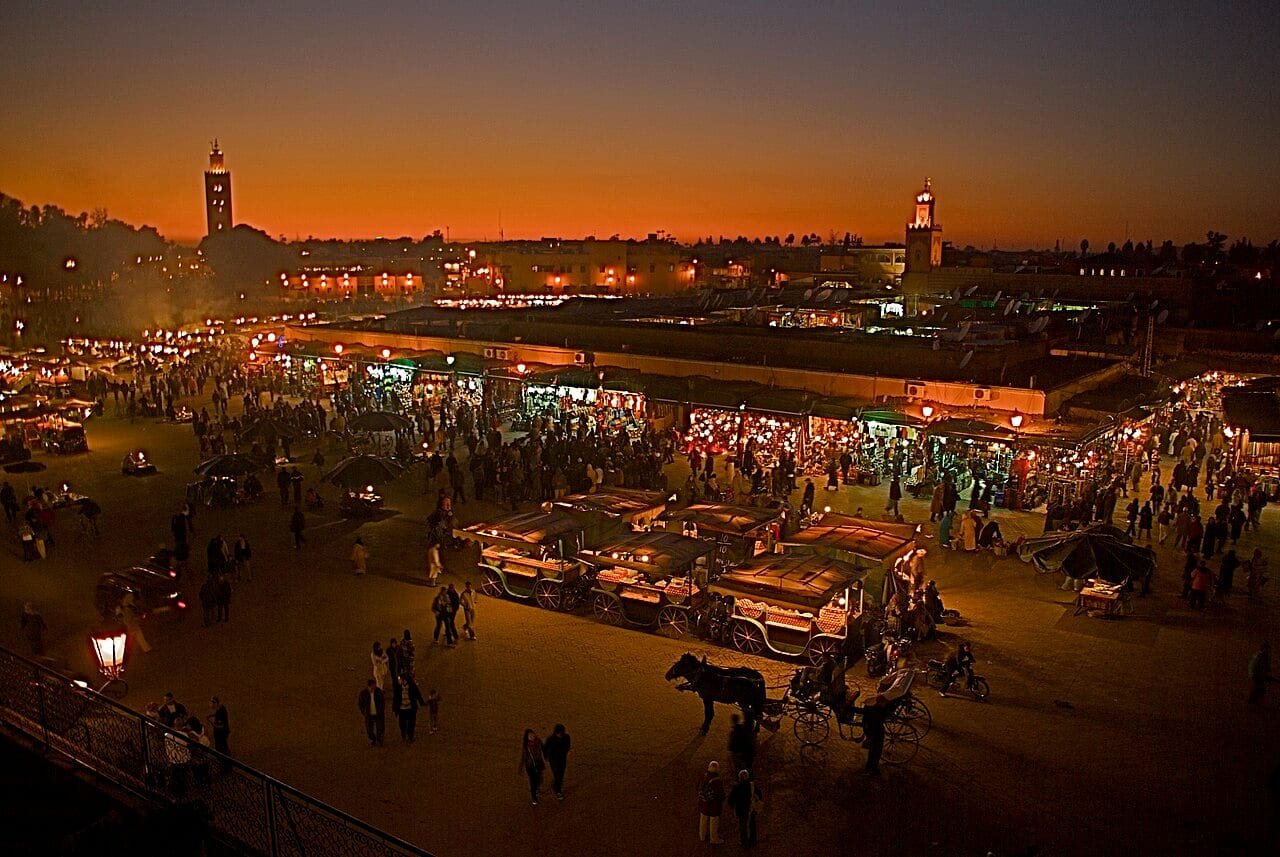
The first time I walked into Jemaa el-Fnaa I lasted about eleven minutes. Drummers, orange-juice carts, a man insisting on painting henna on my friend's hand, smoke from a hundred grills, and no idea which of the twelve exits led back to our riad. The second time, I knew the trick: arrive at sunset, climb to a café terrace first, and watch the square switch itself on. Marrakech is like that. It punishes you a little for being new and then hands you the best evening of your year. This Marrakech travel guide is what I send friends before they fly.
The essentials
- How long: Three nights in the city, plus one or two for a day trip to the mountains or the coast.
- When: March to May and late September to November are ideal. July and August regularly pass 40°C; the medina is a brick oven by 2 pm. Winter days are sunny and mild, nights cold enough for a jacket.
- Money: Moroccan dirhams, cash for the souks and small cafés. ATMs are plentiful in Gueliz and around the square.
- Visa: Many nationalities, including most Gulf and European passports, enter visa-free for short stays. Check the Moroccan National Tourist Office for your passport.
- Getting around: The medina is on foot, full stop. Outside it, the beige petit taxis are cheap; ask for the meter ("compteur") or agree a price first. The airport is twenty minutes from the medina.
Jemaa el-Fnaa, and when to go
The square is a UNESCO-listed piece of living heritage, and the schedule matters. Morning is quiet: juice carts, a few herbalists, old men reading newspapers. Late afternoon the storytellers, musicians and acrobats arrive. At sunset the food stalls roll out in numbered rows, the lights come on, and the whole thing becomes the loudest, friendliest dinner party in North Africa.
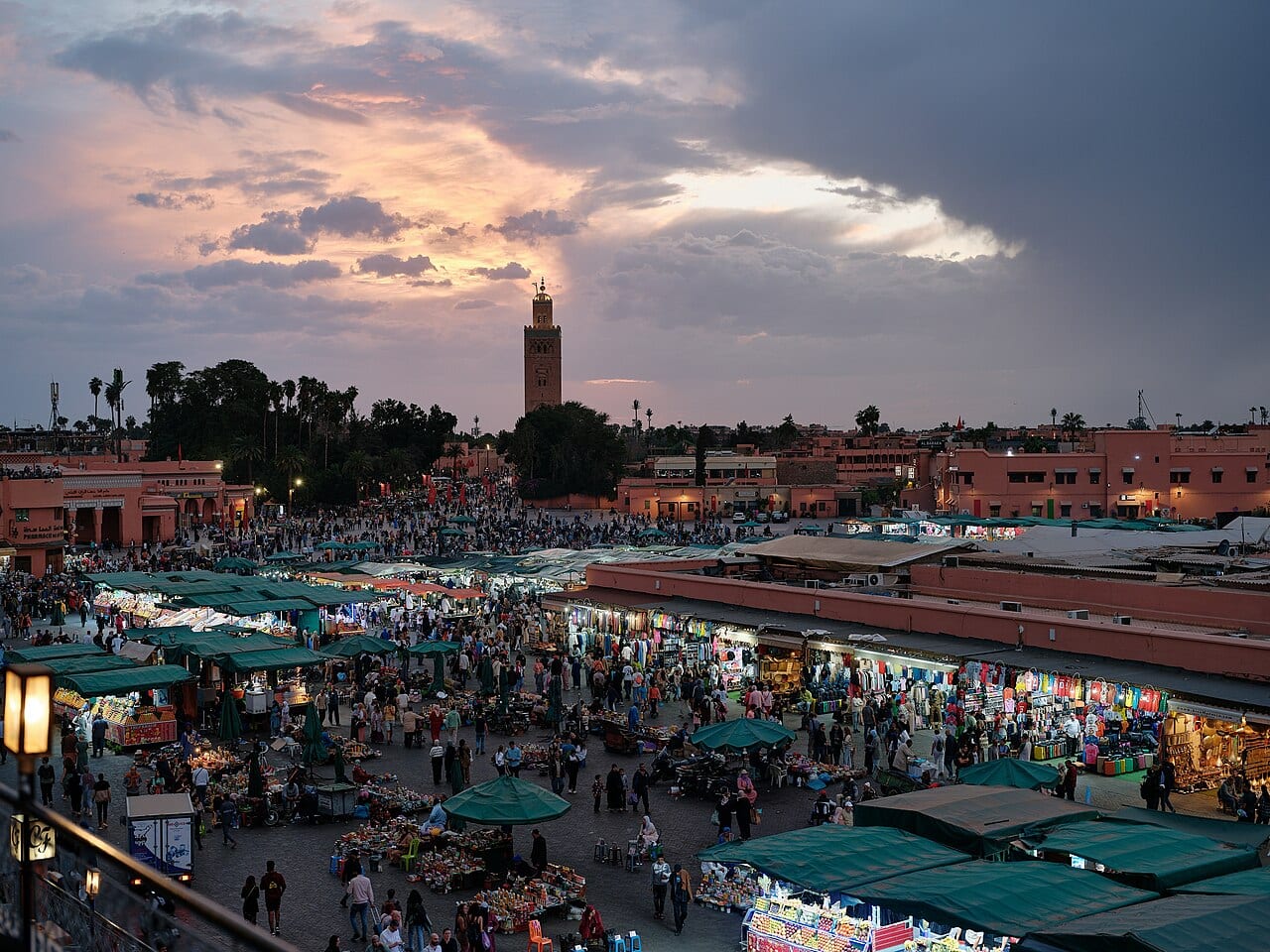
Eat at the stalls at least once. Pick one that is busy with Moroccan families, sit on the bench, and point at what you want: grilled kefta, merguez sausages, harira soup, fried aubergine, snails in spiced broth for the brave. Prices are written on the stall; ask before you order anything that is not. Then get a glass of fresh orange juice from the carts for a few dirhams and walk it off. Keep a hand on your bag in the crowd, and know that anything you photograph closely (a performer, a monkey, a snake) will be followed by a request for money.
Koutoubia, the landmark you navigate by
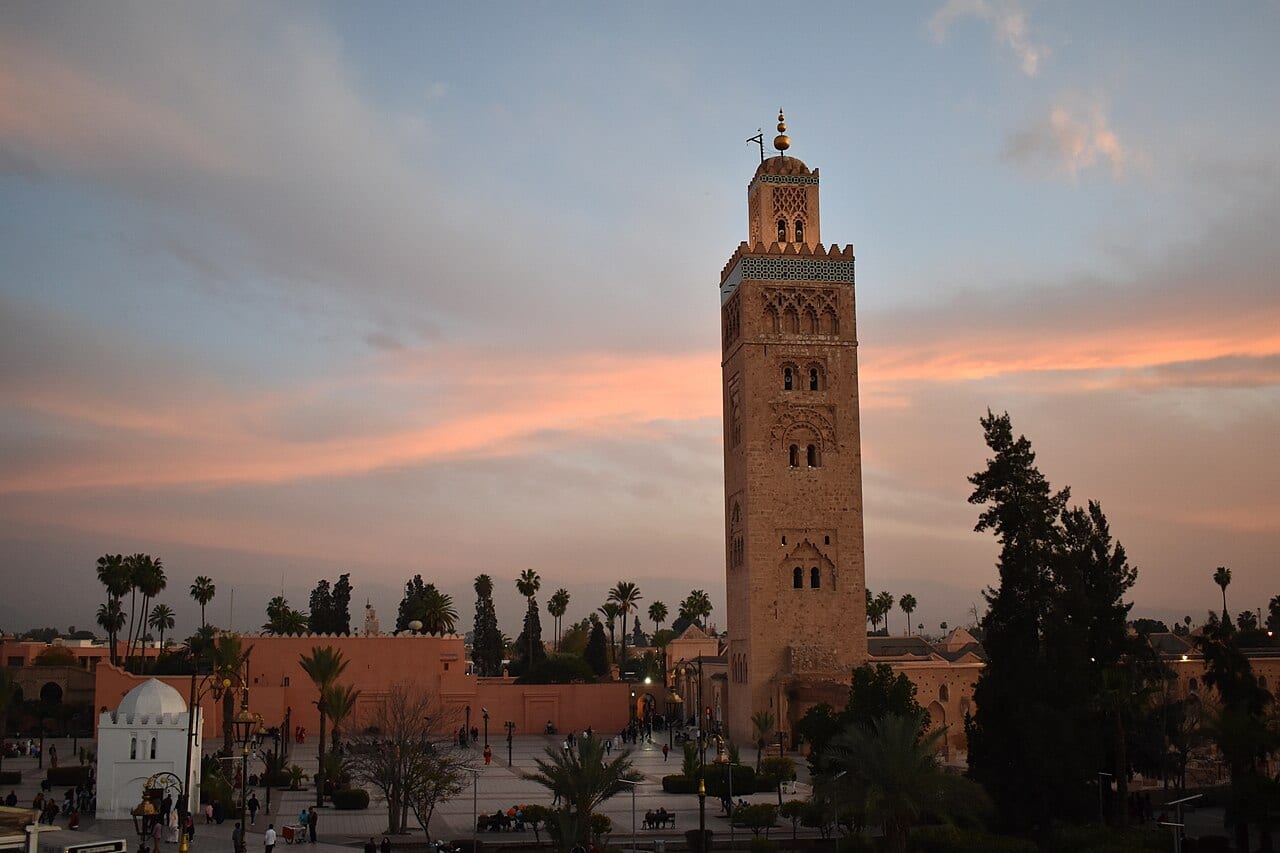
The 77-metre minaret of the Koutoubia Mosque has stood over the square since the 12th century and is the tallest thing you can see from almost anywhere in the medina, which makes it your compass. The mosque itself is open for prayer to Muslims; everyone else enjoys it from the rose gardens on its south side, best at the golden hour when the stone goes the colour of the city's name.
The souks without getting lost
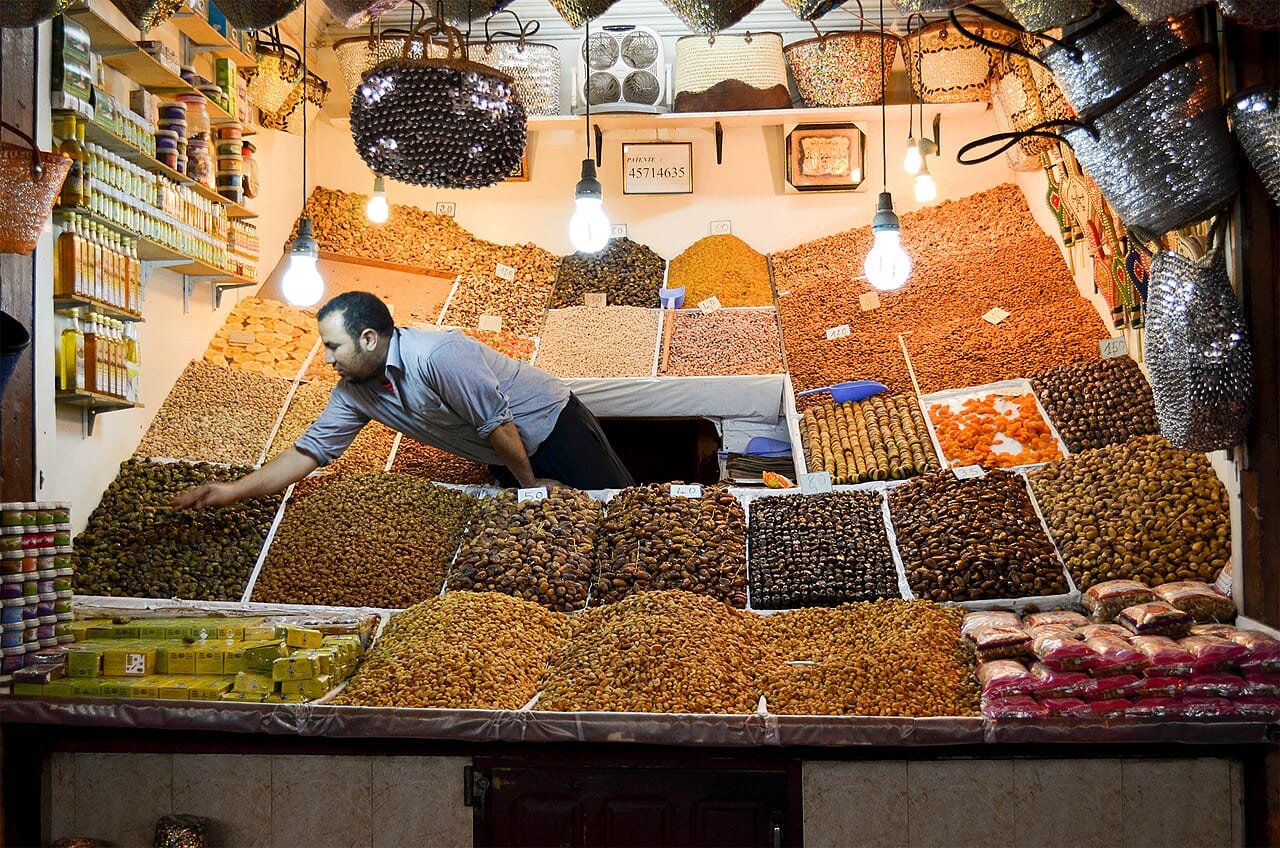
From the north edge of the square, Souk Semmarine is the main artery. Everything branches off it: the dyers' souk with wool hanging in hanks of saffron and indigo, the leather souk, the lantern makers, the spice square (Rahba Kedima) where the baskets of paprika and dried roses are stacked in cones. You will get lost. That is the point, and a petit taxi back to the square costs little if you give up.
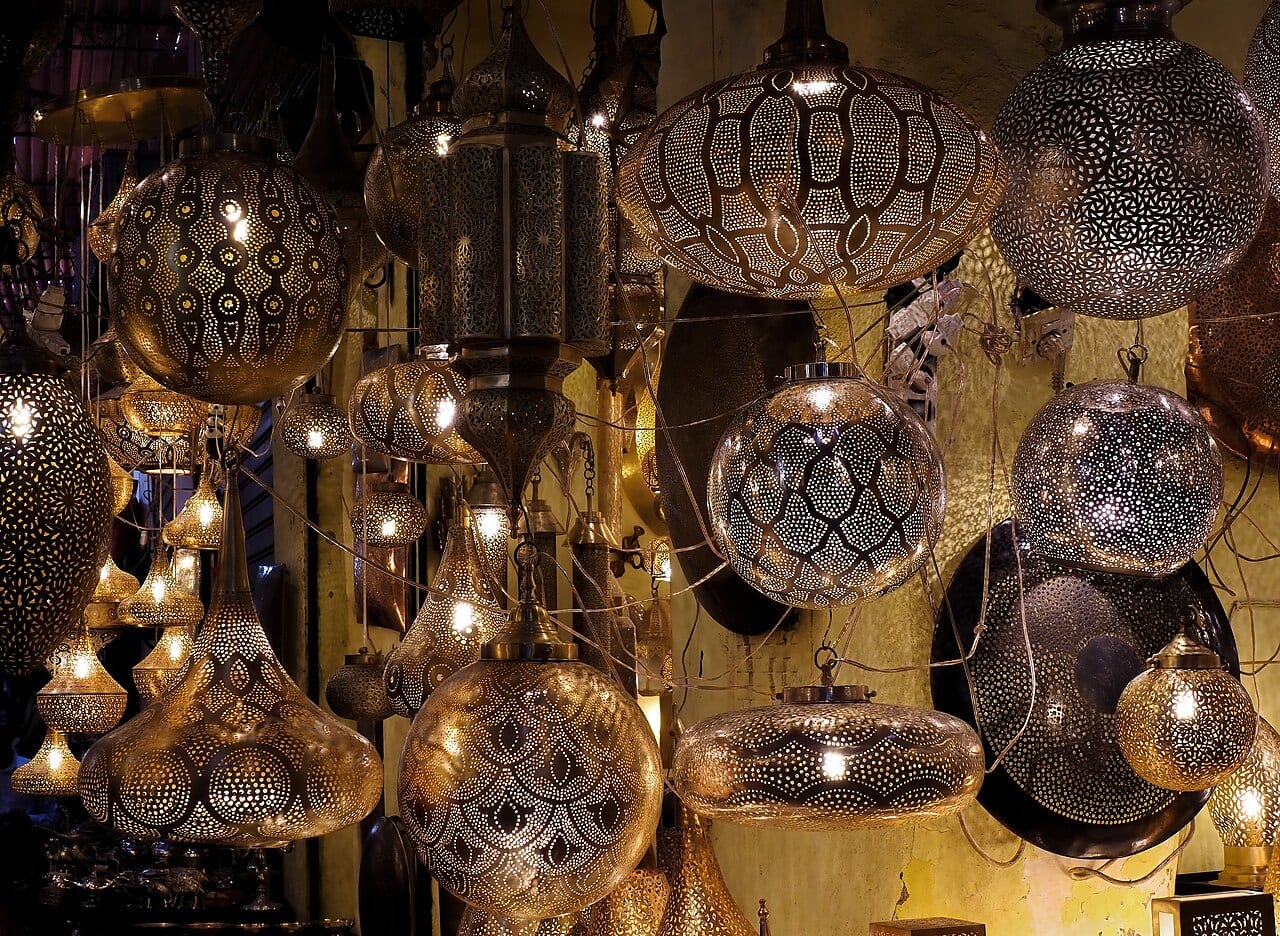
Bargaining is expected and friendly. Decide what something is worth to you, start at about a third of the asking price, and settle somewhere around half. "La, shukran" (no, thank you) with a smile, and keep moving. If someone offers to show you the way, assume it ends at a shop; a polite no and your phone's map will do. Buy the things Marrakech does best: leather babouche slippers, argan oil from a cooperative, brass lanterns, hand-painted ceramics, spice mixes like ras el hanout, and dates and almonds from the stalls.
Palaces, a madrasa and a garden
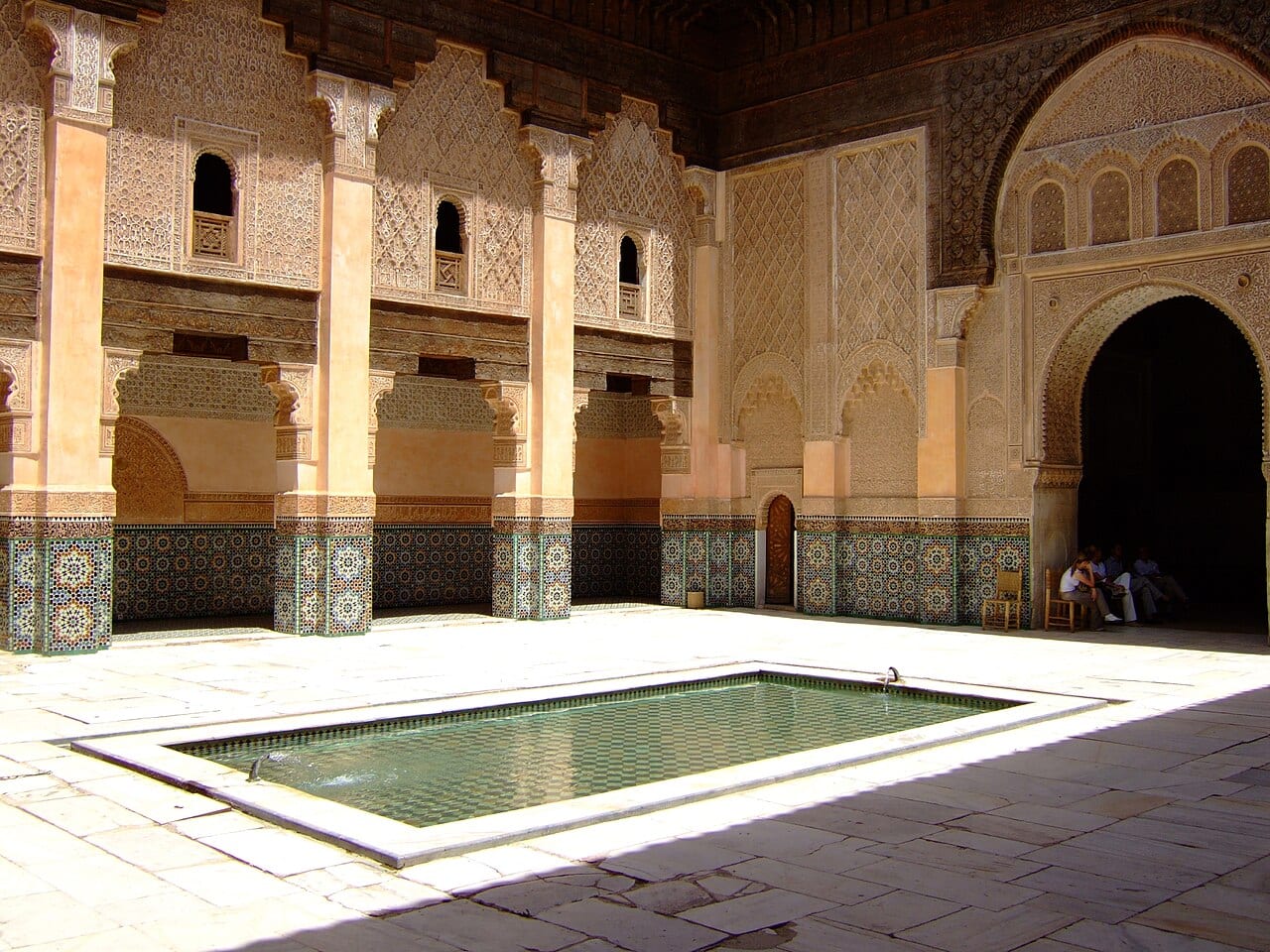
Ben Youssef Madrasa, a 16th-century Quranic school that reopened after a long restoration, is the single most beautiful interior in the city: cedar, carved plaster and zellige tiles around a still pool. Go at opening to have the courtyard to yourself.
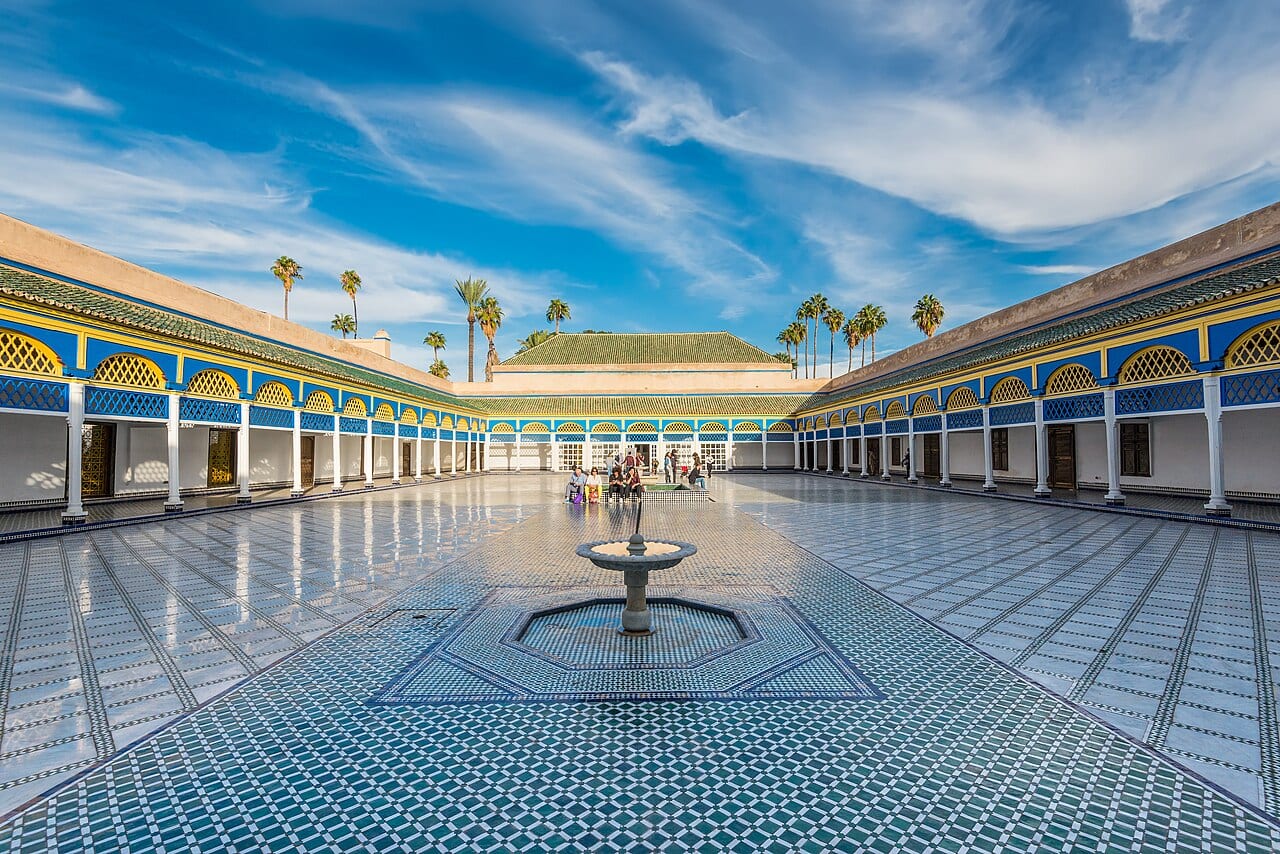
Bahia Palace is a 19th-century vizier's home built to impress, and it does, room after painted room around citrus courtyards. Across the old Jewish quarter, the Saadian Tombs hide a chamber of marble and gold leaf, and the roofless El Badi Palace is a vast sunken garden where storks nest on the walls. All three are walkable from the square in a long morning.
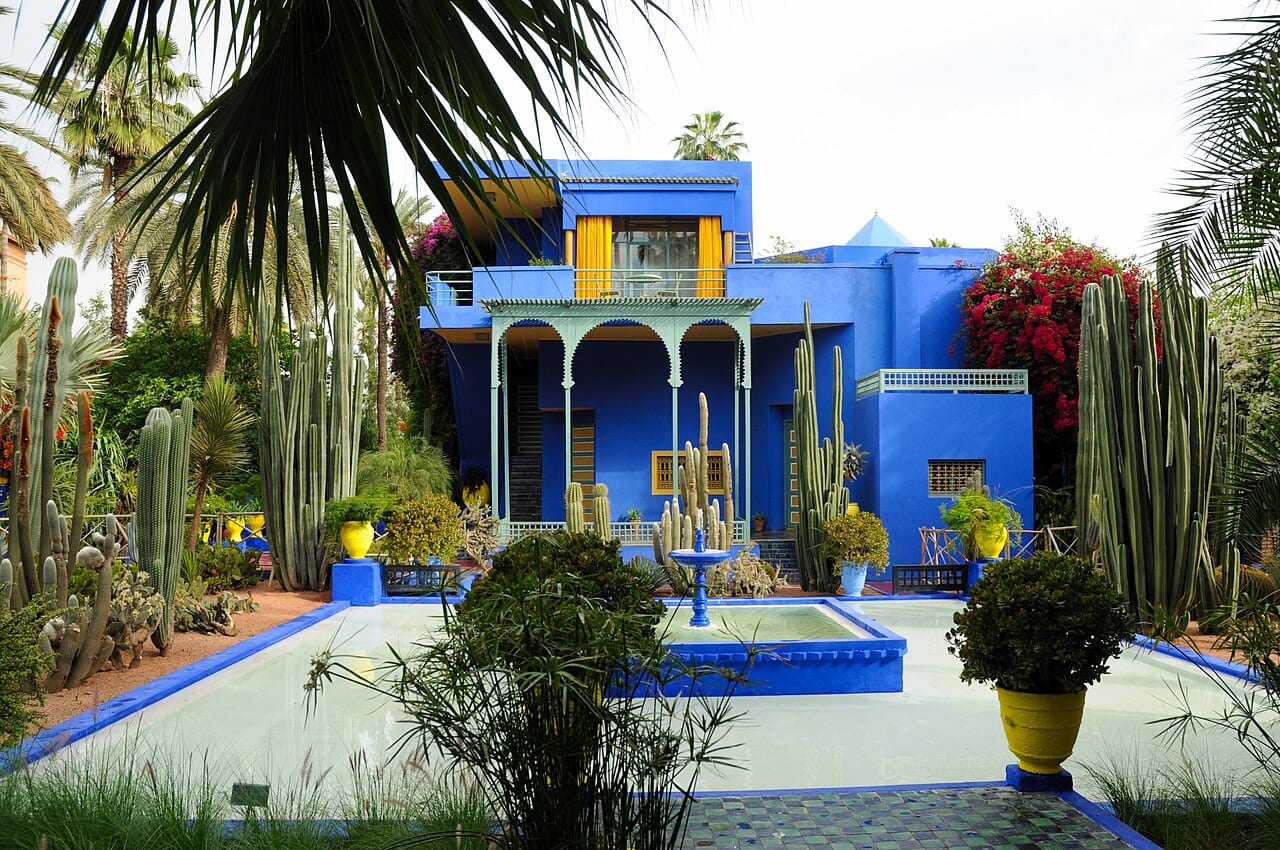
North-west of the medina in the new town, Jardin Majorelle is the cobalt-blue garden you have seen on every Instagram feed. It is small and it is popular, so book a timed ticket online and go first thing or in the last hour. The cactus collection and the Berber Museum inside are the real treats. If you want a calmer garden, Le Jardin Secret inside the medina, or the olive groves and reflecting pool of the Menara Gardens at sunset with the Atlas behind.
What to eat
Moroccan food is slow food. The best things take hours and are worth waiting for. Everything in the medina is halal by default; the only thing to watch for is that a few upmarket restaurants also serve drinks, which is easy to avoid if you prefer, since the city is full of alcohol-free riads and rooftops.
- Tangia, the dish Marrakech claims as its own: beef or lamb with preserved lemon, cumin and saffron, sealed in a clay urn and cooked overnight in the embers of the hammam furnace. Order it a day ahead at a traditional place, or find it at lunchtime near the Mellah.
- Tagine, obviously: chicken with preserved lemon and olives, lamb with prunes and almonds, kefta with eggs. A good one has been bubbling for two hours; a tourist one arrives in ten minutes.
- Couscous on Friday, the family meal after the midday prayer. Many restaurants only make it properly on Fridays.
- Pastilla, a sweet-savoury pie of pigeon or chicken, almonds and cinnamon under flaky warqa pastry.
- Harira, the tomato and lentil soup of Ramadan evenings, eaten with dates and chebakia (sesame-honey pastries).
- Breakfast: msemen and baghrir pancakes with honey and amlou (almond-argan spread), fresh bread, olives, and mint tea poured from a height.
- Street snacks: sfenj doughnuts in the morning, roasted chickpeas, and the sugary sellou on festival days.
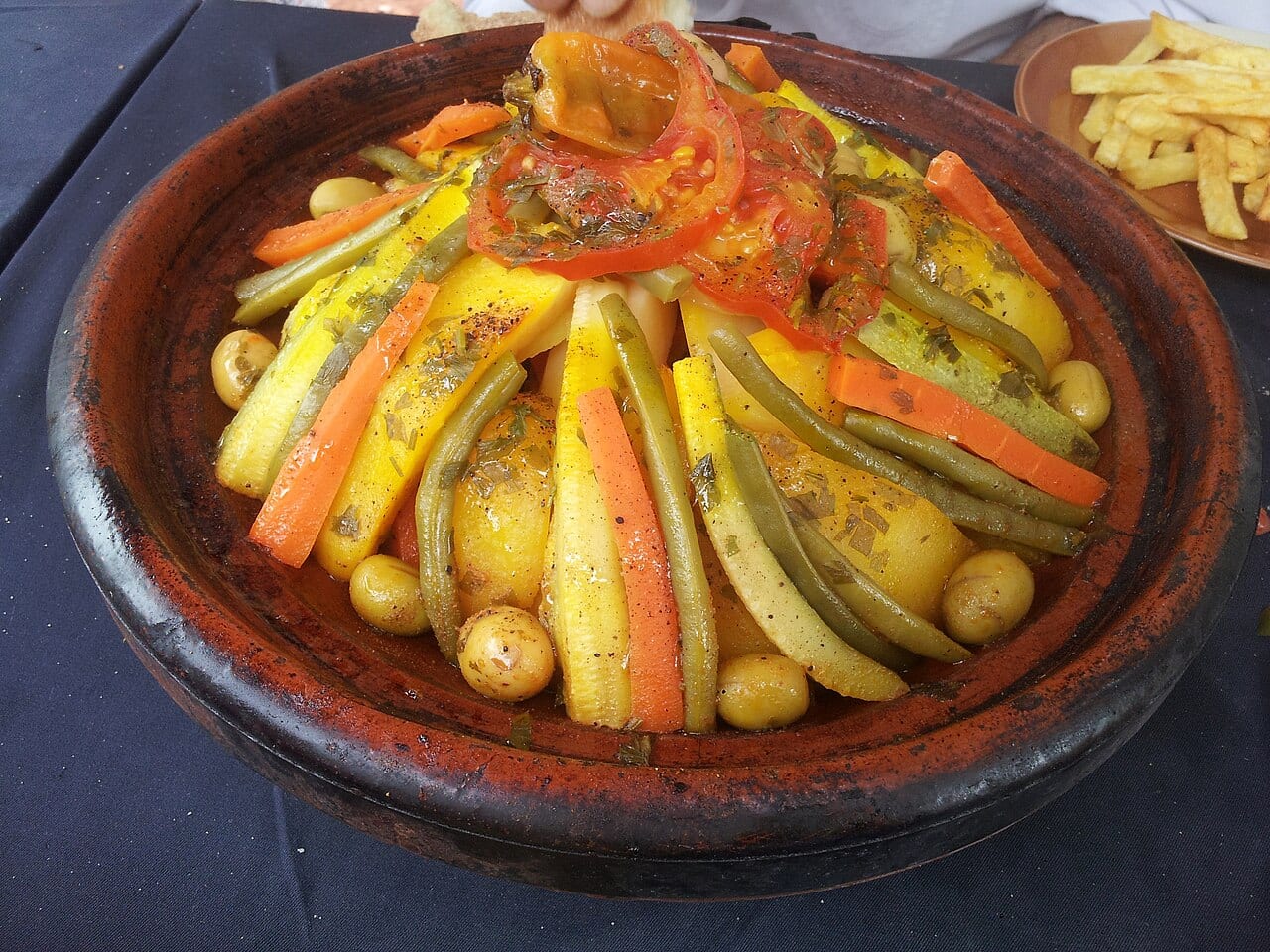
For a proper sit-down dinner, Al Fassia in Gueliz is run entirely by women and has been cooking the classics for decades. For coffee in a palace, Bacha Coffee at Dar el Bacha is as pretty as the pictures. For a rooftop at sunset, almost any café on the square works; order mint tea and stay for the lights.
Where to stay: riad or hotel?
A riad is a traditional house turned inward around a courtyard, and sleeping in one is half the reason to come. Most have a handful of rooms, a plunge pool, a roof terrace and breakfast included. The downside: taxis cannot reach the door, so you walk the last few minutes through the lanes with your bags, and a riad on a noisy souk street is a mistake. Pick one in a quiet quarter like Riad Laarous, Dar el Bacha or the Kasbah.
Families with young children or anyone who wants a big pool and space to spread out should look at the Palmeraie or Hivernage resort hotels, and take taxis in. See live prices for your dates on our hotels page.
Day trips worth the drive
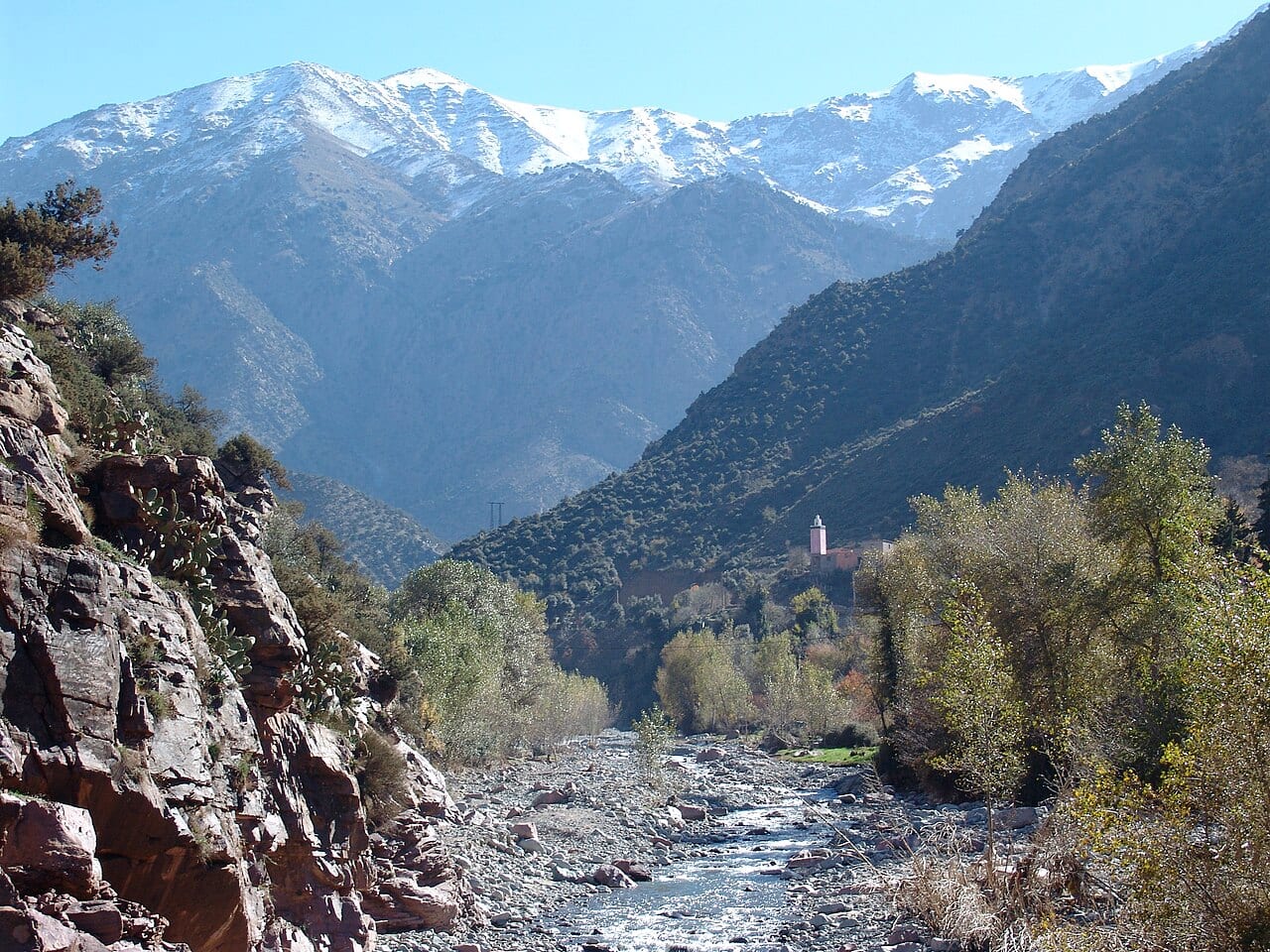
- Ourika Valley (about an hour): a green river valley in the foothills with Berber villages, riverside cafés where you eat tagine with your feet almost in the water, and a walk to the Setti Fatma waterfalls.
- Imlil and the High Atlas (about 90 minutes): the trailhead for Mount Toubkal, North Africa's highest peak. You do not need to climb it; a half-day walk between villages with a local guide is wonderful, and in winter the peaks are white.
- Ouzoud Waterfalls (about 2.5 hours): Morocco's biggest falls, with wild monkeys and boat rides at the bottom. A long but easy day.
- Agafay Desert (45 minutes): stony desert rather than dunes, but the camps do sunset camel rides, dinner under the stars and a night in a tent without driving to the Sahara.
- Essaouira (about 3 hours): the windswept Atlantic port with a blue-and-white medina, grilled fish at the harbour and far cooler air. Better as an overnight.
Practical notes
- Dress: Covered shoulders and knees for everyone makes the medina easier and friendlier. Light, loose clothing beats shorts for the heat anyway.
- Prayer: Mosques are on every corner and the call to prayer organises the day. Most historic mosques admit Muslims only, so non-Muslim visitors admire them from outside, with the exception of the Tin Mal Mosque in the Atlas.
- Hammam: A traditional hammam is the best way to end a dusty day. Neighbourhood hammams are cheap and gender-separated with set hours; riad and spa hammams are private and pricier.
- Hassle: Marrakech is safe. The friction is persistence, not danger. A firm "no, thank you" and no eye contact ends most of it; so does walking with purpose and not unfolding a map in the middle of a lane.
- Ramadan: A lovely time to visit if you are relaxed about hours: quieter days, feasting nights, the whole square breaking fast at once. Eat discreetly in daylight.
A three-day plan
- Day 1: Koutoubia gardens, Bahia Palace, Saadian Tombs and El Badi, lunch in the Mellah, then Jemaa el-Fnaa from a terrace at sunset and dinner at the stalls.
- Day 2: Ben Youssef Madrasa at opening, a slow morning in the souks, afternoon at Jardin Majorelle, dinner in Gueliz.
- Day 3: Ourika Valley or Imlil, back for a hammam and a rooftop mint tea.
Want this built around your own dates and flights? Our AI trip planner does it with live prices. The destination page is at Marrakech on YallaSafra.
FAQ
Is Marrakech good with kids?
Yes. Children love the square's acrobats, the orange juice, the storks at El Badi, camel rides in Agafay and riad pools. Bring a carrier rather than a pushchair for the medina lanes.
How many days do I need?
Three for the city, four or five if you add the Atlas or the coast.
Is the food halal?
Yes, by default everywhere. A handful of high-end restaurants also serve drinks; if that matters to you, ask when booking, or stick to the medina's many alcohol-free places.
Do I need a guide for the medina?
Not for the souks; getting lost is part of it. A licensed guide is worth it for a half-day history walk through the palaces and madrasa.
Can I visit the Koutoubia Mosque?
Muslims can enter for prayer. Other visitors can enjoy the exterior and gardens, which are the best photo anyway.
Taxi or walk?
Walk inside the medina, petit taxi outside it. Ask for the meter or agree the fare first.