
Mexico City Day of the Dead week feels different from any other week of the year. Marigolds appear on every market stall, bakery windows fill with pan de muerto, and the whole city seems to be getting ready for one long celebration. That celebration is Dia de Muertos, the Day of the Dead, and if you have ever wanted to see it where it is most alive, this is the week to go.
First, a useful correction: the Day of the Dead is not Mexican Halloween. It is a family tradition with roots in pre-Hispanic Mexico, recognised by UNESCO in 2008 as part of the Intangible Cultural Heritage of Humanity, in which families welcome back the souls of their loved ones with flowers, food, music and altars called ofrendas. The mood is warm and communal rather than scary, and visitors are welcome as long as they come with respect.
This guide covers the dates that matter in 2026, where to stand for the big parade, what to see in the historic centre, and how to fill the days around the parades with markets, canals, museums and good food.
The 2026 dates that matter
Most of the public programme runs from late October into the first days of November. These are the fixed points to plan around:
- Sunday, October 25: the Mega Procesion de Catrinas, a citizen-led procession of thousands of people dressed as elegant skeletons, walking from the Angel de la Independencia to the Zocalo from around 6pm.
- October 29 to November 2: the monumental ofrenda in the Zocalo, the city's main square, open to the public and free to visit.
- Saturday, October 31, 2pm: the Gran Desfile de Dia de Muertos, the big official parade, running from the Diana Cazadora fountain along Paseo de la Reforma to the Zocalo. It is free, with no tickets.
- November 1 and 2: Dia de Muertos itself, with ofrendas in homes, museums and public buildings across all 16 boroughs of the city.
The big parade: route and where to stand
The Gran Desfile starts at the Diana Cazadora roundabout on Paseo de la Reforma, passes the Angel de la Independencia, continues past the Alameda Central, then turns into the historic centre along Avenida Juarez and 5 de Mayo before finishing in the Zocalo. The full procession takes several hours to pass any single point, so pick your spot and settle in.
Each stretch has a different character. Near the Diana Cazadora or the Angel, the floats and costumes are fresh and the energy is high, but these sections fill first, so aim to arrive by late morning. Between the Angel and the Alameda, the pavements are wider and the crowds build a little later. The Zocalo is the finish line, with the giant ofrenda already in place around you, but the square fills earliest and empties slowest.
Whatever you choose, bring water, sunscreen and a hat, wear comfortable shoes, and keep bags light. Road closures around Reforma and the historic centre mean walking is often faster than any car or taxi on parade day.
The Zocalo ofrenda and the historic centre
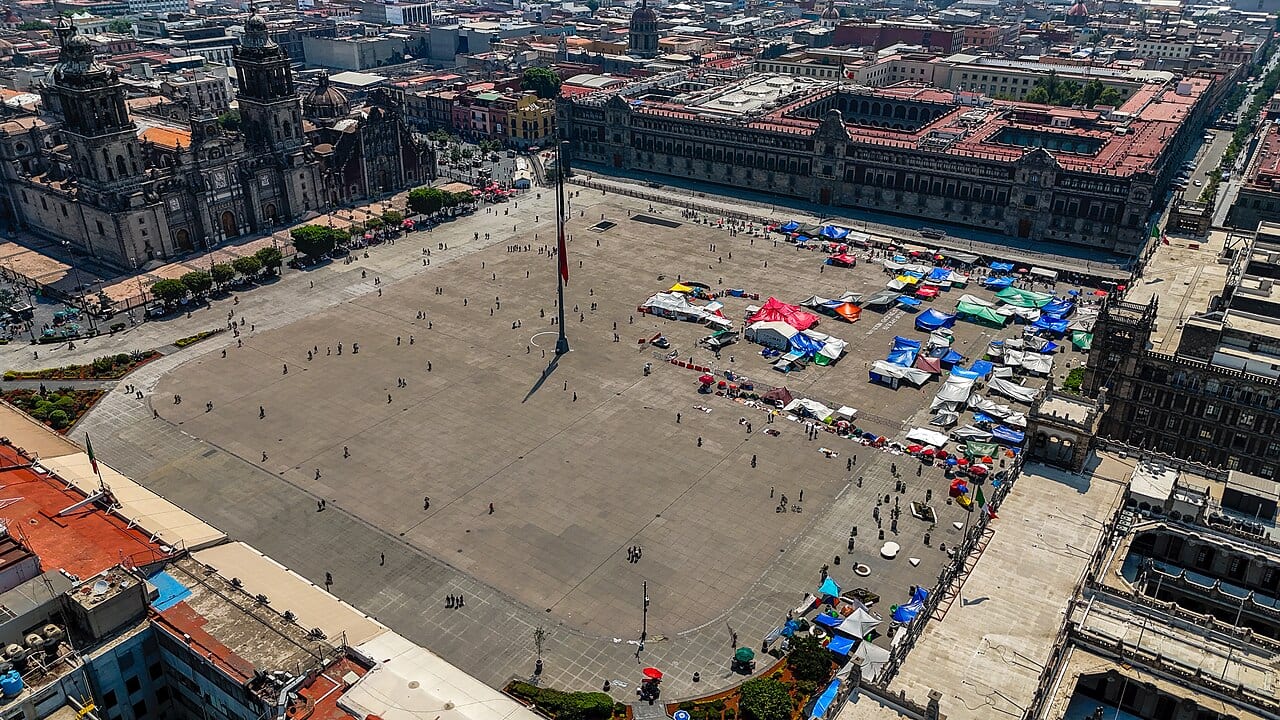
The Zocalo, formally the Plaza de la Constitucion, is one of the largest public squares in the world, and during the festival it holds the city's monumental ofrenda. Go in the morning for a calmer look, then return after dark when the lights change the whole square. From the Zocalo you can walk to the Metropolitan Cathedral, look across at the National Palace, and visit the Templo Mayor archaeological site, where the Aztec past of the city sits right beside the colonial centre.
A short walk west brings you to the Alameda Central, the city's oldest public park, and the Palacio de Bellas Artes, the white marble palace that hosts opera, dance and exhibitions. The streets between the Zocalo and Bellas Artes are the classic historic centre walk, and during festival week they are lined with marigold vendors, street food and pop-up altars in shop windows.
Catrinas, marigolds and what an ofrenda means
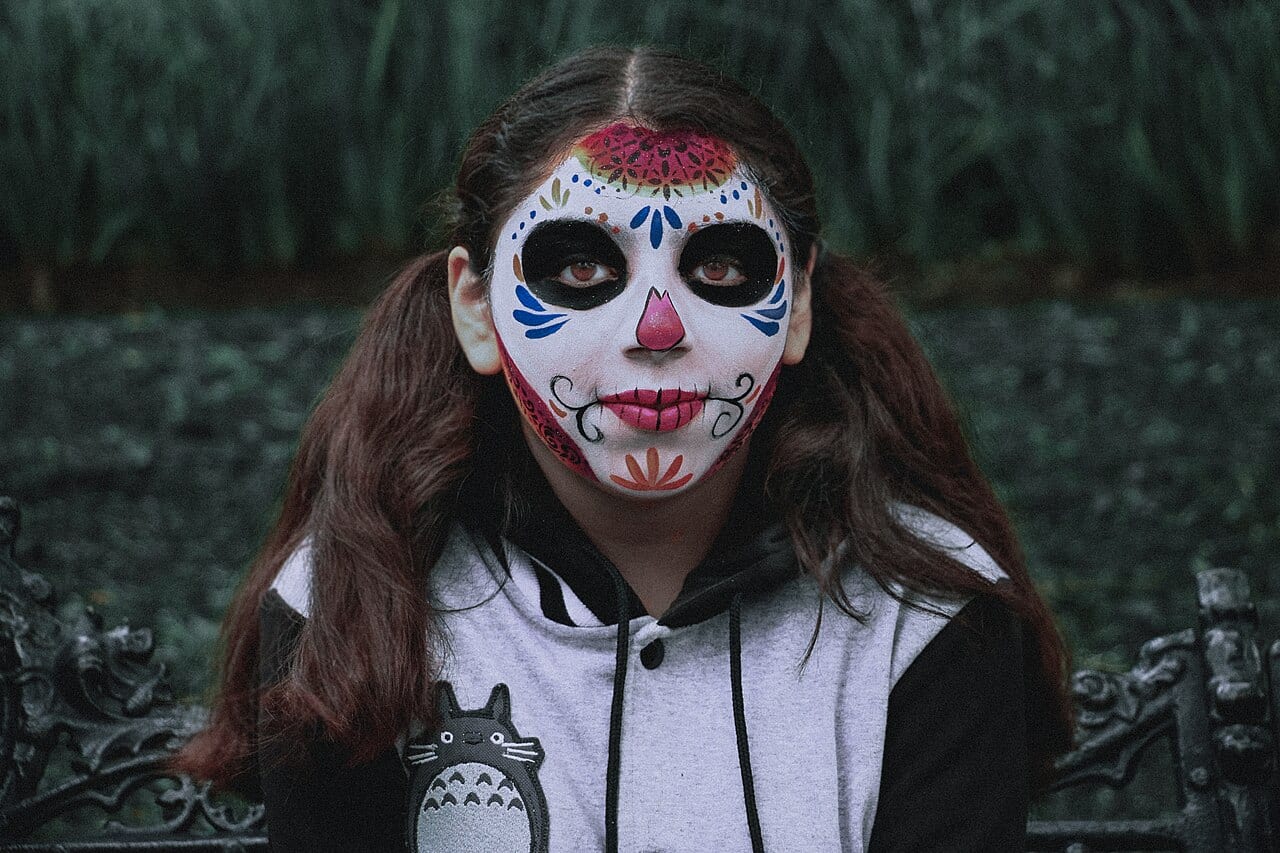
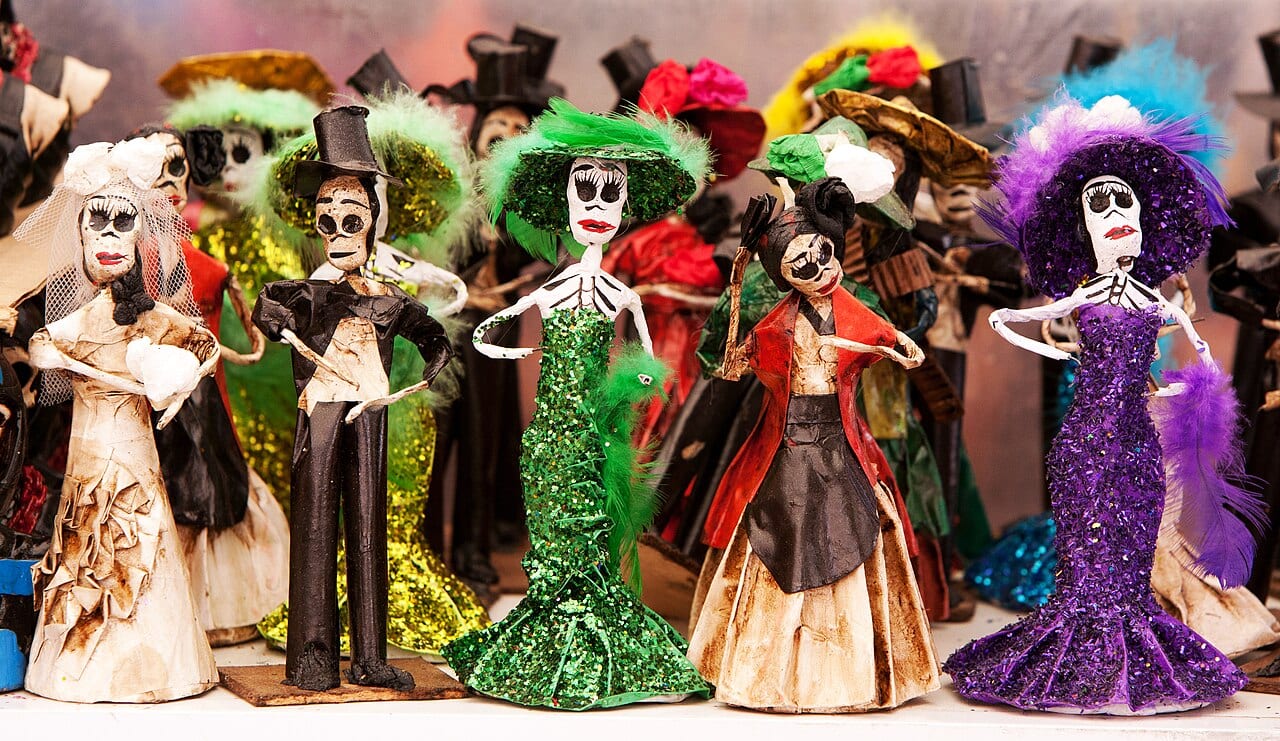
La Catrina, the elegant skeleton lady in a wide hat, was made famous by the printmaker Jose Guadalupe Posada and has become the best-known face of the festival. During the Catrinas procession on October 25, ordinary residents dress in their own versions, and the effect is joyful rather than grim: a city laughing with death, not hiding from it.
An ofrenda is an altar built to welcome a loved one home. It usually holds marigolds, candles, photographs, papel picado (cut-paper banners), sugar skulls, and the foods and drinks the person enjoyed in life. If you visit a cemetery or a community altar, treat it as someone's family moment: ask before taking close photographs of people, keep voices low, and do not touch offerings. In the Mixquic neighbourhood, south-east of the centre, the cemetery vigils on the night of November 1 to 2 are famous, and they are best visited with a local guide who can explain what is happening.
Beyond the parades: Coyoacan, Xochimilco and Chapultepec
Festival week is a good excuse to see the rest of the city. Coyoacan, a village-like district of cobbled streets and colonial houses in the south, is home to the Frida Kahlo Museum in the Casa Azul, plus a lively main square and market. It is calmer than the centre and a good half-day trip.
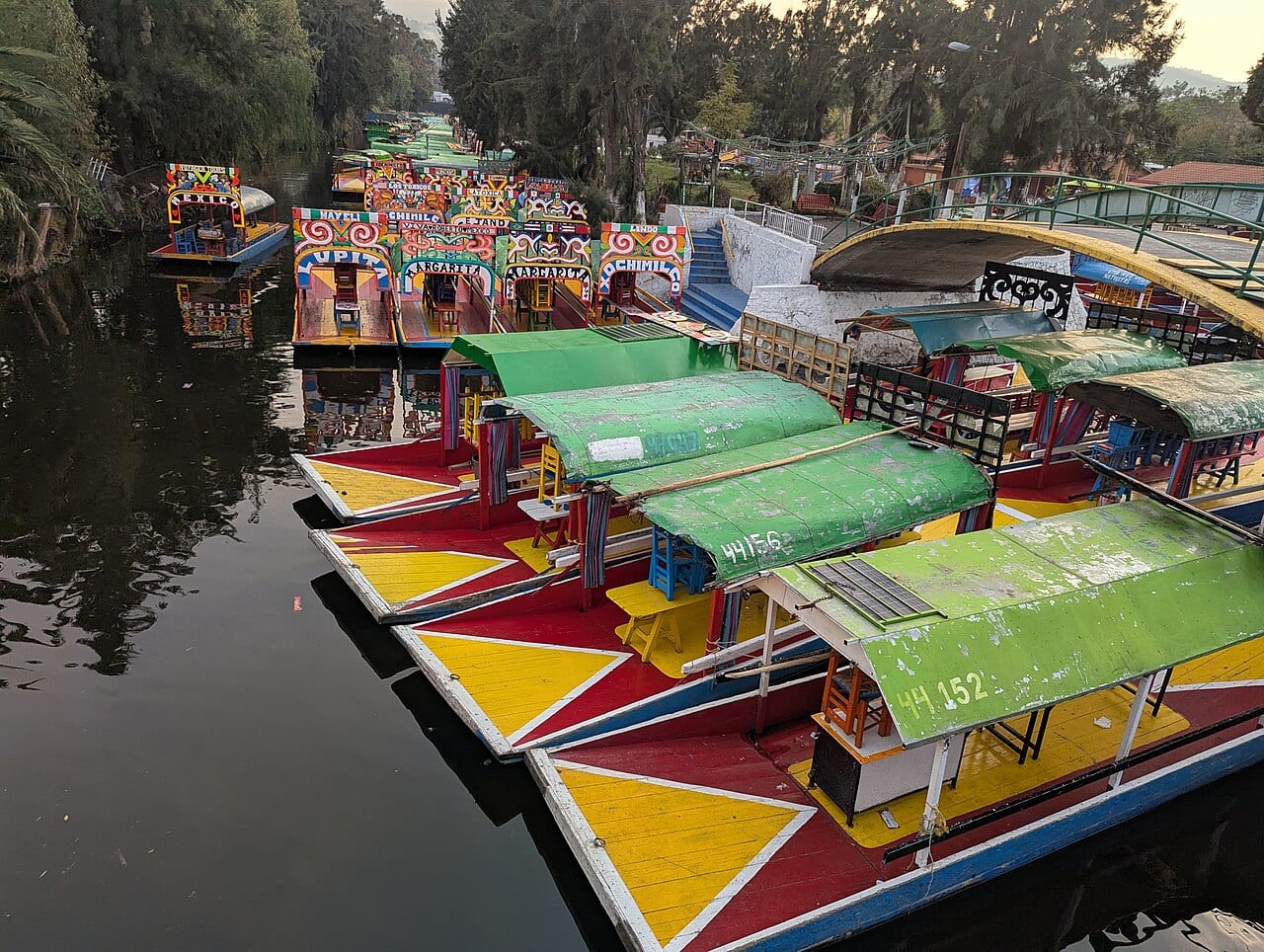
Xochimilco, further south, is the city's floating gardens: a network of canals where you ride a brightly painted trajinera boat past chinampas, the floating farm plots that have fed the city since Aztec times. Book a boat at an official embarcadero, agree the route and time before boarding, and go in the morning to avoid the afternoon crowds.
Chapultepec Park, one of the largest urban parks in the world, holds the Museo Nacional de Antropologia, the country's great museum of pre-Hispanic cultures, and Chapultepec Castle on the hill above it. If you only have time for one museum in Mexico City, make it the anthropology museum.
What to eat during festival week
Food is part of the festival, not an afterthought. Start with pan de muerto, the sweet bread baked for the season and topped with bone-shaped dough, best eaten with champurrado, a thick chocolate-based drink. Street stalls sell elote and esquites, corn on the cob and corn kernels dressed with lime, chilli and cheese. For a fuller meal, try chicken tinga tacos, tamales filled with rajas con queso (poblano peppers and cheese), and mole poblano served with chicken, the rich, dark sauce that is one of Mexico's great dishes.
Mexico City is one of the great food cities of the world, and festival week is no time to eat only at your hotel. Roma Norte and Condesa are full of small restaurants and cafes within walking distance of each other, and the city's fine dining scene includes Pujol and Sud 777, two of the best-known names in Mexican cooking. Book ahead for any popular restaurant during festival week.
Where to stay
Your base shapes your festival week. A hotel on or near Paseo de la Reforma, such as the Reforma Imperial Hotel area, puts you at the parade start and close to Chapultepec. A base in the historic centre puts you at the Zocalo finish and within walking distance of the cathedral, Bellas Artes and the main museums. Roma Norte or Condesa suit travellers who want a calmer, leafier base with cafes and restaurants on the doorstep, accepting a short metro or taxi ride to the parade route.
Book early: festival week is one of the city's busiest, and rooms near Reforma and the centre go first. Compare stays on YallaSafra hotels, then build the full trip, flights, stays and day plans together, on the YallaSafra planner at https://yallasafra.ai/.
Practical tips
Mexico City sits at about 2,240 metres above sea level, so take the first day gently, drink plenty of water, and expect to tire faster than usual if you arrive from sea level. Late October brings mild days and cool evenings, so pack a light jacket for the evening processions. The metro is cheap and efficient, but it is packed on parade day, so walking between central sights is often the better choice.
Keep valuables close in crowds, as you would at any big city festival.
A short note for Muslim travellers
Mexico City has a small Muslim community and a small number of halal restaurants in central districts, so ask your hotel for the nearest options when you arrive, and plan prayer breaks around the parade timetable, since crowds make moving around slow on October 31. The festival itself is a cultural celebration open to all visitors, and the guidance in this guide about respectful behaviour at altars and vigils applies to everyone.
FAQ
Is the Day of the Dead parade free? Yes. The Gran Desfile on October 31 is a public event along Paseo de la Reforma, with no tickets and no reserved sections. Arrive early for a good spot.
When exactly is the Day of the Dead? The holiday itself is November 1 and 2, but Mexico City's public programme runs from late October, with the Catrinas procession on October 25, the Zocalo ofrenda from October 29 to November 2, and the big parade on October 31.
Is it suitable for families? Yes, very much so. Children dress as Catrinas, the parades are daytime or early evening events, and the atmosphere is festive. Keep young children close in the biggest crowds and pick a mid-route spot rather than the packed Zocalo finish.
Do I need tickets for the Zocalo ofrenda? No. The monumental ofrenda in the Zocalo is free and open to the public from October 29 to November 2.
How many days should I allow? Four to five days covers the parade, the Zocalo ofrenda, Coyoacan, Xochimilco and Chapultepec without rushing. A longer stay lets you add Teotihuacan, the great pre-Hispanic city north-east of the capital, as a day trip.
Sources: UNESCO, Indigenous festivity dedicated to the dead, and the Mexico City 2026 Dia de Muertos programme dates for the Gran Desfile, the Mega Procesion de Catrinas and the Zocalo ofrenda. Plan your trip on the YallaSafra planner at https://yallasafra.ai/, and browse more city guides on YallaSafra places.