Oman is the Gulf country that kept its old shape. Muscat is low and white, wrapped around a harbour between brown mountains, with forts on the headlands and a corniche where men in dishdashas and embroidered caps sit with coffee at sunset. There are no towers to speak of, nothing is in a hurry, and within two hours of the capital you can swim in a canyon pool, sleep in sand dunes or stand on a mountain terrace of roses. This Muscat guide covers a first trip of five days or so: the city itself, which deserves two, and the drives that make Oman Oman. It is an easy country for our families: halal is simply how food is, alcohol is confined to a few hotel venues, mosques are everywhere, and Omanis are among the most courteous hosts you will meet.
When to go
October to April is the season: days of 25–32°C, cool desert nights, warm sea. December and January are the sweet spot for the mountains and the desert, and the busiest for hotels. May to September is 40°C and humid on the coast, but the mountains of Jebel Akhdar stay ten degrees cooler and Salalah, far to the south, has its famous green monsoon season, which is a separate trip entirely. April brings the rose harvest on the Jebel Akhdar terraces. Ramadan in Oman is gentle and traditional, with iftar in family homes and quiet days; restaurants outside hotels close during fasting hours, so plan meals around it.
Getting there and getting around
Muscat International Airport (MCT) is thirty minutes from Mutrah, served by Oman Air, the budget carrier SalamAir and most Gulf airlines; from Dubai it is a one-hour flight or a four-to-five-hour drive through the Hatta and Al Wajajah border, which many UAE families do over a long weekend (confirm your car insurance covers Oman and expect queues on public holidays). GCC citizens enter freely; many other nationalities are visa-free for a short stay or buy an e-visa online from the Royal Oman Police before travel, so check your own case early.
Inside Muscat, taxis are plentiful and the ride-hailing apps are reliable; a rental car is the way to see the country, because Oman's attractions are drives: roads are excellent, petrol is cheap and signage is bilingual. For Jebel Akhdar the police checkpoint at the foot of the mountain only allows four-wheel-drive cars up the road, so hire one for that day or book a tour. Our AI trip planner can sequence the drives around your hotel and prayer times.
The Sultan Qaboos Grand Mosque
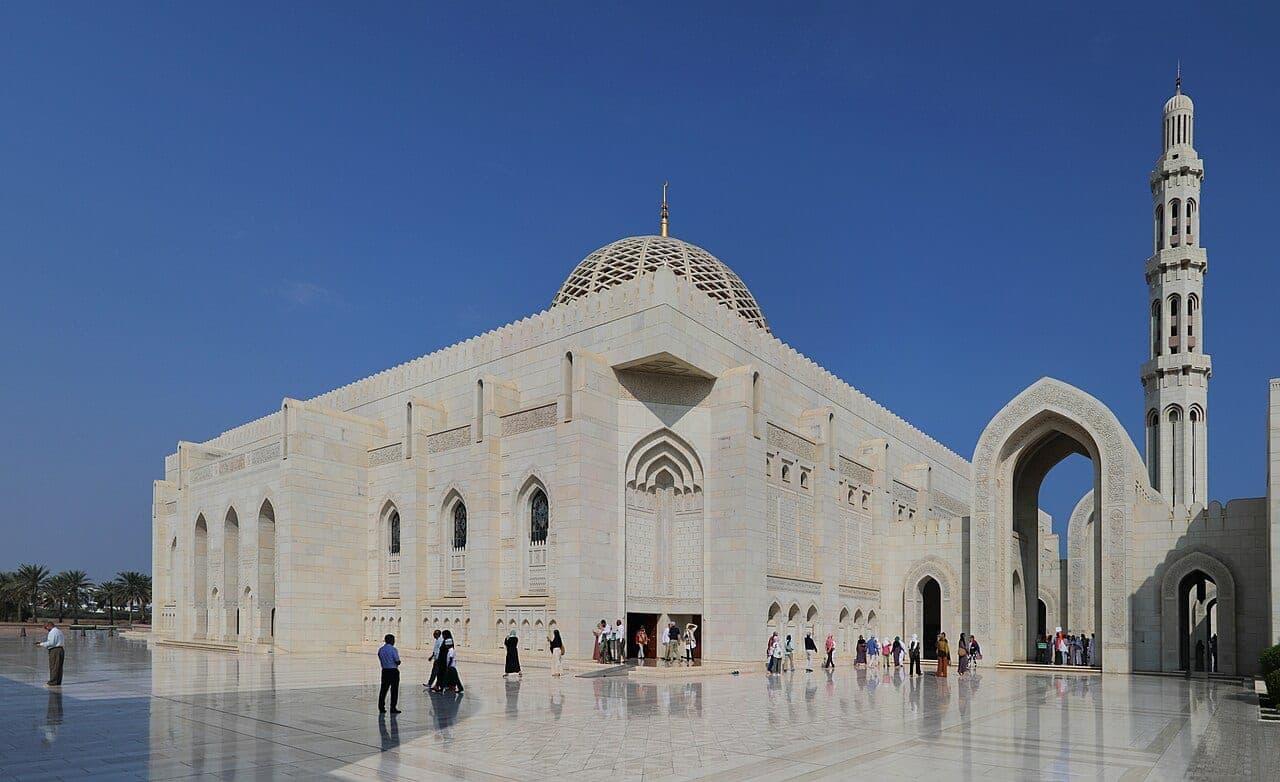
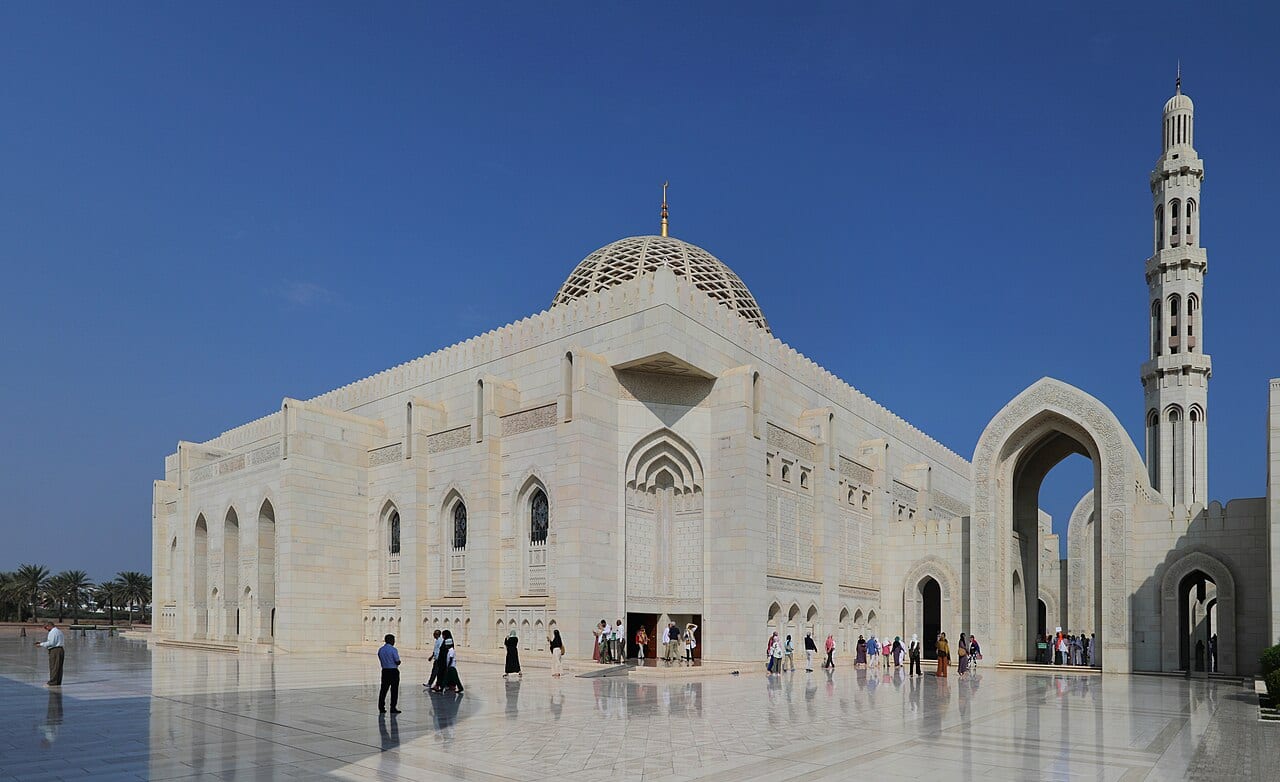
Begin here, early. The Grand Mosque is a building of white and sandstone marble around a prayer hall that holds the second-largest hand-knotted carpet in the world (a single piece that took hundreds of weavers four years) under a chandelier of Swarovski crystal fourteen metres tall. Pray fajr or dhuhr with the congregation if you can, then walk the arcades and the gardens; the calm is the point. Non-Muslim visitors are welcome on most mornings except Friday, with modest dress required (long sleeves, ankle-length, a headscarf for women; abayas can be borrowed), so this is the mosque to show friends. Entry is free; check the mosque's own site for current visiting hours. The library and the Islamic information centre at the entrance are run by welcoming staff who answer questions patiently.
Mutrah: the corniche, the souq and the fish market
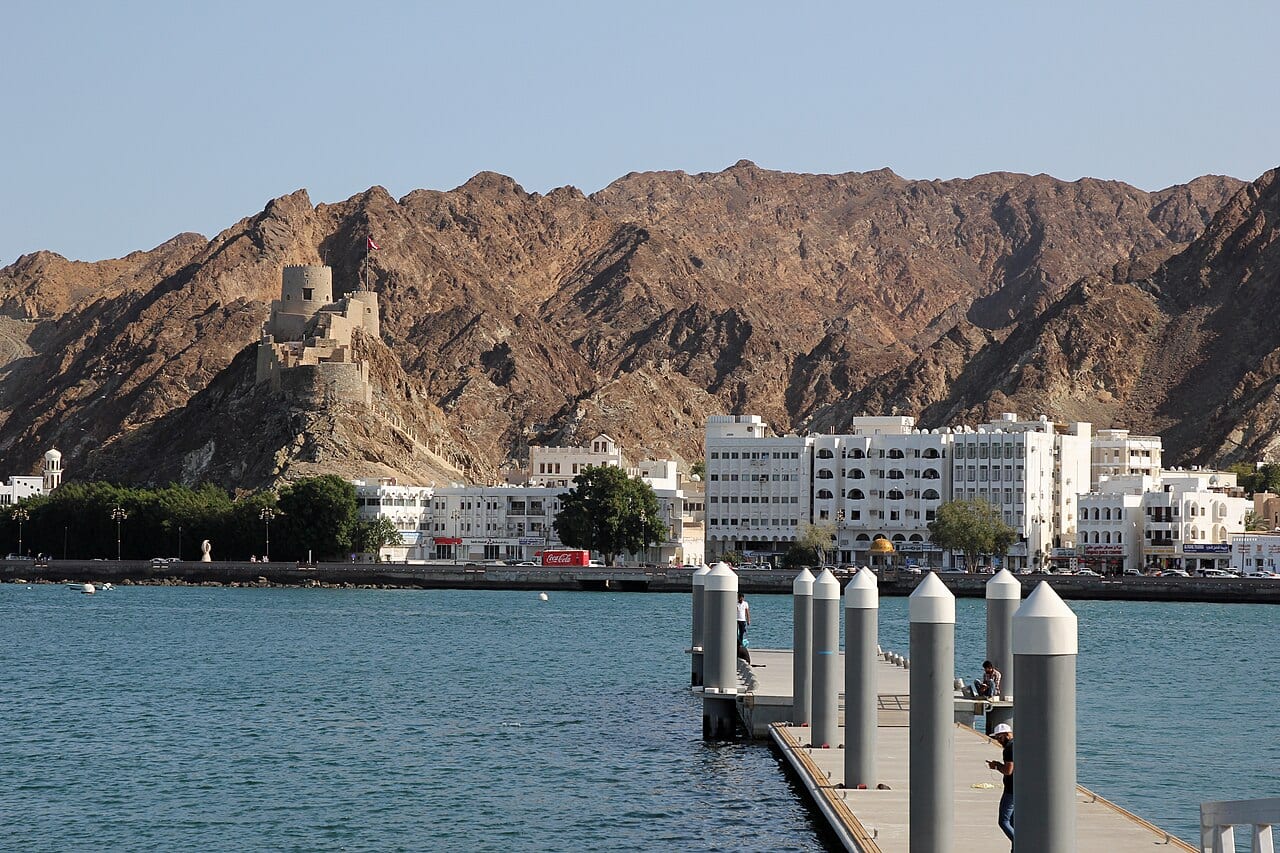
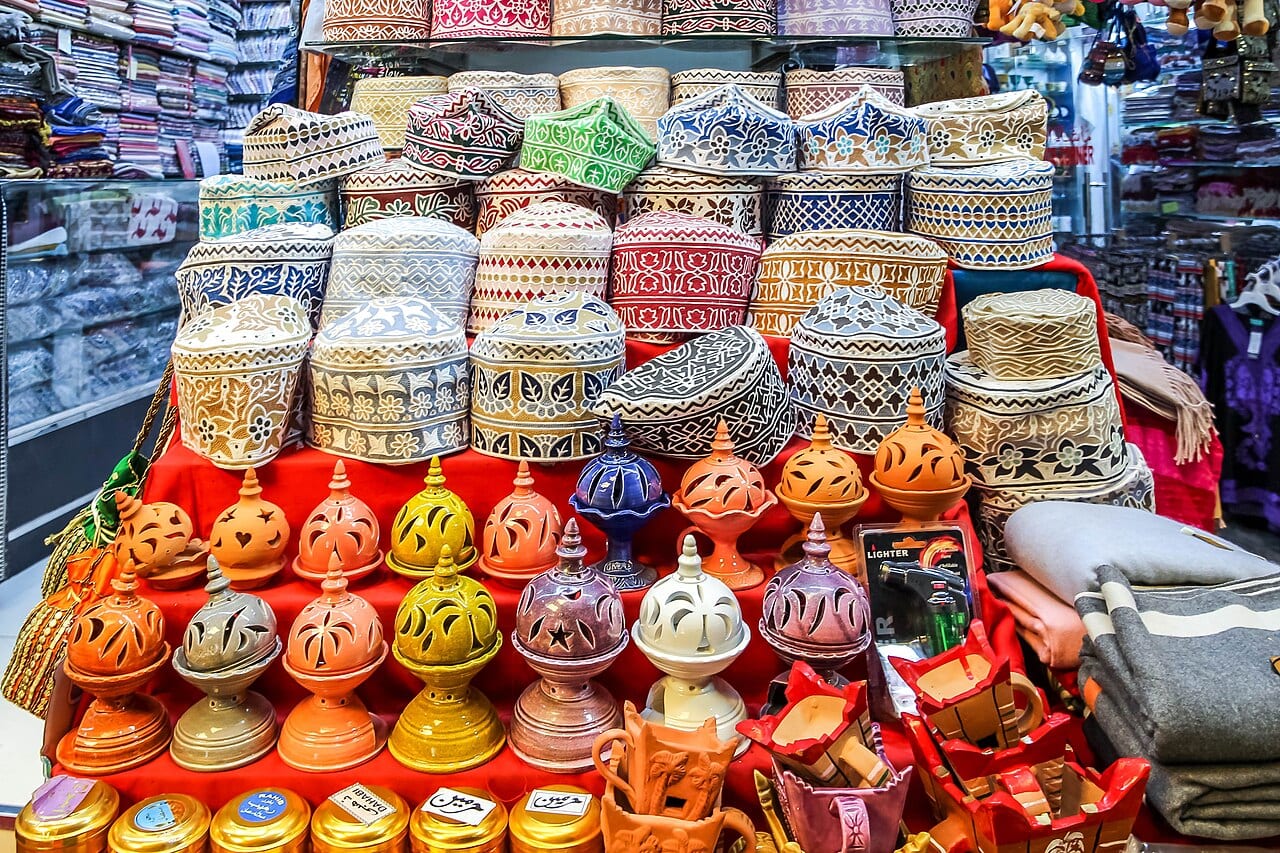
Mutrah is the old port and the heart of the city. Walk the Corniche an hour before sunset: the harbour on one side, latticed merchant houses and the mosque's blue dome on the other, the fort above, and the incense-burner monument on the hill at Riyam Park. The Mutrah Souq is one of the oldest markets in Arabia and one of the most pleasant: covered lanes of frankincense and bukhoor, silver khanjars, embroidered kumma caps, pashminas, dates and Omani halwa, with prices that are fair even before you bargain. Pray maghrib at the Al Lawatiya Mosque's neighbourhood or any of the small mosques off the lanes, then eat Omani food on the Corniche. The new fish market at the eastern end, a sweep of white roof, is a lively morning visit where the day's kingfish and tuna come in.
Old Muscat: the palace, the forts and the museums
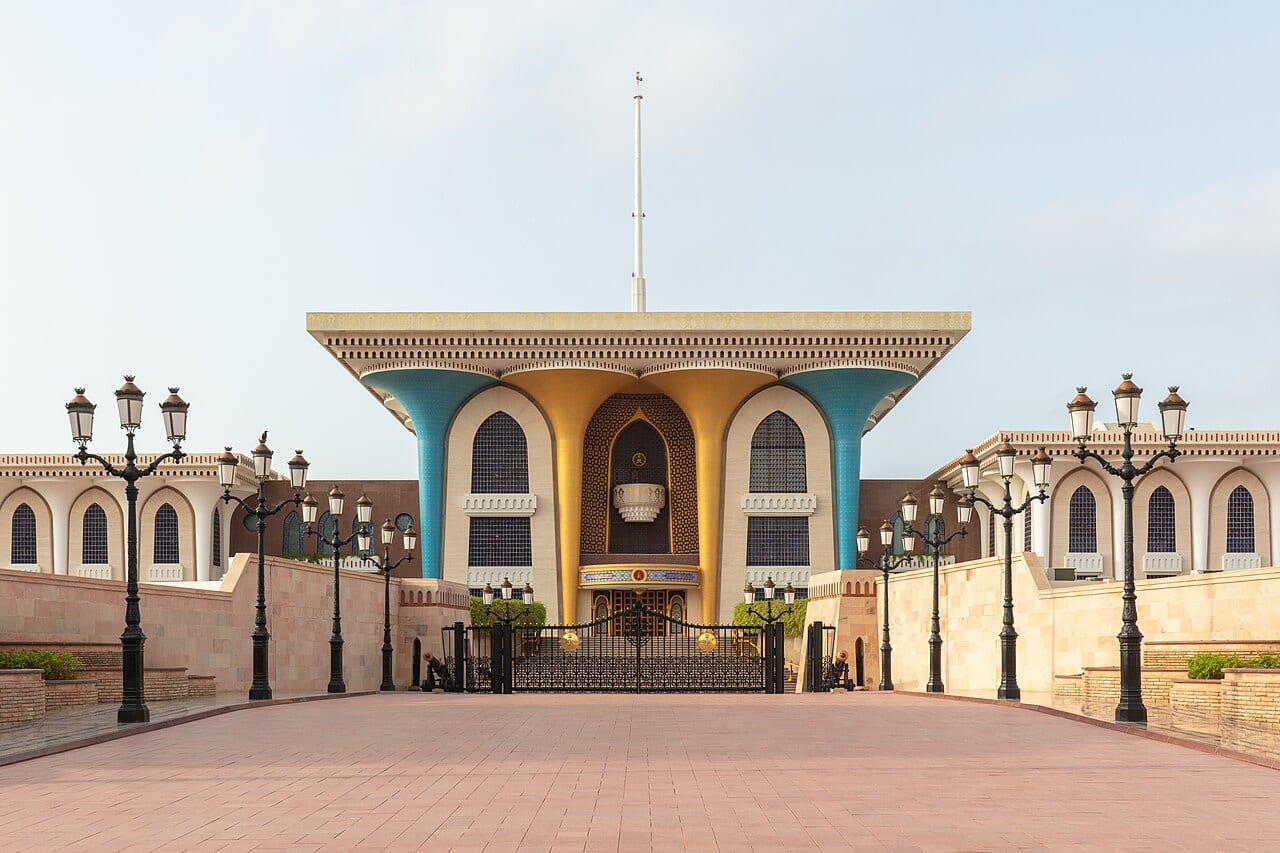
A ten-minute drive through the headlands brings you to Old Muscat, the walled town at the harbour's mouth. The Al Alam Palace, the Sultan's ceremonial palace, is a surprise of blue and gold columns; you view it from the plaza outside, flanked by the Portuguese-era forts of Al Jalali and Al Mirani on their rocks. The National Museum opposite is the best in the Gulf: Oman's seafaring history, the frankincense trade, Islamic manuscripts and a children's gallery, all in Arabic and English with Braille throughout. Bait Al Zubair, a private museum in a restored family house, shows Omani dress, jewellery and weapons in a more intimate setting with a good café. Together they take a cool half day, which is exactly what you want after a morning on the Corniche.
The Royal Opera House and the beach districts
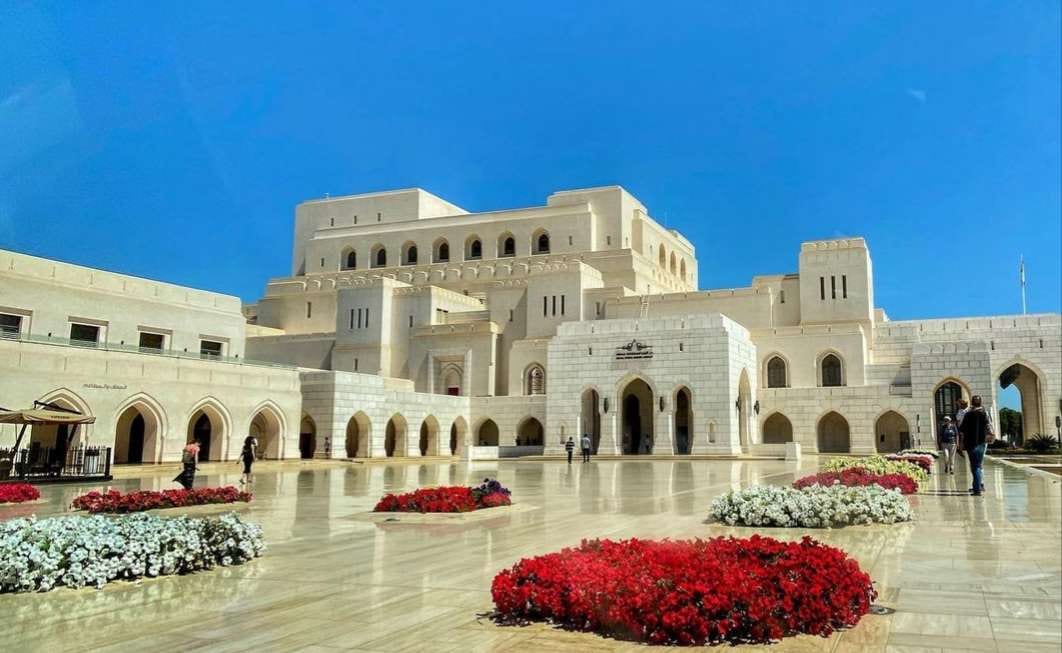
West along the coast, the Royal Opera House Muscat is a palace of Omani stone and carved wood that hosts concerts, Arab and international, and offers daytime tours of the hall and its grand chandelier; the gardens and the arcade of shops are pleasant even without a ticket. Behind it, Shatti Al Qurum and Qurum Beach are the city's public seaside: a long free beach, a promenade of cafés and juice bars, families on the sand after asr and footballs everywhere. The Qurum Natural Park has lawns, a lake and playgrounds. Dolphin-watching boats leave from the marina at Bandar Al Rowdha early in the morning and almost always find pods of spinner dolphins; in winter, snorkelling trips run to the protected Daymaniyat Islands, where turtles and reef fish gather in water as clear as Sharm's.
Day trip one: Nizwa and the forts
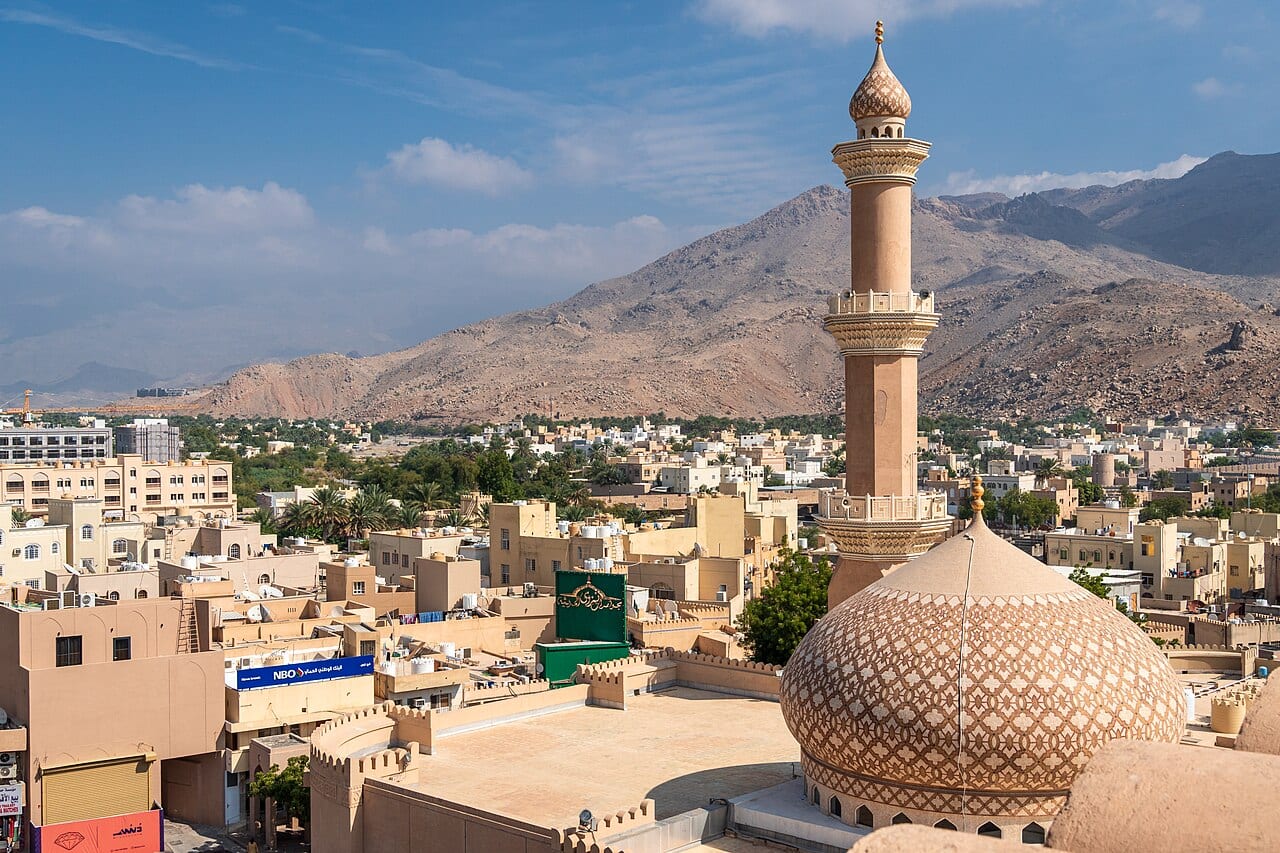
Nizwa, ninety minutes inland, was Oman's capital for centuries and is still its cultural heart. Go on a Friday morning if you can, when the livestock market fills the square with goats, cattle and Bedouin traders in a scene that has not changed in generations; arrive by seven and it is over by nine. Nizwa Fort is a vast round tower with a maze of defences inside and a view over the date palms from the top; its courtyard hosts craft demonstrations. The souq sells silver, pottery from nearby Bahla and the best Omani halwa in the country. Add Bahla Fort, a UNESCO site, and the castle at Jabrin with its painted ceilings, and you have a full day; the mountain road to Jebel Akhdar begins nearby, so many travellers sleep up there.
Day trip two: Jebel Akhdar, the green mountain
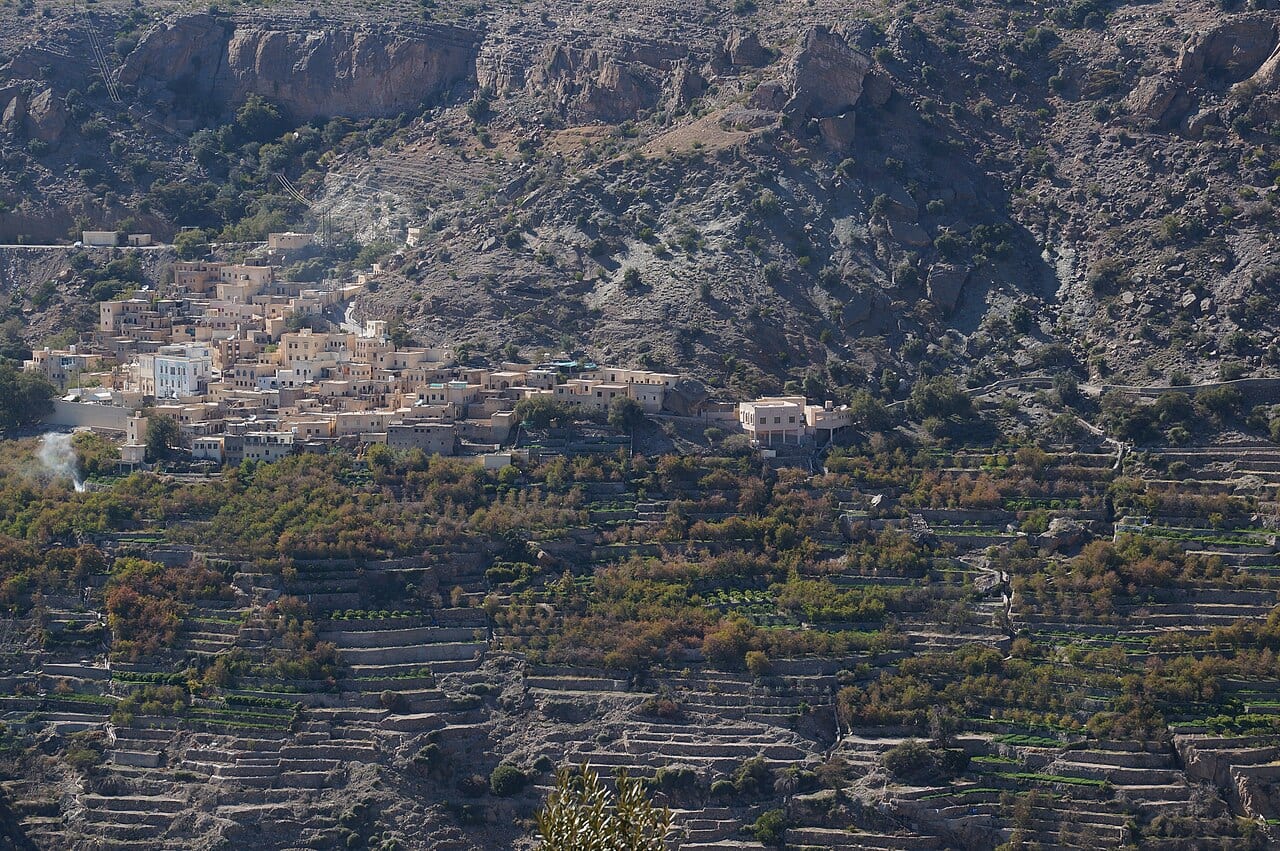
From the checkpoint above Birkat Al Mawz, a steep road climbs two thousand metres to the Saiq Plateau, where the air is cool enough for a jacket in winter and villages cling to terraces of pomegranates, walnuts and the Damask roses that are harvested in April for Omani rosewater. Walk the village-to-village path from Al Aqr to Al Ayn and Ash Shirayjah along the terraces (two easy hours), look over Wadi Al Ayn from the viewpoints, and have lunch at one of the mountain hotels. Four-wheel drive is compulsory and enforced at the checkpoint. Families often stay a night: the stars are extraordinary and the mountain mosques call the adhan across the canyon.
Day trip three: Wadi Shab and the Bimmah Sinkhole
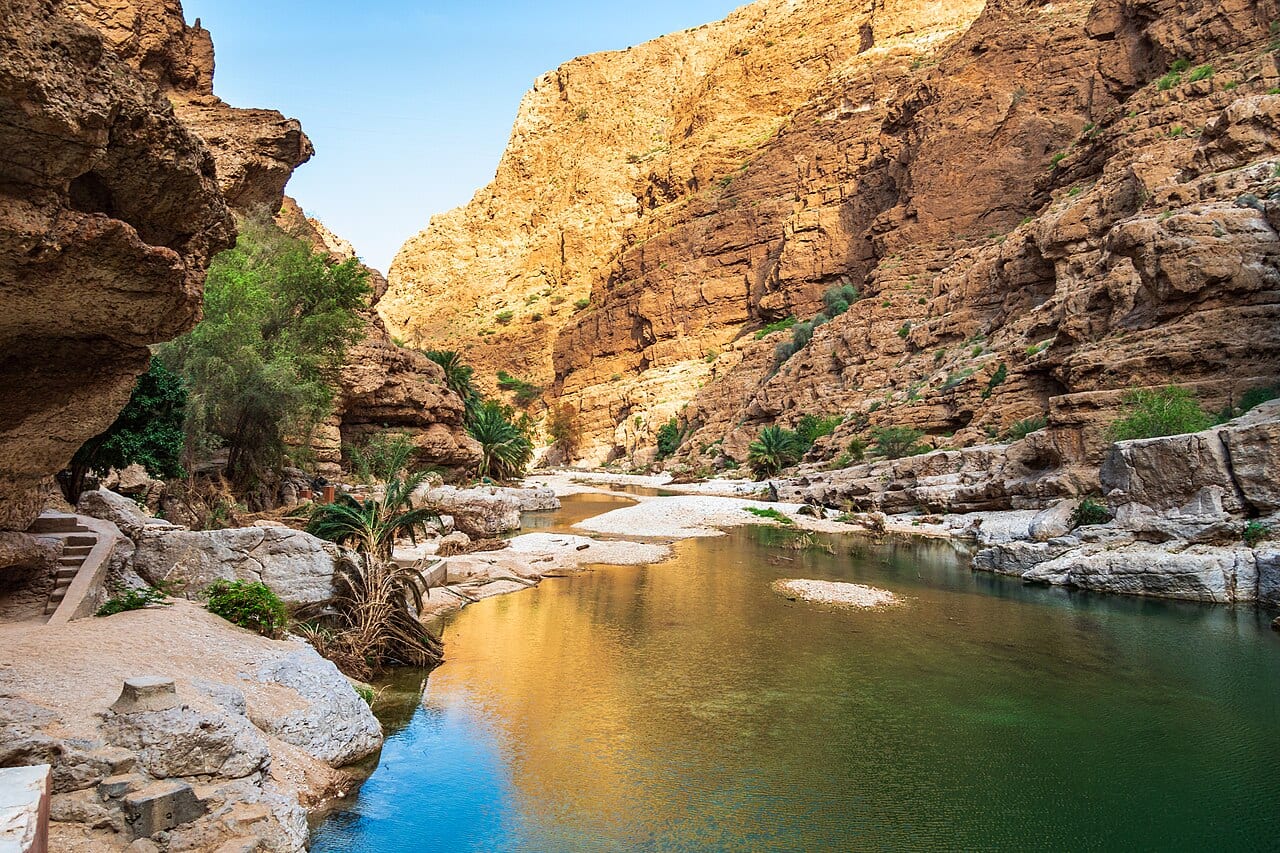
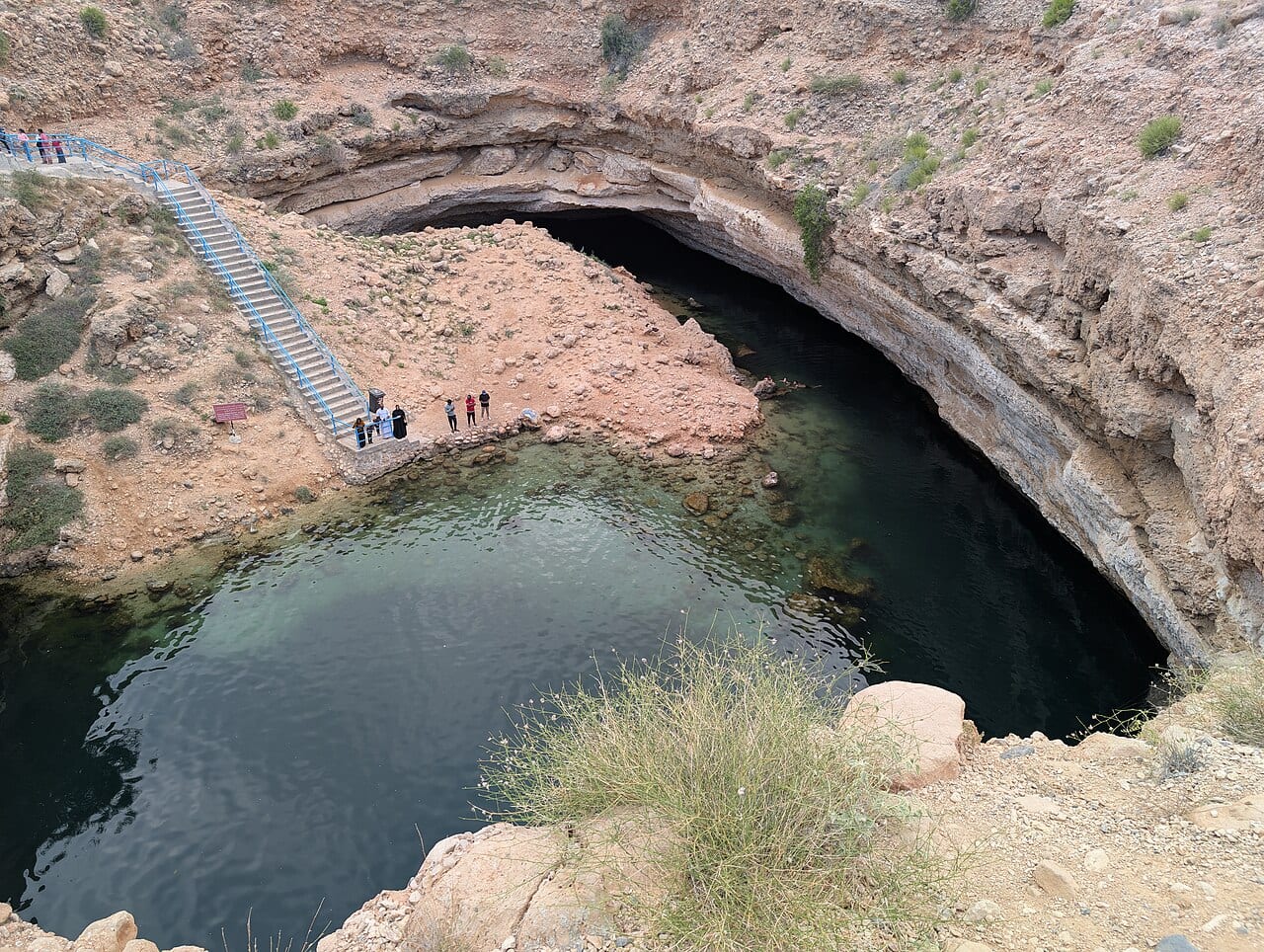
South along the coast road, the Bimmah Sinkhole is a limestone crater with a pool of blue-green water forty metres across, with steps down for a swim; it sits in a small free park and makes a perfect morning stop. Twenty minutes further, Wadi Shab is the most beautiful walk in Oman: a short boat ride across the inlet, then forty-five minutes on foot between canyon walls, past palm gardens and falaj channels, to a chain of pools where you swim from one to the next and finally through a narrow gap into a cave with a waterfall inside. Go early, wear shoes you can get wet, swim in modest clothing as the locals do, and carry water; there is no shade on the walk back at noon. Pray dhuhr at the mosque in the village by the car park.
A night in the Wahiba Sands
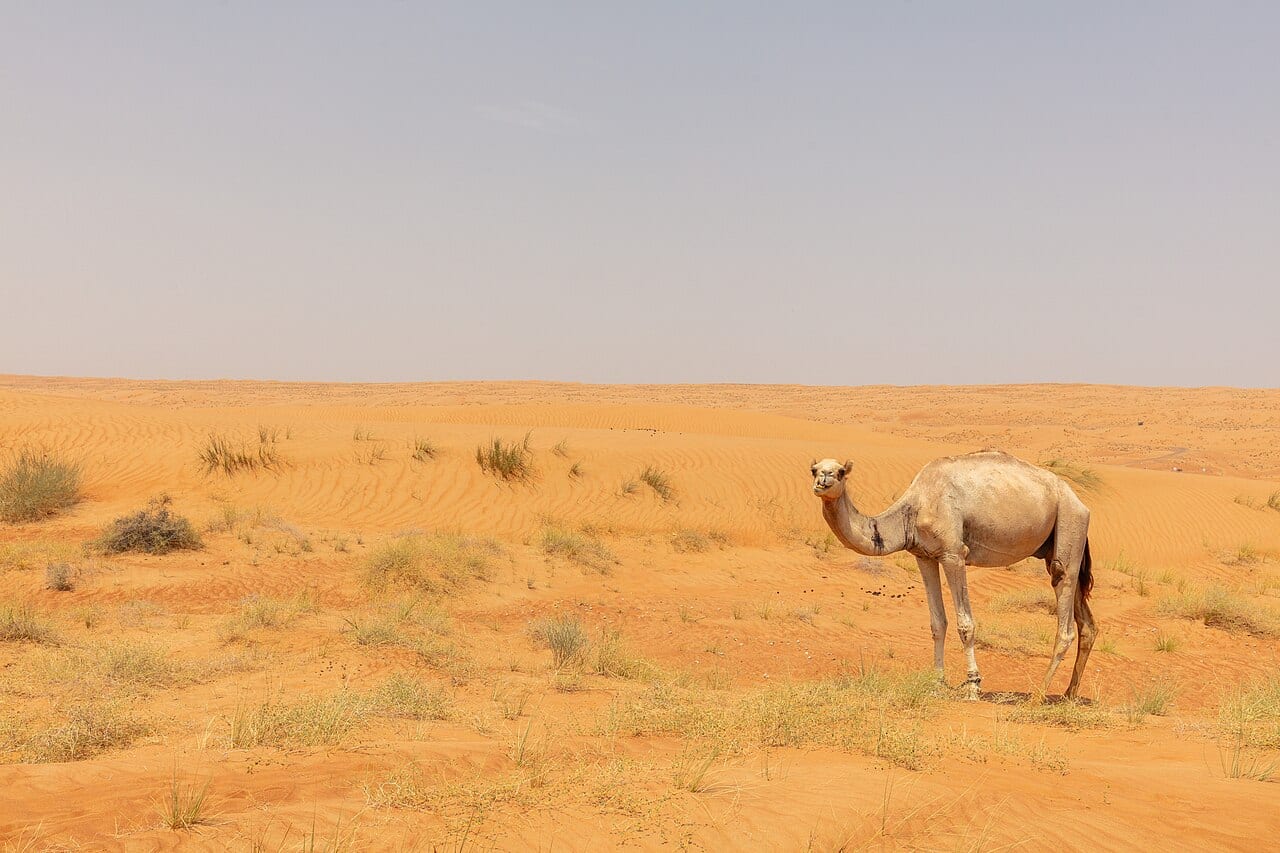
Two and a half hours from Muscat the road ends and the Wahiba Sands (Sharqiya Sands) begin: two hundred kilometres of orange dunes rolling to the sea. Desert camps collect you at the edge in four-wheel drives, race the dunes at sunset, and give you a Bedouin dinner of grilled meats, rice and dates under a sky with more stars than you knew existed, then a tent or a barasti hut for the night and camel rides at dawn. Camps range from simple to luxurious; nearly all are alcohol-free, and families with small children are their main guests. Combine the desert with Wadi Bani Khalid, a wadi of deep emerald pools an hour away, for the classic two-day loop from the capital, or continue to Sur for its dhow yards and to Ras Al Jinz, where green turtles come ashore to nest at night.
Where to pray and what to eat
Prayer needs no planning in Oman: every village has its mosque, every mall and fort car park has a prayer room, and the Grand Mosque and the hilltop Mohammed Al Ameen Mosque in Bausher are destinations in themselves. Food is halal everywhere by default. Omani cooking is quiet and generous: shuwa, lamb marinated in spices and slow-cooked in an underground oven for a day or two (the Eid dish, now on restaurant menus year-round); mishkak skewers from roadside grills; majboos rice; harees; fish from the Gulf of Oman, especially kingfish; and Omani halwa, a dark saffron-and-rosewater sweet served with kahwa coffee and dates in every home and shop you enter. Zanzibar's influence shows in the biryanis and the mandazi doughnuts. In Muscat, Bait Al Luban on the Mutrah Corniche serves traditional Omani dishes in a restored building above the harbour, Bin Ateeq does home-style Omani food on the floor in private rooms, and Kargeen Café in Madinat Qaboos is the garden café where Omani families eat shuwa under lantern-lit trees. Check opening hours, as many close between lunch and dinner.
A five-day plan
- Day one, Muscat old and new. Grand Mosque early, the National Museum and Al Alam Palace, Mutrah Corniche and souq from asr to dinner.
- Day two, the sea. Dolphins at dawn from Bandar Al Rowdha, Qurum Beach in the afternoon, the Royal Opera House tour, dinner in Shatti Al Qurum.
- Day three, Nizwa and up the mountain. Nizwa Fort and souq (Friday for the market), Bahla or Jabrin, up to Jebel Akhdar for the night.
- Day four, down to the desert. Terrace walk in the morning, drive via Wadi Bani Khalid to the Wahiba Sands for the dune evening and the camp.
- Day five, the coast home. Sunrise on the dunes, Wadi Shab and the Bimmah Sinkhole, back to Muscat by evening.
Driving from the Emirates? Read our Dubai first-time guide for the other half of a Gulf road trip, and compare hotels by district on our hotels page and flights on the flight search.
Family tips
- Hire a car with child seats at the airport; distances are long and taxis for day trips add up. Four-wheel drive only matters for Jebel Akhdar and the desert.
- Oman is conservative and relaxed at once: modest dress everywhere outside hotel pools, and swimming in the wadis is done in clothes rather than swimwear.
- Wadi walks are hot by eleven; start at eight, carry two litres of water per person and wear shoes that grip wet rock.
- Desert camps have family tents, proper bathrooms and early bedtimes; book a camp that collects you from the edge of the sands rather than driving in yourself.
- Friday mornings are quiet everywhere except Nizwa's market; plan museums and malls for the afternoon.
What it costs, honestly
Oman is mid-priced: cheaper than the Emirates for hotels and restaurants, more expensive than Egypt or Türkiye. The forts and museums charge small entry fees, the Grand Mosque, the beaches, the sinkhole and the wadis are free, and petrol is among the cheapest in the world, so a rental car is the best money you will spend. Desert camps and mountain hotels are the splurge; Muscat has good mid-range hotels in Qurum and Al Khuwair. Eating Omani food in local restaurants costs a fraction of hotel dining and is far better.
FAQ
Is Oman good for a conservative family?
It is one of the most comfortable countries in the world for one: halal everywhere, alcohol confined to a few hotel venues, modest dress the norm, and a culture of hospitality towards families.
Do I need four-wheel drive?
Only for Jebel Akhdar, where the police enforce it at the checkpoint, and for driving into the dunes, which the camps do for you. Every other place in this guide is reachable in an ordinary car.
Can non-Muslims visit the Grand Mosque?
Yes, on most mornings except Friday, in modest dress, for free. It is one of the most visitor-friendly great mosques anywhere.
How many days?
Five covers Muscat, Nizwa, Jebel Akhdar, the wadis and a desert night. A week lets you add Sur and the turtles at Ras Al Jinz, or slow the whole thing down.
Is it safe to drive?
Oman's roads are excellent and well signed in Arabic and English; drive in daylight in the mountains and watch for camels on desert roads at dusk.