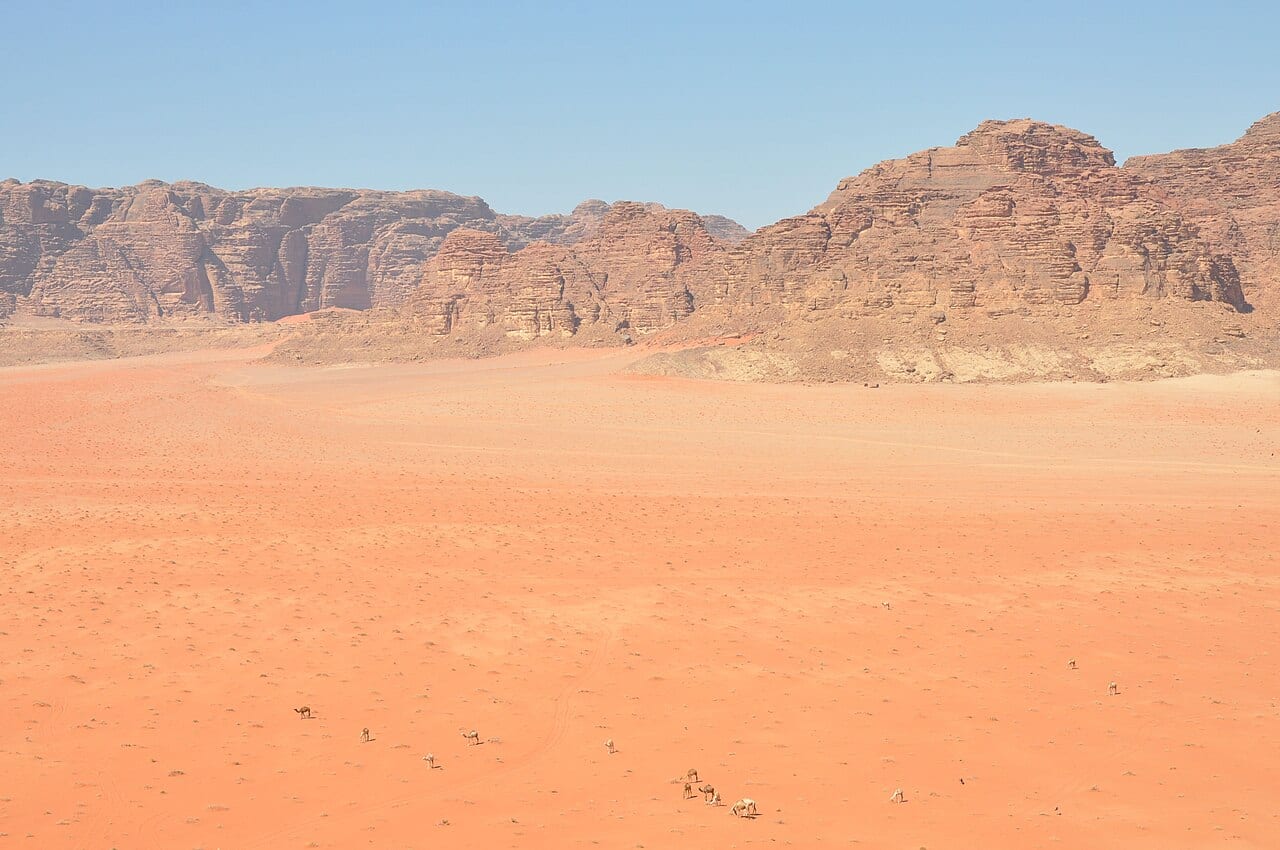
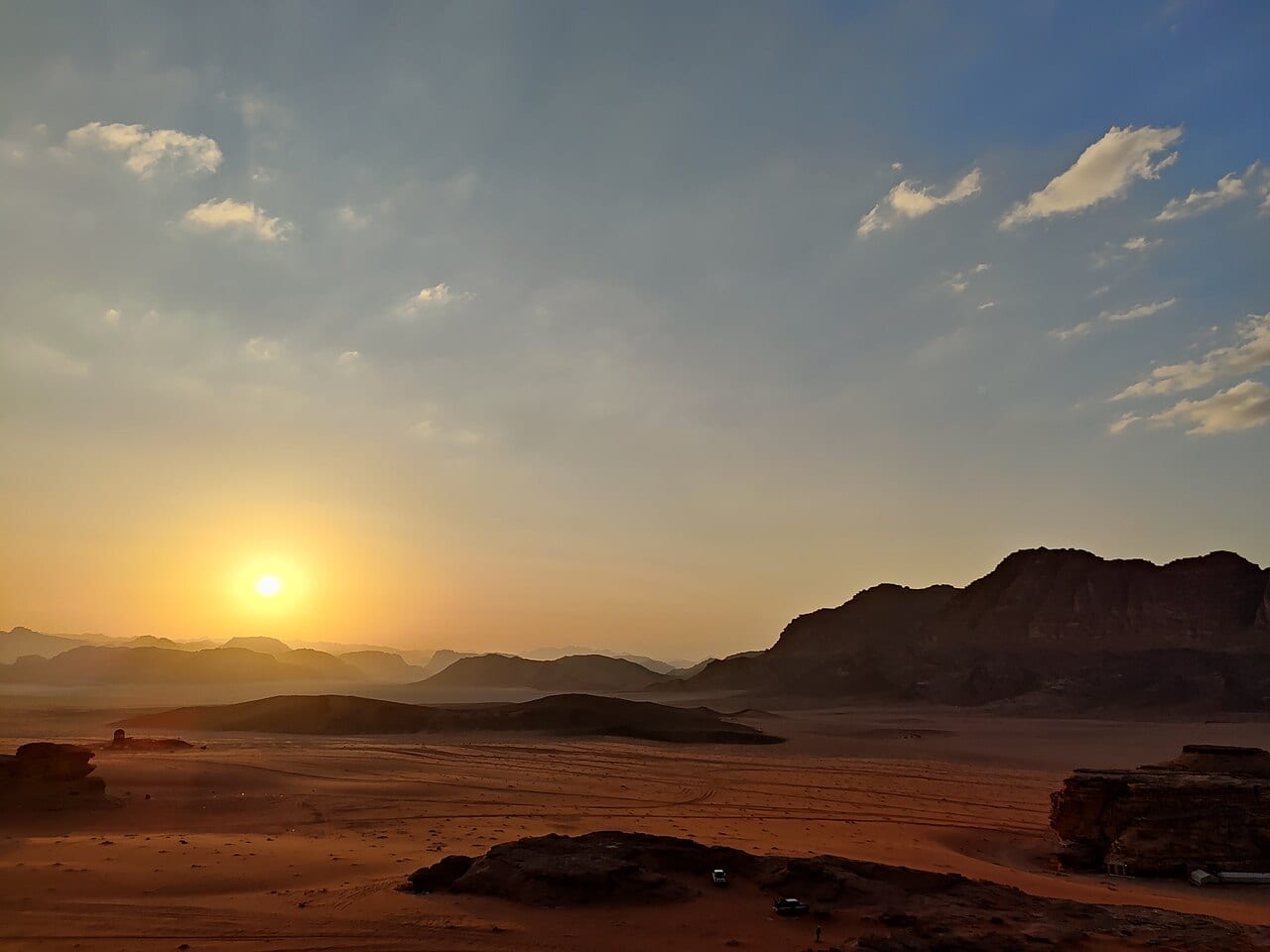
Wadi Rum, the Valley of the Moon, is a protected desert of red sand and sandstone mountains in the far south of Jordan. A night there is one of the best things you can do in the region: a jeep ride through the canyons in the afternoon, sunset from a dune, dinner cooked under the sand, and a sky so dark that the Milky Way looks like a cloud. This guide explains how to choose a camp, what a jeep tour includes, how to get there, what it costs, when to go (including Ramadan and summer), and how to keep halal food and prayer simple in the desert.
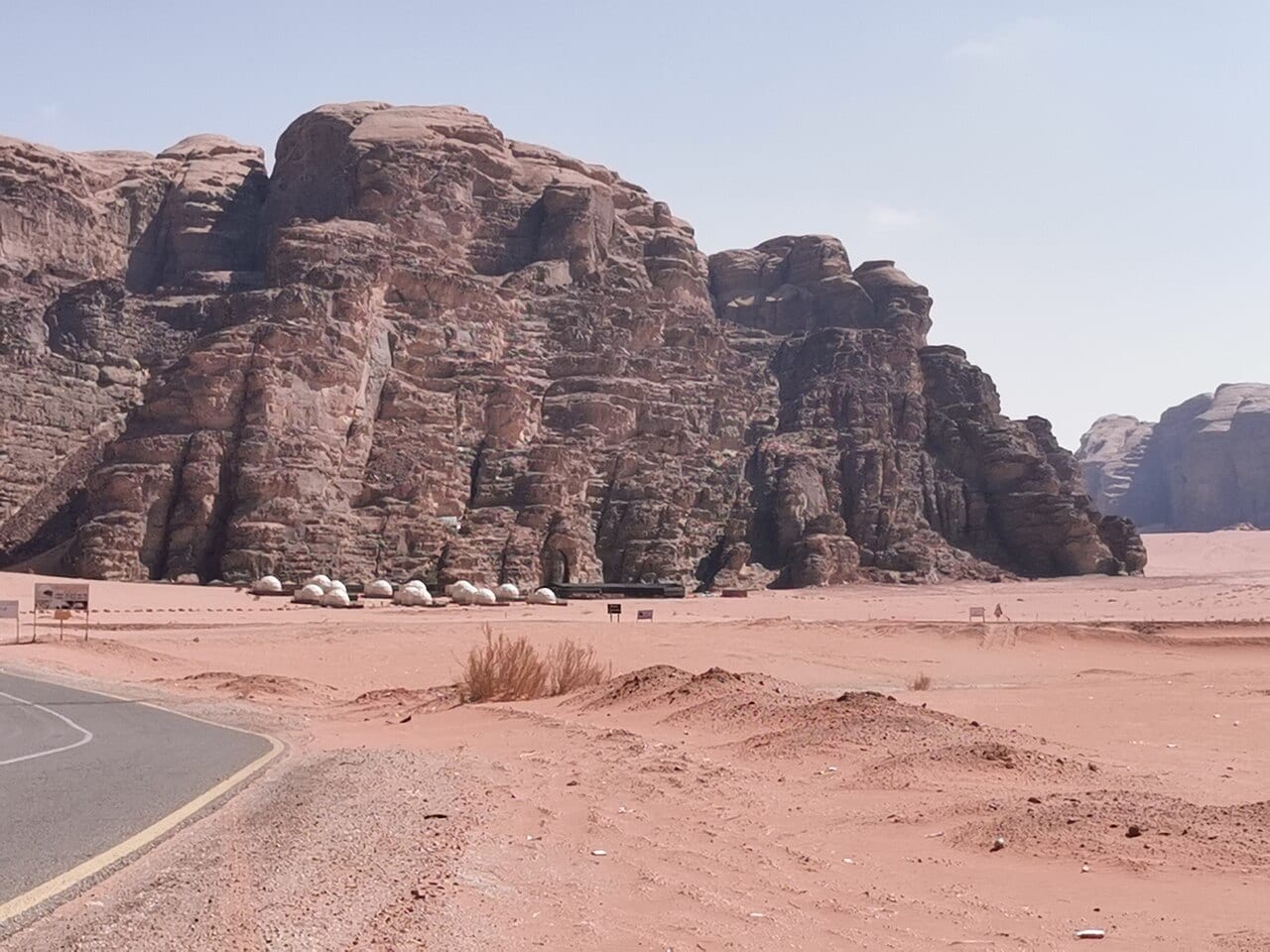
Wadi Rum at a glance
- Where: about 60 km (1 hour) north-east of Aqaba, 1.5 to 2 hours south of Petra and about 4 hours from Amman.
- Status: the Wadi Rum Protected Area is a UNESCO World Heritage Site, both natural and cultural, home to Bedouin communities, thousands of rock inscriptions and Nabataean remains.
- Entry: a protected-area fee is paid at the visitor centre. Wikivoyage lists it at 5 JD per person in 2026, and it is free with the Jordan Pass; confirm at the visitor centre.
- How long: one night is the classic; two nights let you add a full-day jeep tour, a hike or a camel trek without rushing.
- Halal: camps are run by Bedouin families and the food is halal; camps do not normally serve alcohol, but ask if a quiet, family camp matters to you.
When to go
March to May and September to November are the best months: warm, clear days and cool nights. Winter (December to February) days are pleasant and sunny, but nights drop close to freezing, so choose a camp with heated tents or plenty of blankets. Summer (June to August) is very hot from late morning to late afternoon; book an early-morning or late-afternoon jeep tour and rest in the shade at midday.
Ramadan in the desert is special: the call to prayer from Rum village at Maghrib, breaking the fast with dates and tea around the fire, and a long quiet night under the stars. Tell the camp when you book that you are fasting. Most will serve iftar at sunset and leave suhoor (or prepare it early) on request, and drivers will plan the tour so you are back before Maghrib. In warm months, keep daytime activity short.
For stargazing, choose dates near the new moon; around the full moon the desert is bright enough to walk without a torch, which is beautiful in its own way but hides most stars.
Choosing your camp
Almost every camp sits on private Bedouin land inside the protected area, and quality varies a lot. They fall into three groups:
- Traditional Bedouin camps: goat-hair tents with simple beds, shared bathrooms and a central fire where tea is always on. The cheapest and often the friendliest; ideal if you want conversation and stories rather than comfort.
- Comfort camps: canvas or stone-walled tents with private bathrooms, hot showers and proper beds. The best balance for families and older travellers.
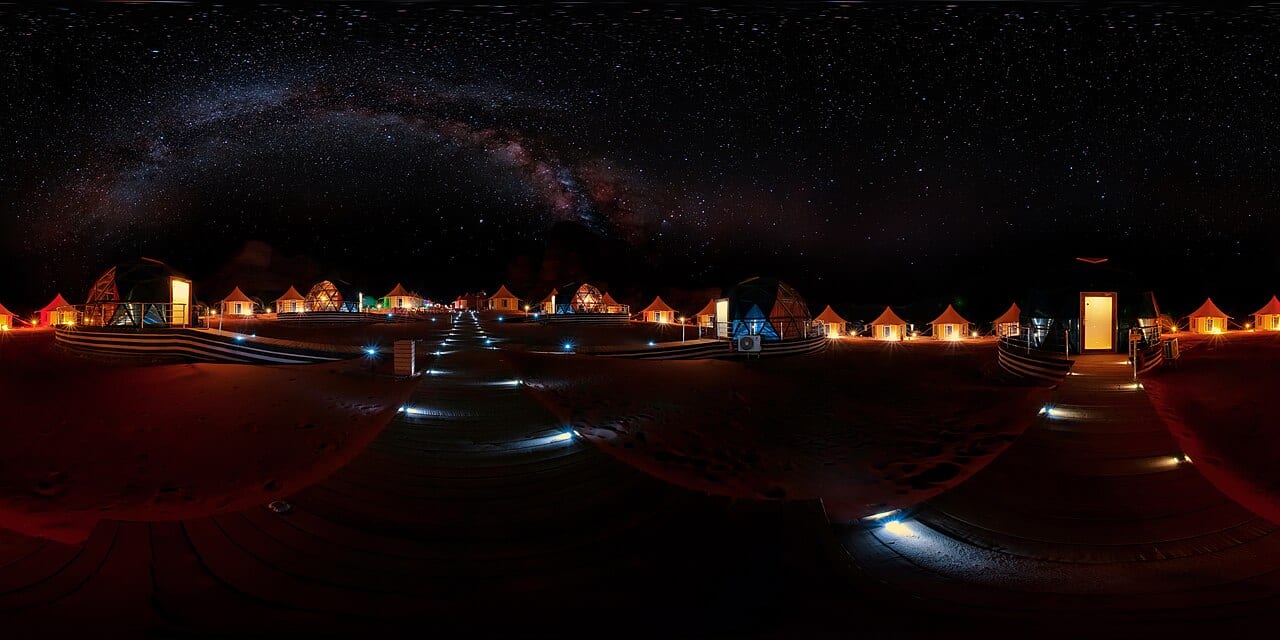
- Dome ("bubble" or "martian") tents: panoramic domes with clear walls or a clear roof, often air-conditioned, built for stargazing from your bed. The most expensive, and booked out early in spring and autumn.
Before you book, check recent reviews for four things: the cleanliness of the bathrooms, the quality of the dinner, whether the jeep tour is run by the camp's own family or sub-contracted, and how far the camp is from the visitor centre (camps deep in the desert are quieter but the transfer is longer). Ask the camp to confirm what is included: transfer from the visitor centre or Rum village, dinner, breakfast, the tour and any extra for a private tent.
Families and women: comfort camps with private bathrooms are the easiest choice for families with small children and for women who prefer privacy; ask for a tent close to the bathroom block if bathrooms are shared. Bedouin hosts are used to Muslim families and are generally respectful and protective of guests. Women travelling without a male companion should book a well-reviewed camp in advance rather than taking an offer at the roadside.
Jeep tours, hikes and camel rides
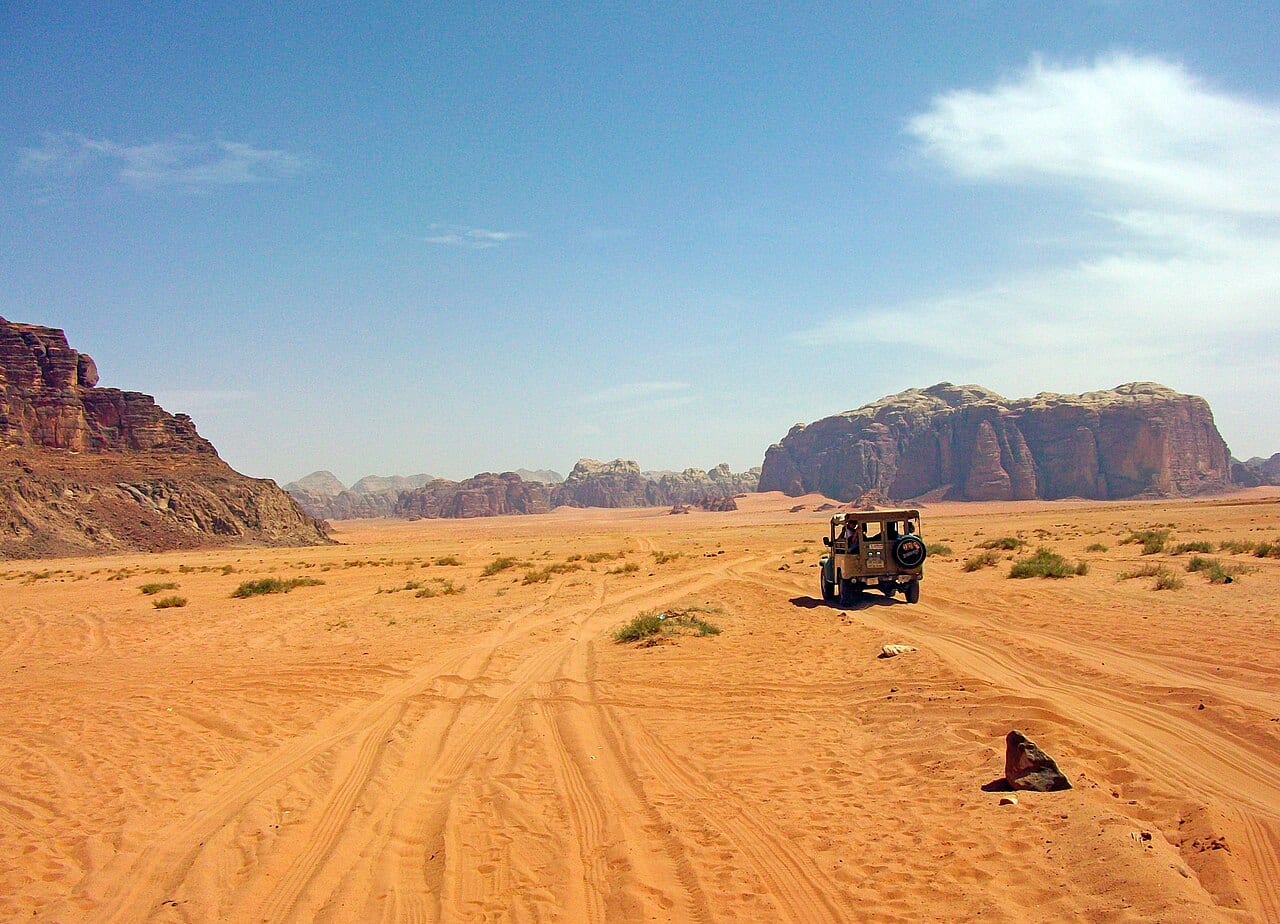
Camps sell jeep tours of 2 to 8 hours, usually in the back of an open pickup with benches, which is fun but dusty; bring a scarf. A typical half-day tour visits:
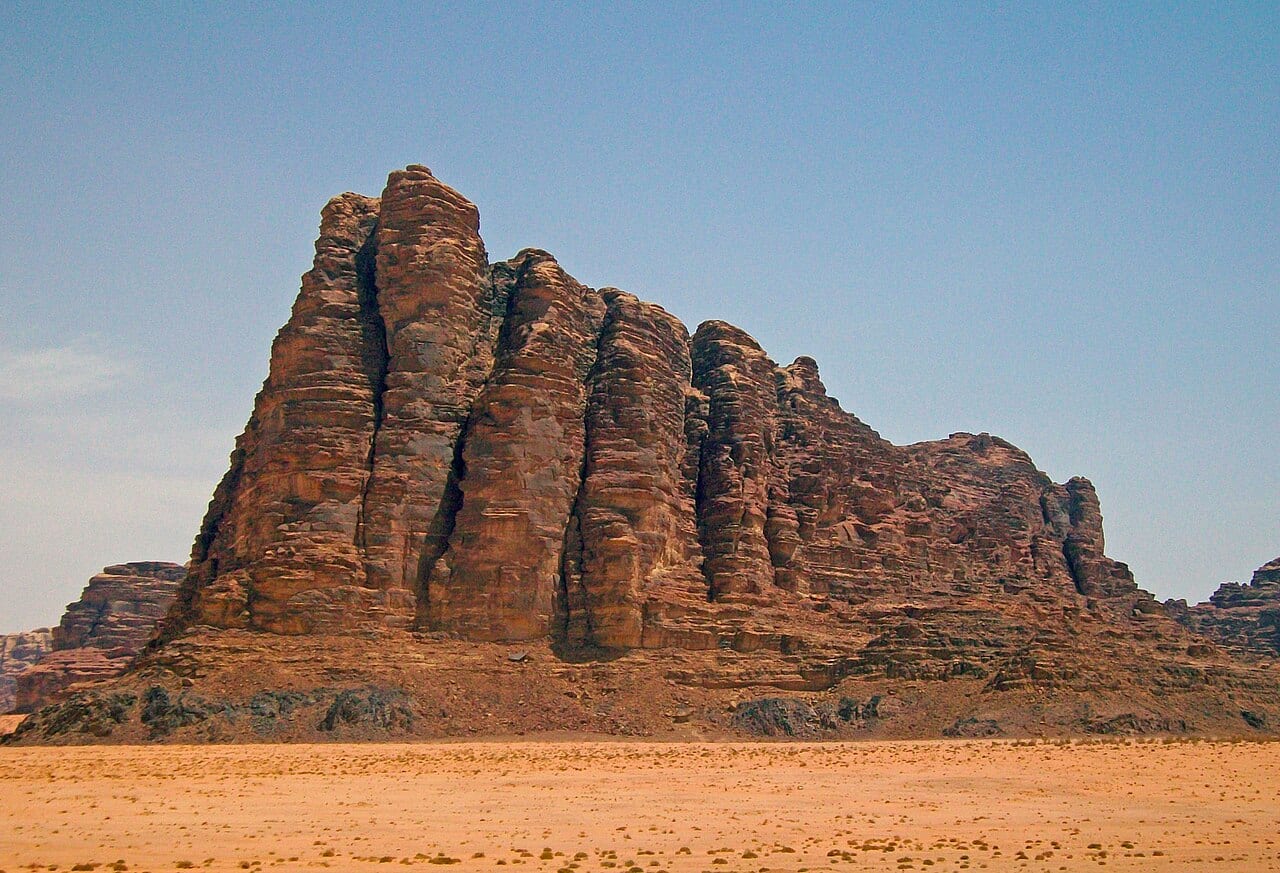
- The Seven Pillars of Wisdom, the fluted mountain beside the visitor centre, named after T. E. Lawrence's book about the Arab Revolt.
- Lawrence's Spring, a small spring on a mountainside with a view over the valley.
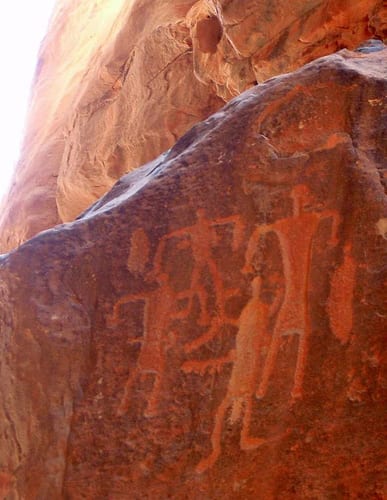
- Khazali Canyon, a narrow cleft with Thamudic and Nabataean inscriptions and carved figures of people and animals.
- The red sand dunes, which you climb barefoot or in shoes and slide down for the view.
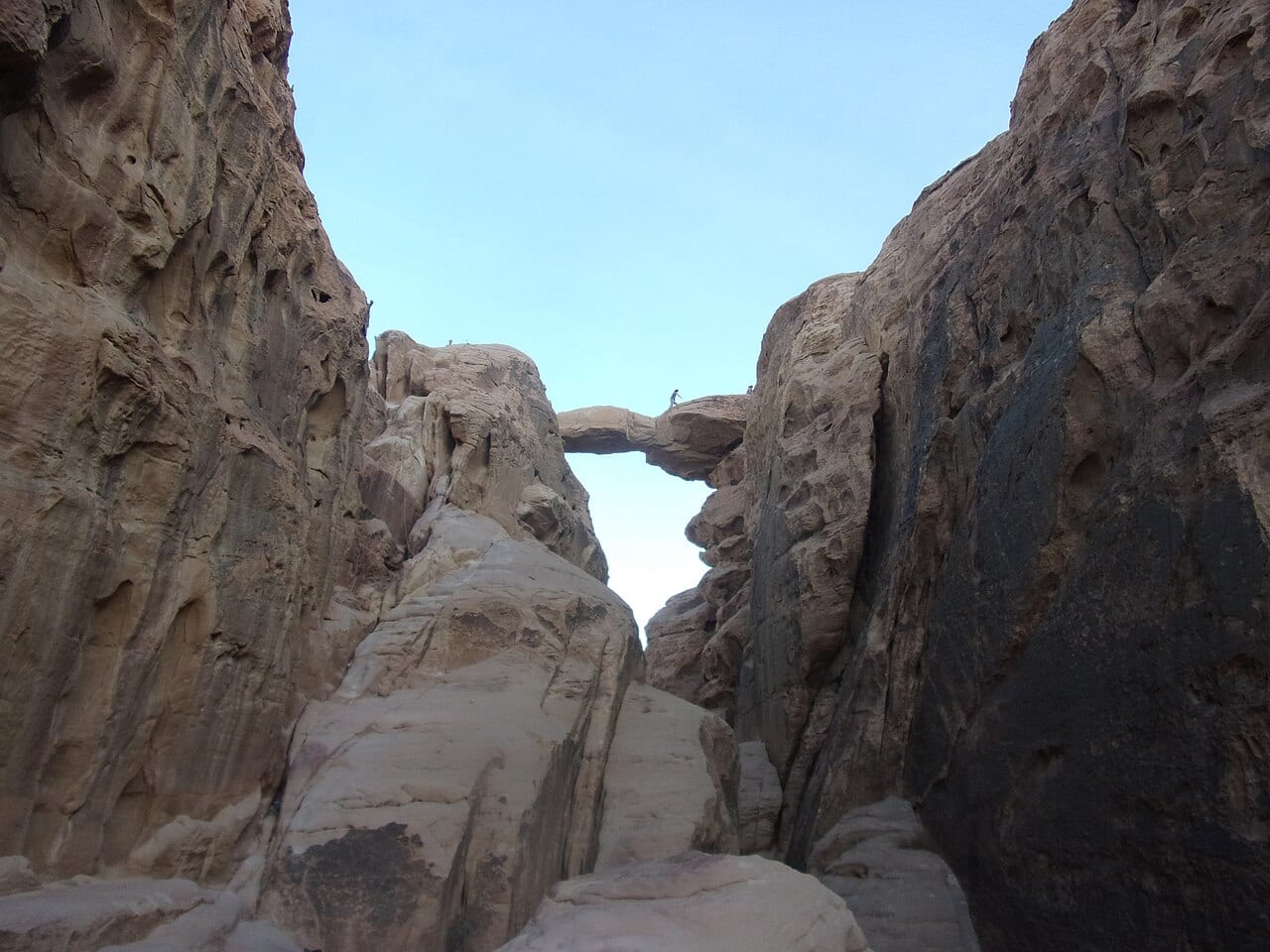
- Um Fruth rock bridge, a small natural arch that is easy to climb.
- A sunset point on a ridge or dune, timed to the minute by your driver.
Back in Rum village, the remains of a Nabataean temple sit behind the houses and can be visited on foot. Ask your driver to show you the inscriptions and the old water channels along the cliffs.
A full day adds Burdah rock bridge (a scramble with a guide to an arch about 80 metres above the desert floor) and the remote northern canyons. Experienced hikers can climb Jabal Umm ad-Dami, the highest mountain in Jordan at about 1,850 metres, with a local guide; on a clear day the view reaches the Red Sea. Many routes in Wadi Rum need a licensed local guide, and you should never hike alone without telling the camp where you are going.
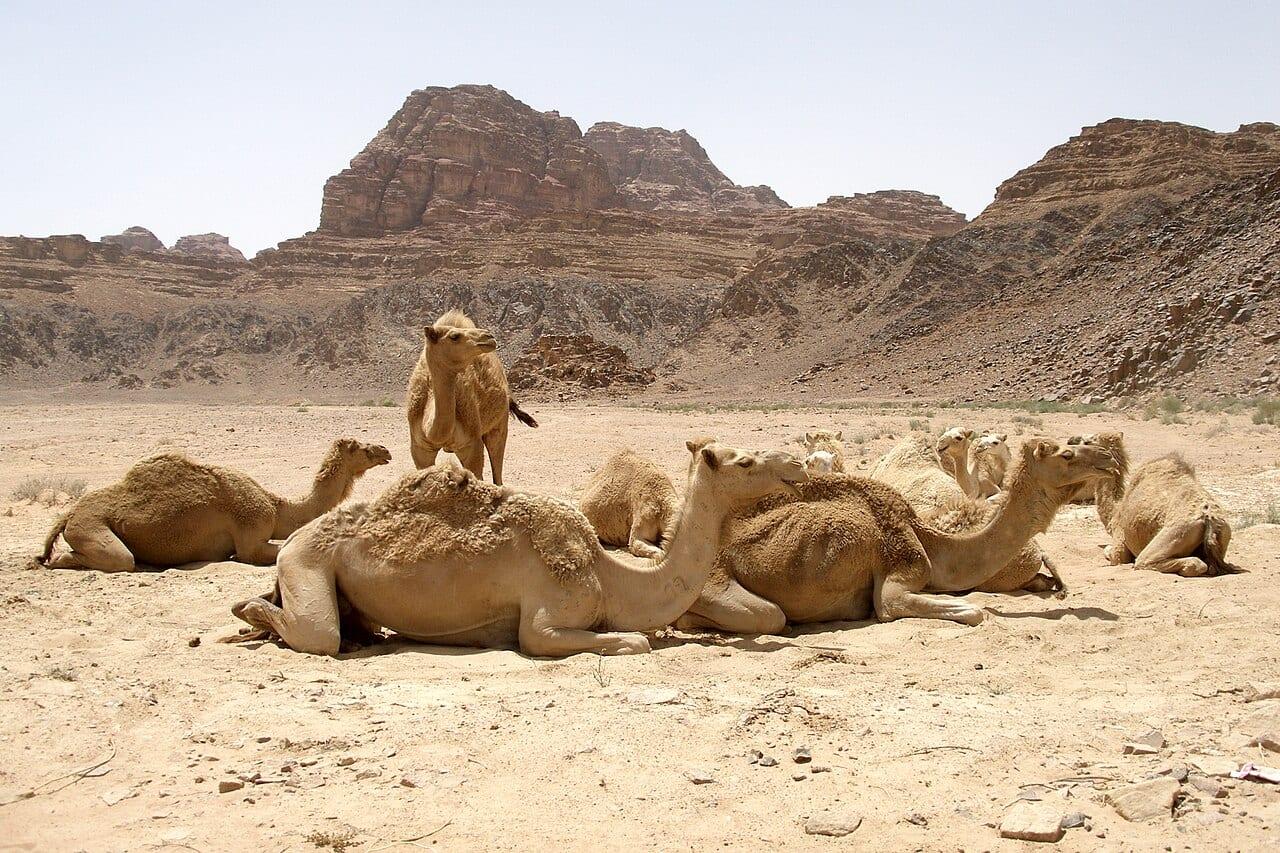
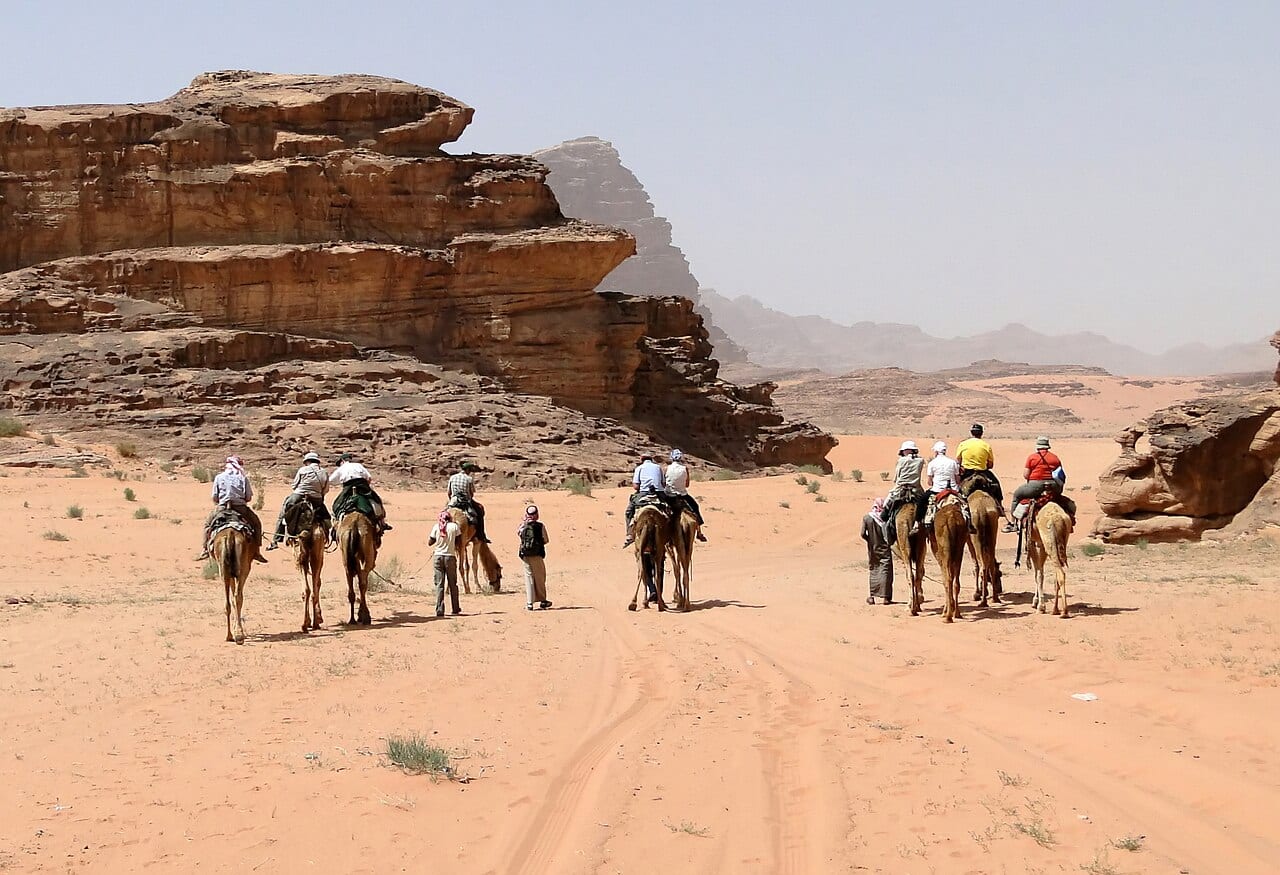
Camel rides of an hour or two are gentle and good with children; longer camel treks between camps, or to a sunset point, can be arranged a day ahead. Sit well back, hold the saddle when the camel stands up (back legs first), and wear long trousers.
Dinner under the sand: zarb
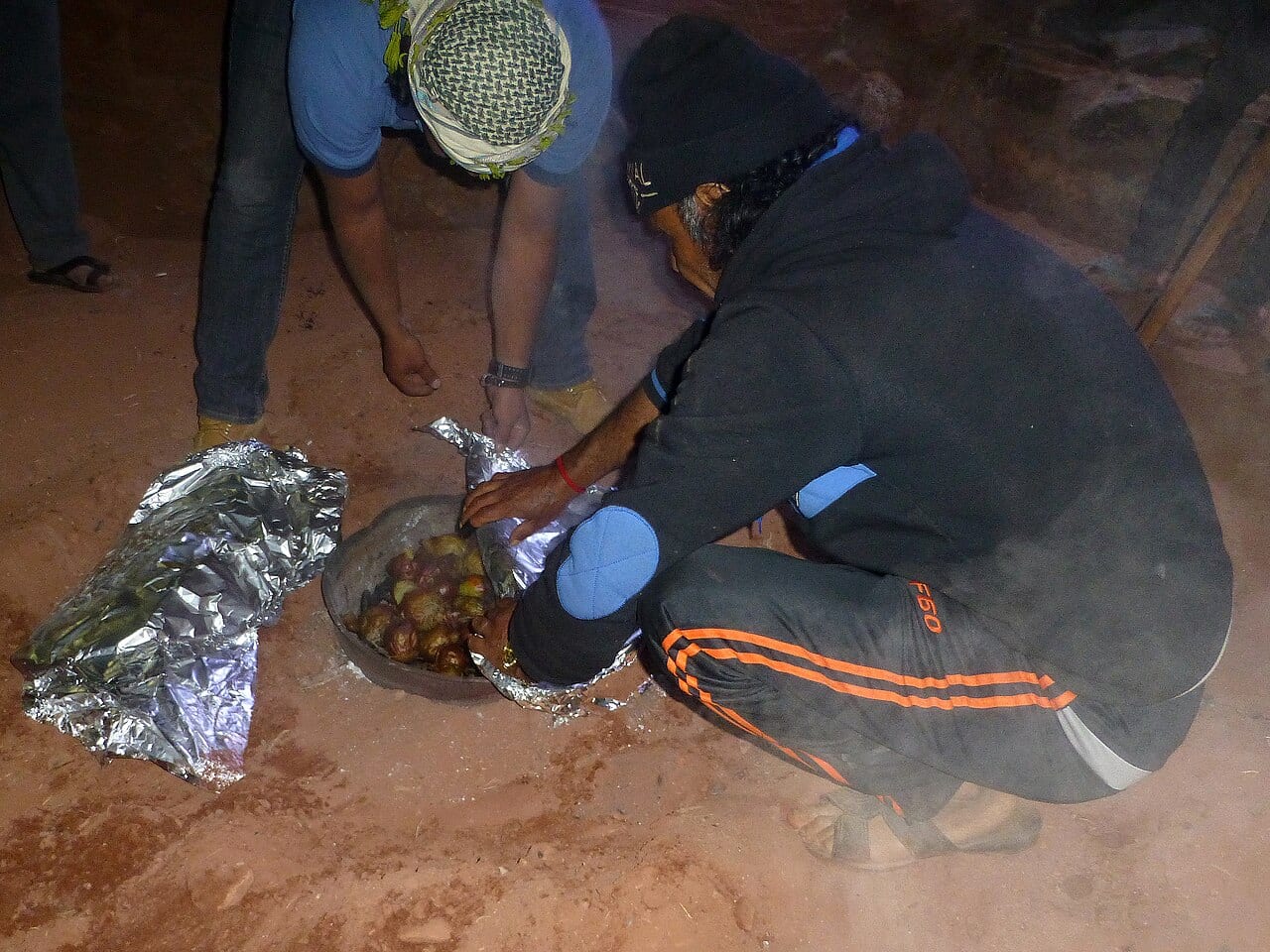
The signature meal is zarb: chicken or lamb with potatoes, onions and carrots, arranged on metal trays and lowered into a pit of hot coals, then covered with sand and left to cook slowly for one to two hours. Watching the camp lift it out at sunset is part of the experience. It is served with rice, salads, hummus, bread and endless glasses of sweet tea with sage or cardamom coffee. Breakfast is usually eggs, za'atar, olive oil, cheese, jam, labneh and flatbread.
The meat is halal; if you want to be sure, ask the camp how it is sourced, which they will be used to. Vegetarians should mention it when booking. For more Jordanian dishes, see our guide to Jordanian cuisine.
Praying in the desert
Wadi Rum is one of the most moving places to pray: the call to prayer from the mosque in Rum village carries across the sand at Maghrib, and at night you will understand why the desert has always been a place of reflection. Bring a light prayer mat and a compass app; the Qibla from Wadi Rum is roughly south-south-east (about 155 degrees). Ask the camp for water for wudu if bathrooms are shared, and tell your jeep driver your prayer times: Bedouin drivers are happy to stop, and many will pray with you. Tayammum on clean sand is permitted when water is genuinely unavailable.
For Jumu'ah, the mosque in Rum village is the nearest; arrange the transfer with your camp, since most camps are a jeep ride away from the village.
The night sky
With almost no light pollution, Wadi Rum is one of the best stargazing places in the region. Walk a couple of hundred metres away from the camp lights, turn off your phone screen and give your eyes 20 minutes to adjust. In summer the Milky Way rises high in the south; in winter the bright constellations are sharp in the cold air. Many camps offer a telescope session, and a free star-map app helps you name what you see. Bring a warm layer: even in May the night air in the desert is cool.
Getting there
From Aqaba: about an hour by taxi or car. Minibuses also run from Aqaba towards Rum village during the day, but they are infrequent, so most visitors arrange a taxi or a camp pick-up. From Petra: 1.5 to 2 hours; many travellers do Petra first and arrive in Rum by early afternoon. From Amman: about 4 hours by the Desert Highway. From King Hussein International Airport in Aqaba, the drive is about an hour.
The turn-off from the Desert Highway leads about 20 km to the visitor centre, where you pay the fee or show your Jordan Pass, and Rum village is a few kilometres further. Leave your car at the visitor centre or in the village; your camp collects you there by jeep, because ordinary cars cannot drive on the sand. Agree the pick-up time with the camp the day before.
Wadi Rum fits naturally into a southern Jordan loop: Amman, Petra, Wadi Rum, then a night by the Red Sea in Aqaba. Read our Petra travel guide and our Amman destination guide for the rest of the route.
A sample one-night and two-night plan
- Day 1, midday: arrive at the visitor centre after lunch in Petra or Aqaba; transfer to camp, tea and rest.
- Day 1, afternoon: a 3 to 4 hour jeep tour (Seven Pillars, Khazali Canyon, the dunes, Um Fruth), Asr on the way and sunset on a ridge; Maghrib in the desert.
- Day 1, evening: zarb dinner, tea by the fire, stargazing.
- Day 2, morning: Fajr and sunrise, breakfast, a camel ride, then transfer back. Or stay a second night and take a full-day tour to Burdah rock bridge and the northern canyons.
Want the whole trip worked out with real prices for your dates? Try our planner: plan Petra and Wadi Rum.
What it costs
Prices change with the season and the camp, so treat this as a guide and confirm when you book. A traditional camp with dinner and breakfast is the budget option; comfort camps cost noticeably more; dome tents are the premium tier, especially on spring and autumn weekends. Jeep tours are usually priced per vehicle (commonly up to six people), which makes them good value for families and groups. Add the protected-area fee (or your Jordan Pass), transport to the visitor centre, and a tip for your driver.
Packing list
- A warm fleece or jacket for the night, even in spring and autumn.
- Sunglasses, a hat and sunscreen for the day.
- Closed shoes for rock scrambles; the sand gets very hot in summer.
- A head torch, a power bank and cash in Jordanian dinars.
- A scarf or shemagh against wind and dust in the back of the jeep.
- A light prayer mat and a small bottle of water for wudu on tour.
Common mistakes
- Doing Wadi Rum as a rushed day trip: the night is the best part.
- Booking only on price: very cheap camps often cut corners on bathrooms and food.
- Underestimating the cold: desert nights in winter and early spring are close to freezing.
- Driving onto the sand: ordinary rental cars get stuck; leave the car at the visitor centre or village.
- Climbing arches without a guide: the rock is soft and polished, and falls happen.
Frequently asked questions
Is Wadi Rum safe for families?
Yes. It is a protected area with established camps; the main risks are sun, heat and falls when climbing. Keep children close on rock arches and dunes.
Can I visit Wadi Rum as a day trip?
You can do a 3 to 4 hour jeep tour from Aqaba or Petra and leave at sunset, but you will miss the night, which is the best part.
Is the food in Wadi Rum camps halal?
Yes. Camps are run by local Bedouin families and serve halal meat; ask when booking if you want to confirm.
Do camps have Wi-Fi and electricity?
Most comfort and dome camps have electricity and some Wi-Fi; traditional camps may have only lighting and a charging point. Mobile signal varies.
Can we pray Jumu'ah in Wadi Rum?
Yes, at the mosque in Rum village. Ask your camp to arrange a transfer, since most camps are outside the village.
Official information: UNESCO: Wadi Rum Protected Area · Jordan Pass · Visit Jordan. Fee reference: Wikivoyage: Wadi Rum.
Cover photo: camels on the red sand of Wadi Rum. Photo: Vyacheslav Argenberg — CC BY 4.0, Wikimedia Commons