Jordanian food is generous, simple and made to be shared. Meals are long, the table is always fuller than the number of guests, and saying no to a second helping takes real effort. Jordan's kitchen draws on Bedouin, Levantine and Palestinian traditions: lamb and yoghurt from the desert, olive oil, za'atar and fresh bread from the villages of the north, and spices and sweets from the old trading cities. Because Jordan is a Muslim-majority country, the meat you are served is halal as a rule, which makes it one of the easiest places in the region for Muslim travellers to eat well. This guide explains the dishes worth ordering, how and where to eat them, Ramadan and Eid food, the customs around the table, and the mistakes visitors make.
How Jordanians eat
- Breakfast is a spread of small plates with bread, often eaten late on weekends.
- Lunch, from about 2 to 4 pm, is the main meal of the day, and the time to order mansaf or maqluba.
- Dinner is lighter and later: grills, sandwiches, mezze or leftovers.
- Friday lunch after Jumu'ah is the big family meal of the week; restaurants that cook traditional dishes are at their busiest.
- Bread is the cutlery: taboon (oven-baked), shrak (paper-thin, baked on a domed saj) and the flat Arabic bread sold in every bakery.
Mansaf: the national dish
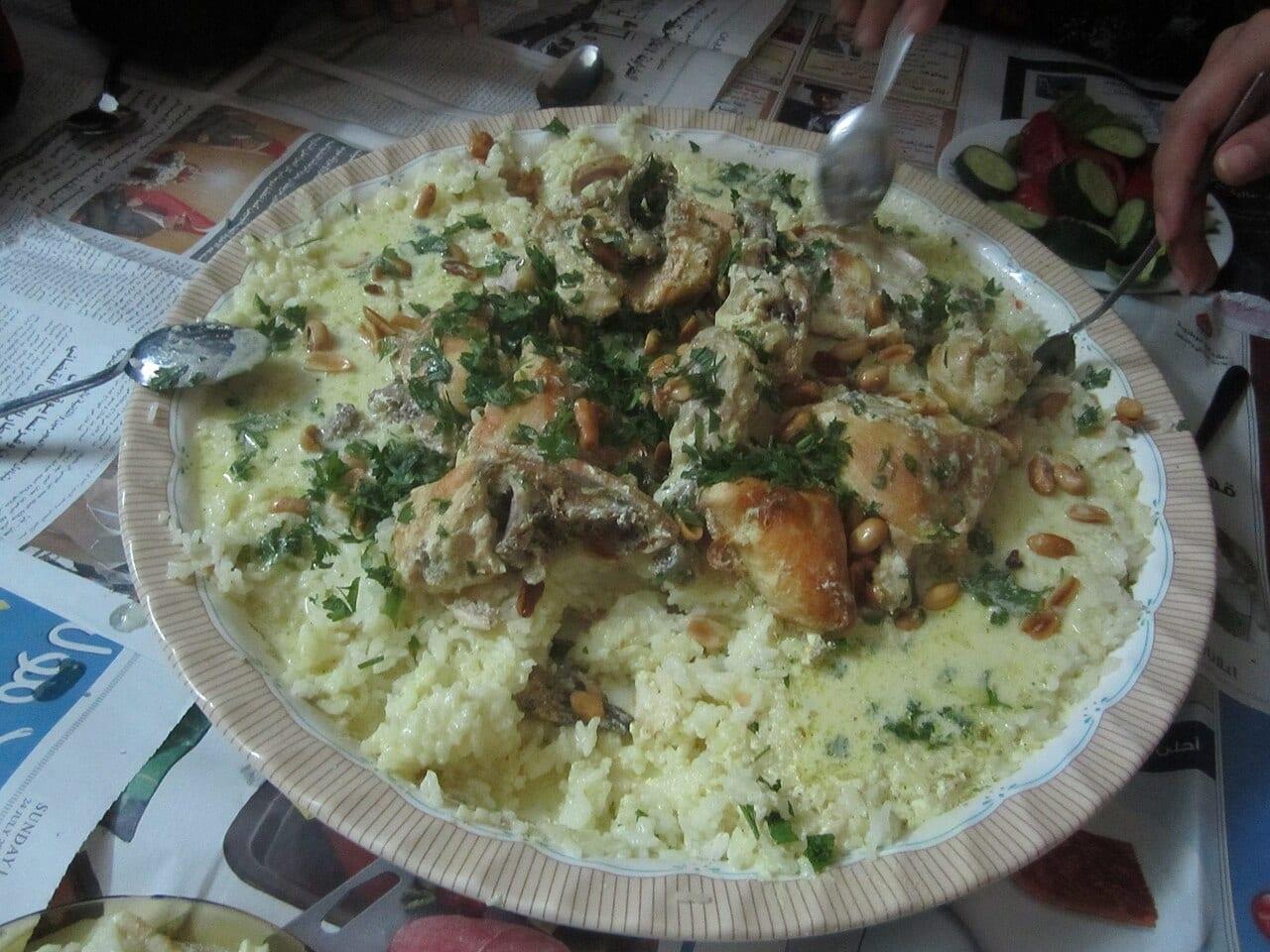
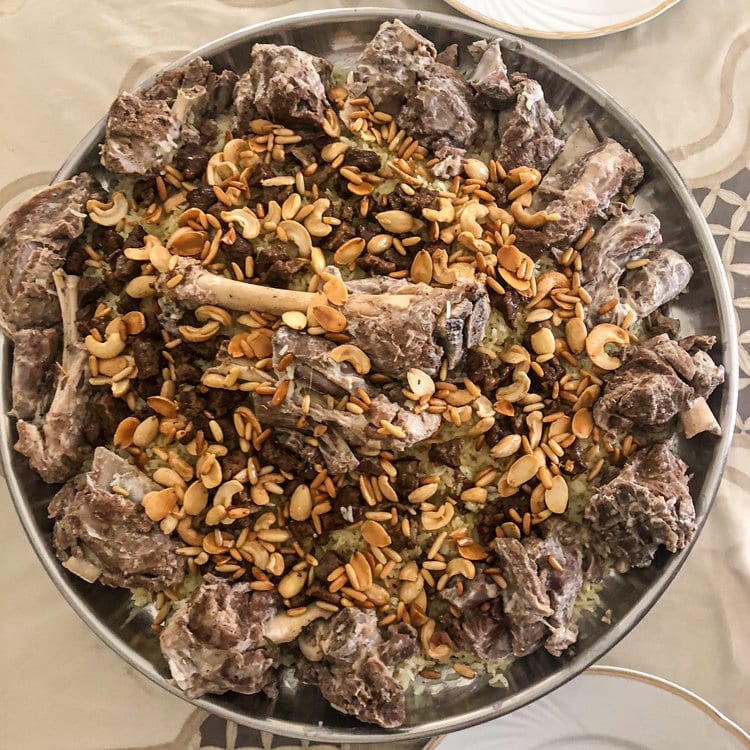
Mansaf is more than a meal; it is how Jordanians celebrate weddings, welcome guests and settle disputes. Lamb is cooked slowly in jameed, a sauce made from dried, fermented yoghurt that gives the dish its tangy, salty depth; jameed from the Karak region is especially prized. The meat is served on a large platter over rice, which sits on thin shrak bread, finished with toasted almonds or pine nuts and more hot jameed poured over the top.
Tradition says mansaf is eaten standing around the platter with the right hand, rolling rice and meat into a small ball. In restaurants you will be given a spoon, and nobody minds. Mansaf is heavy and rich, so order it for lunch and share one platter between two or three people. Many restaurants cook it only at lunchtime or on certain days; it is worth asking in the morning.
Maqluba: the upside-down pot
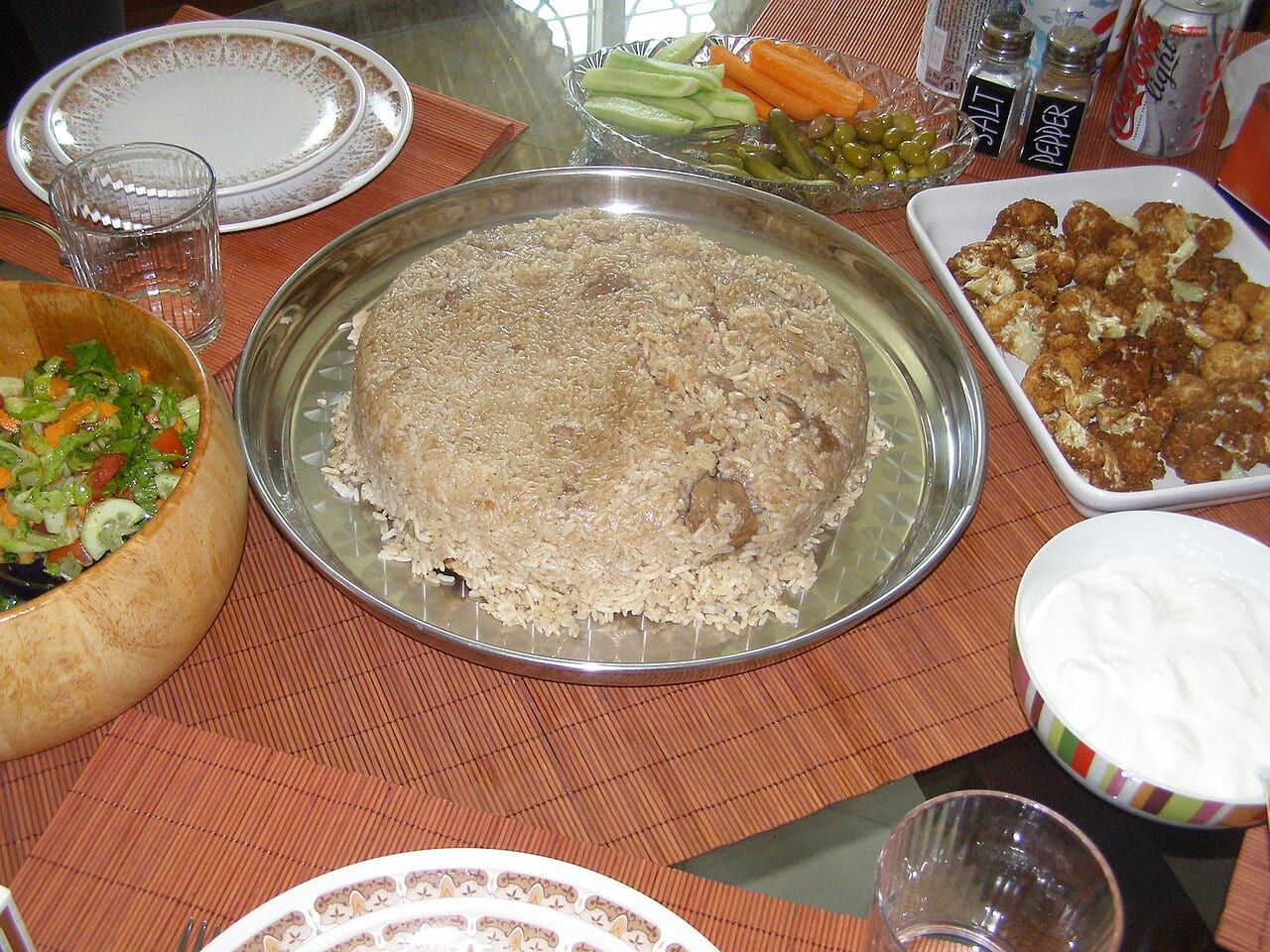
Maqluba means "upside down". Rice, fried aubergine, cauliflower or potato and chicken or lamb are layered in a deep pot and cooked together, then the pot is turned over onto a tray at the table, ideally in one clean movement that leaves a tall, perfect dome. It arrives with plain yoghurt and a chopped tomato and cucumber salad. Maqluba is home cooking at its best and a Friday-lunch favourite in many families.
Musakhan: bread, sumac and onions
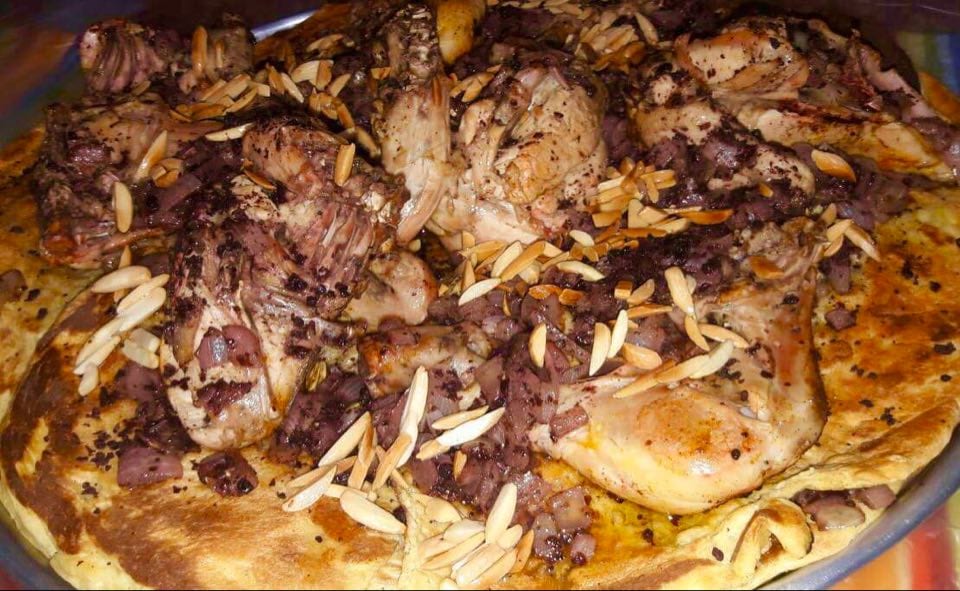
Musakhan comes from Palestinian village cooking and is loved across Jordan. Large rounds of taboon bread are soaked in olive oil, covered with onions slow-cooked with plenty of purple-red sumac, topped with roast chicken and baked until crisp at the edges. It is traditionally made in autumn, after the olive harvest, when the new oil is at its best. Eat it with your hands and do not be shy with the extra onions.
Home dishes worth asking for
Restaurants focus on mansaf and grills, but the dishes Jordanians cook at home are often the most memorable. Look for them on lunch menus and in places that cook "akl beiti" (home food):
- Mujaddara: lentils and rice or bulgur topped with deeply fried onions, eaten with yoghurt and salad; cheap, filling and vegetarian.
- Shishbarak: small meat-filled dumplings cooked in a hot yoghurt sauce with garlic and dried mint.
- Mulukhiyah: a stew of jute leaves with chicken or lamb, served over rice with lemon and chopped onion.
- Freekeh: smoked green wheat cooked as a pilaf with chicken, or as a soup that is a Ramadan favourite.
- Rashouf: a thick winter soup from the north of lentils, bulgur and jameed.
- Mashawi: mixed grills of lamb kofta, shish tawook (chicken) and lamb cubes with grilled tomatoes, onions and bread.
Breakfast and street food
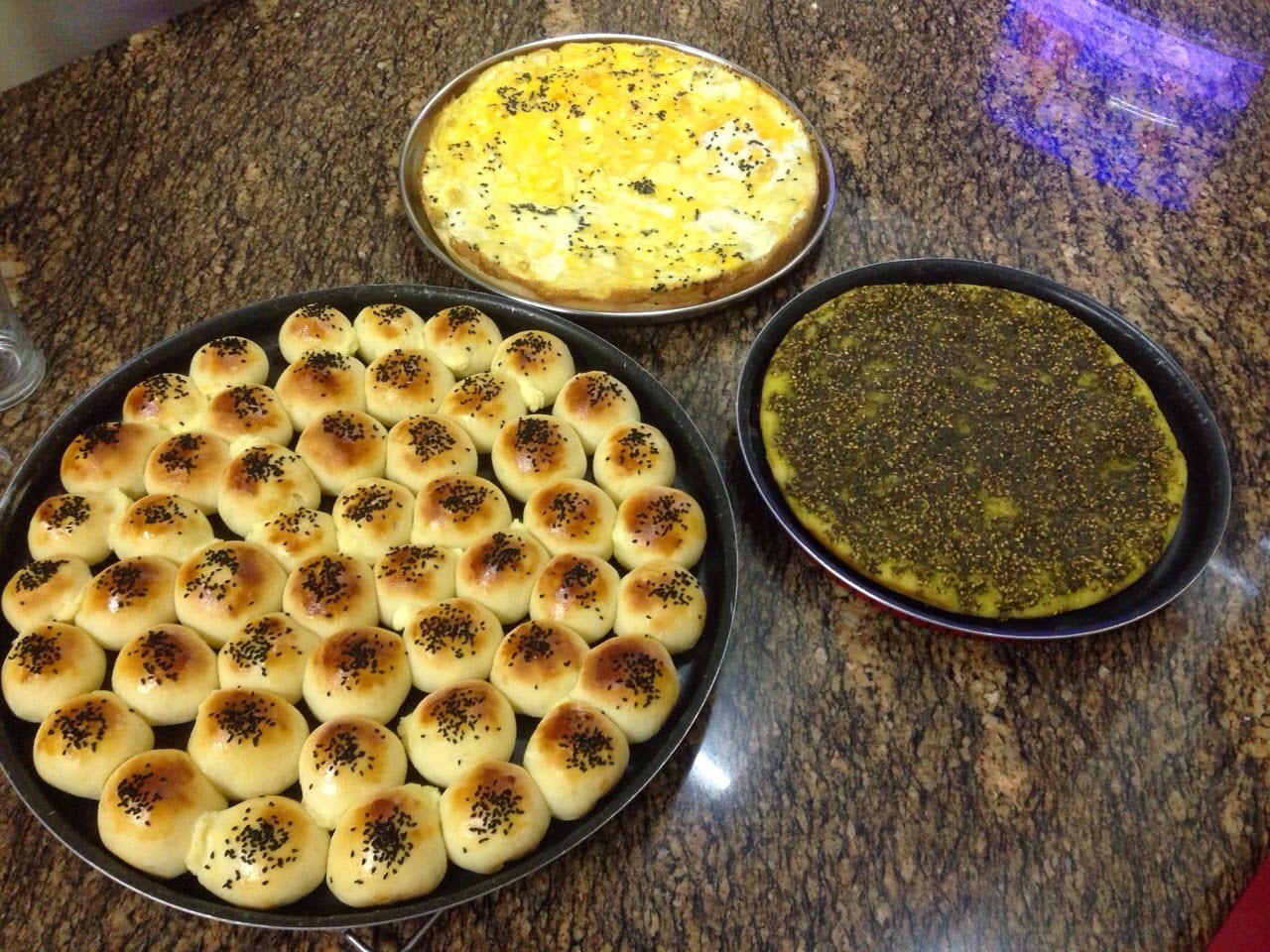
A Jordanian breakfast is a spread of small plates: hummus with olive oil, ful medames (slow-cooked fava beans with lemon, garlic and cumin), falafel fresh from the fryer, labaneh (strained yoghurt), olives, tomatoes, mint and a stack of warm bread. Manakish, flatbreads baked with za'atar and olive oil, cheese or egg, are the classic quick breakfast from neighbourhood bakeries.
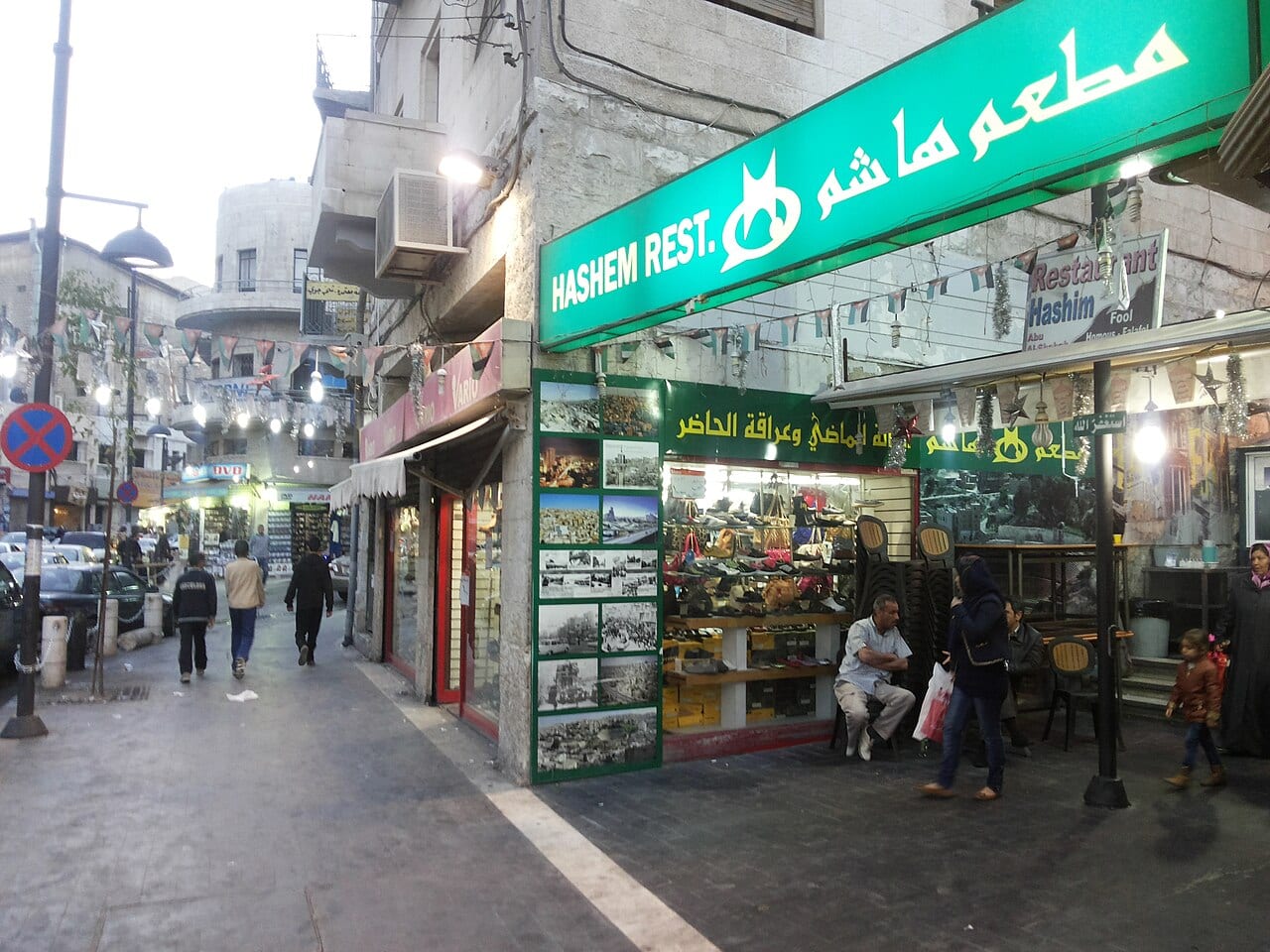
In downtown Amman, Hashem, a no-frills restaurant in an alley off King Faisal Street, has been serving falafel, hummus and ful to everyone from students to royalty for decades; tables are shared, food arrives in minutes and the bill is small. Throughout the day you will also find shawarma stands, ka'ak sellers with sesame bread rings, and fresh juice shops. For a full walk through the city's best bites, see our Amman street food guide.
Bedouin cooking: zarb and galayet bandora
In the desert, cooking happens underground. Zarb is meat and vegetables cooked on trays in a pit of hot coals covered with sand for one to two hours, the signature dinner of Wadi Rum camps (read our guide to camping in Wadi Rum). Galayet bandora is the opposite: a quick pan of tomatoes, onions, chilli and olive oil, eaten with bread at any time of day, and a reminder that the best Jordanian dishes are often the simplest. Bedouin hospitality also means shrak bread, slapped by hand onto a hot domed saj, and endless glasses of tea by the fire.
Salads and mezze
Mezze are the small dishes that start a meal or make a meal on their own. Order several and share:
- Tabbouleh: parsley, mint, tomato and a little bulgur with lemon and olive oil.
- Fattoush: a crunchy salad with toasted bread, sumac and pomegranate molasses.
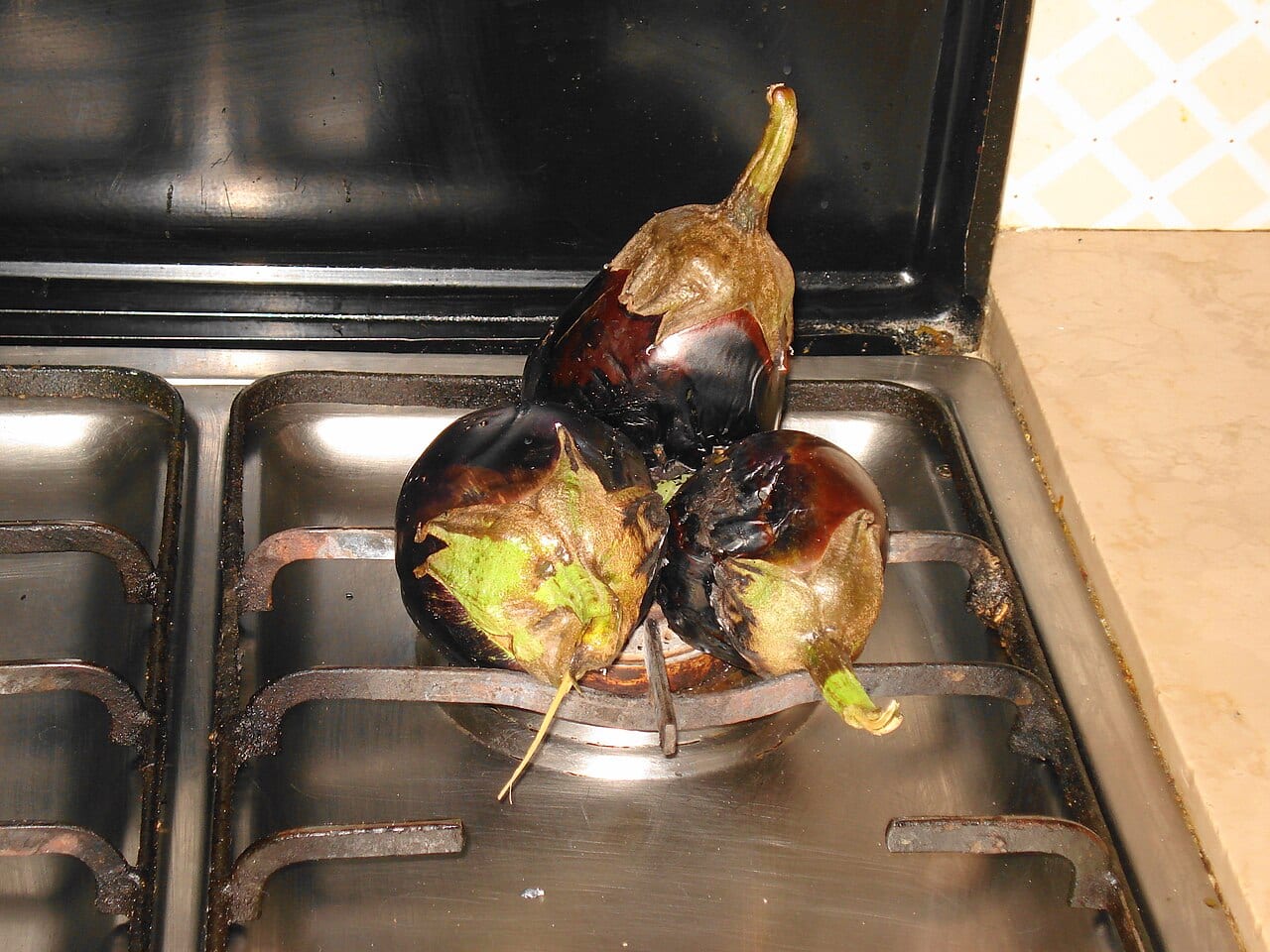
- Mutabbal: smoky aubergine charred over a flame, then mashed with tahini, garlic and lemon.
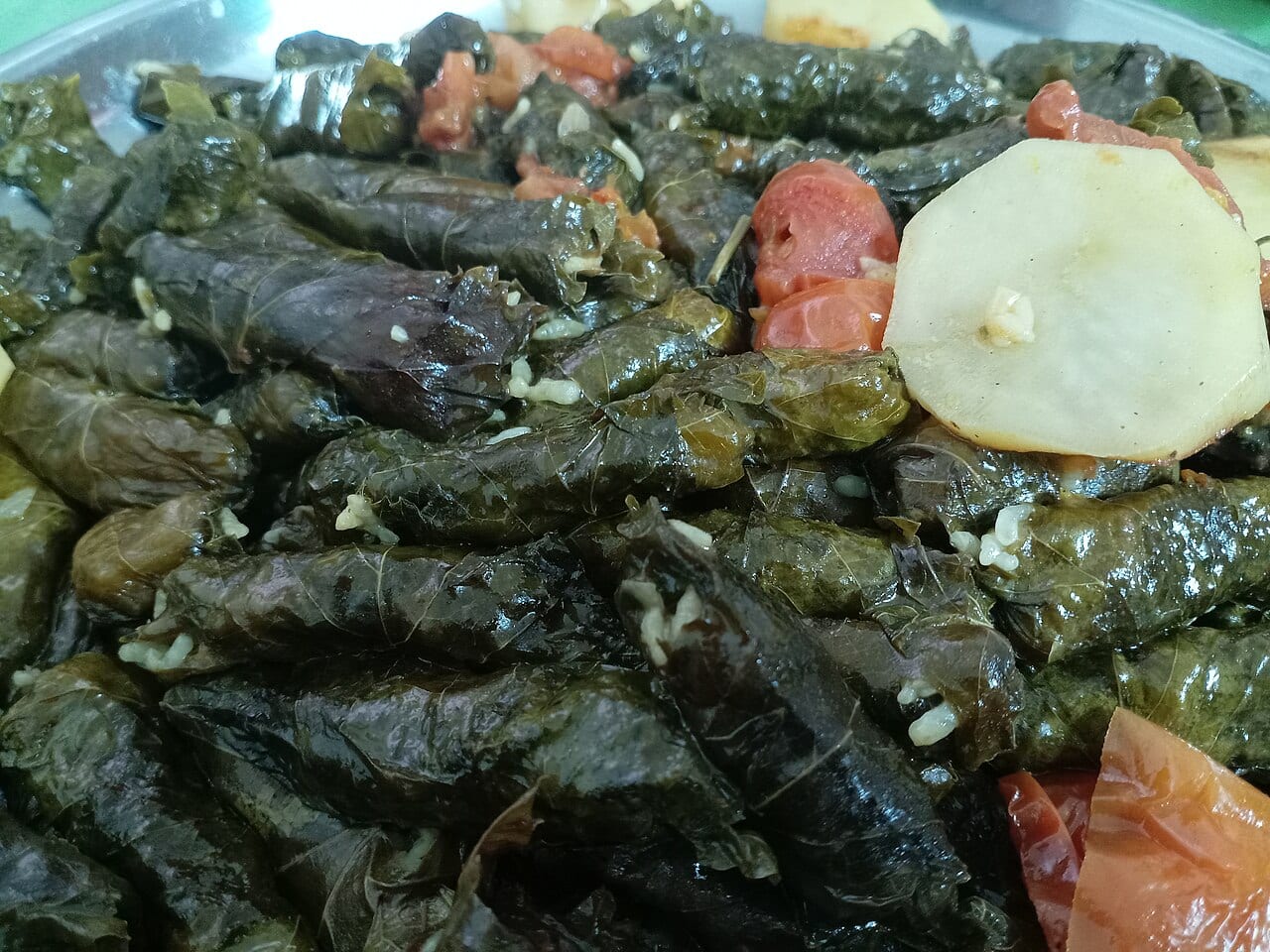
- Warak enab: vine leaves stuffed with rice, sometimes with meat, often cooked with courgettes and potatoes in the same pot.
- Kubbeh: fried bulgur shells filled with spiced minced meat and pine nuts.
- Fatteh: toasted bread, chickpeas and warm yoghurt-tahini sauce, sometimes with chicken.
Sweets, coffee and tea
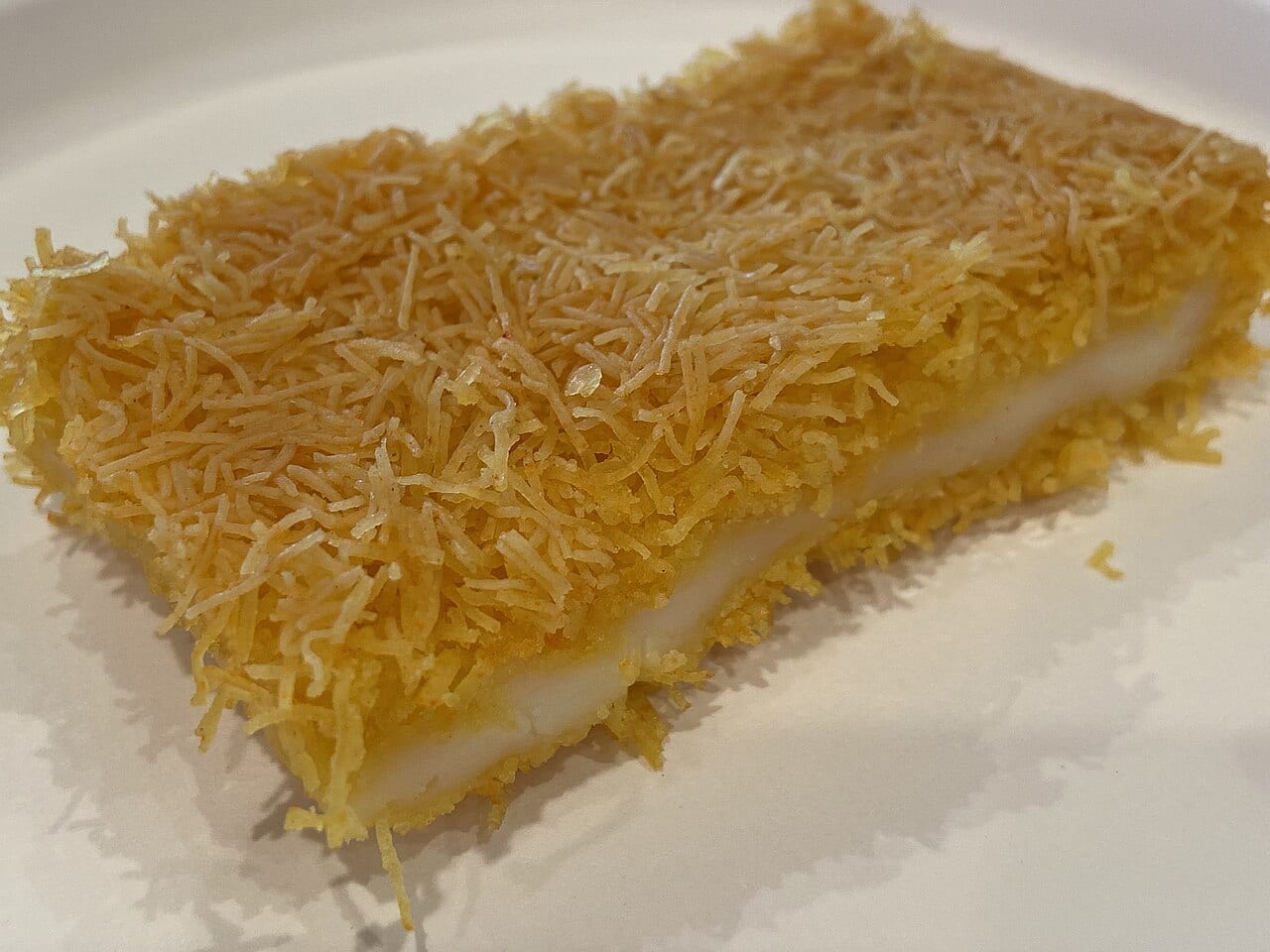
Knafeh is the sweet everyone talks about: a layer of soft white cheese under a crust of semolina or shredded pastry, baked, soaked in syrup and topped with pistachios. Eat it hot, straight from the tray, ideally from a busy shop where the trays turn over quickly; in Amman, Habibah in downtown is the best-known name. Other sweets to try are baklava and burma sold by weight, harissa (semolina cake with syrup), awameh (small fried dough balls in syrup) and, in winter, sahlab, a thick, warm milk drink with cinnamon and coconut.
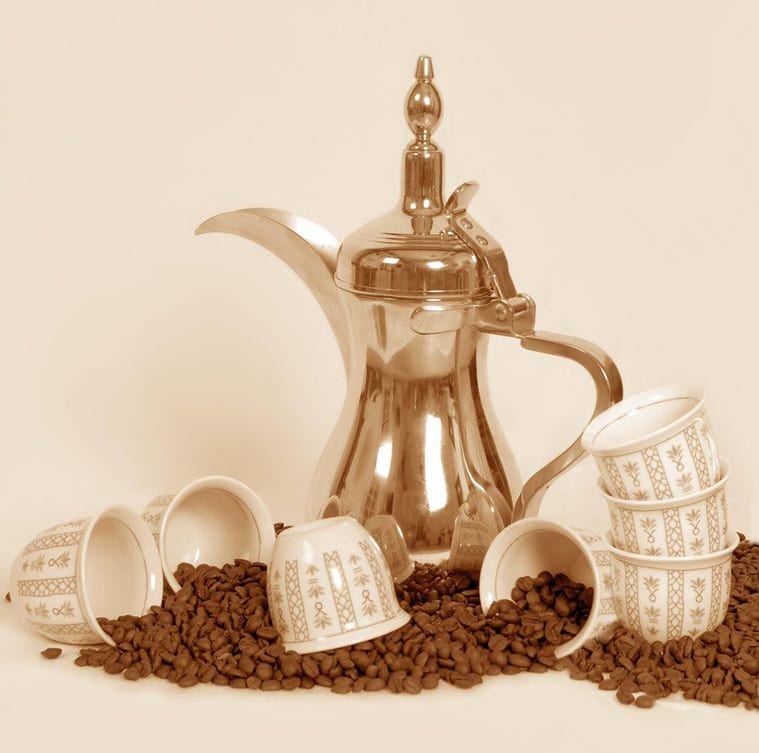
Coffee is part of hospitality. Qahwa sada, bitter Arabic coffee with cardamom, is poured from a dallah in small amounts into tiny cups; the guest is served with the right hand, and gently shaking the cup from side to side tells your host you have had enough. Turkish-style coffee, thick and often with cardamom, is the everyday cup. Sweet black tea, often with fresh mint or maramiya (sage), follows every meal.
Ramadan and Eid food
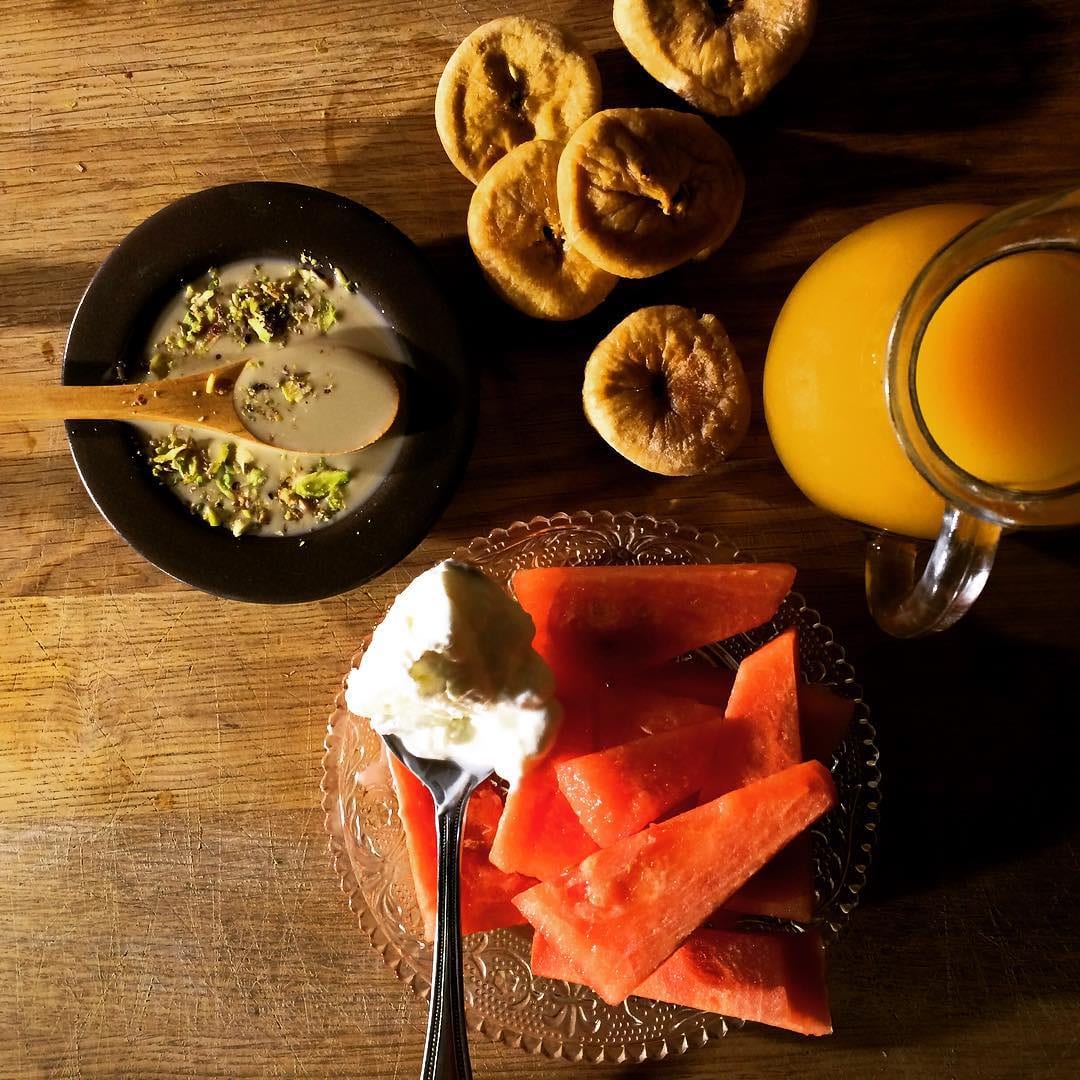
In Ramadan, Jordanian tables change. Iftar starts with dates and water or qamar al-din (apricot drink), tamarind or sous (liquorice) juice sold from street vendors, then lentil or freekeh soup before the main dishes. In the afternoons, queues form at bakeries for qatayef, small pancakes filled with sweet cheese or walnuts, then fried or baked and soaked in syrup. Suhoor is lighter: labaneh, cheese, olives, eggs, ful, fruit and plenty of water.
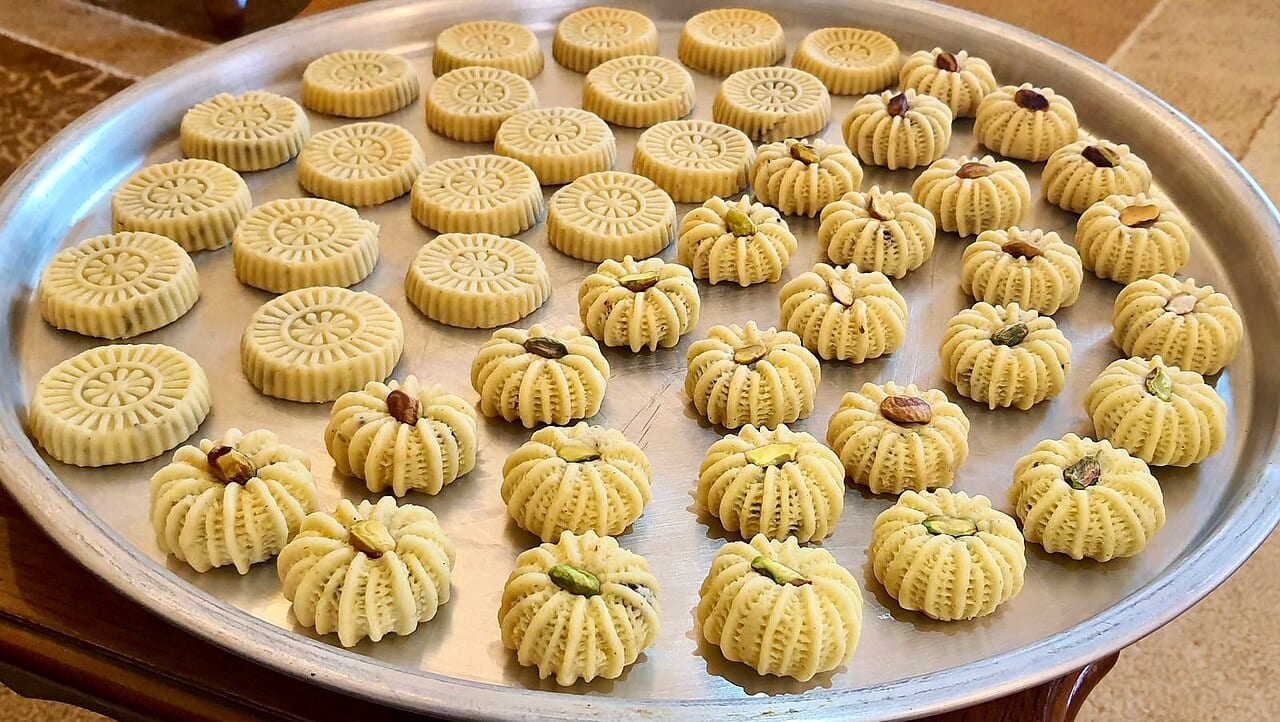
Restaurants are closed during fasting hours and eating in public in daytime is not allowed in Jordan, even for visitors who are not fasting; hotels serve non-fasting guests discreetly. After Maghrib, restaurants and sweet shops are busy until late. For Eid, homes bake trays of ma'amoul, butter cookies filled with dates, walnuts or pistachios and pressed in carved wooden moulds; if you visit a family during Eid you will be offered them with Arabic coffee.
Where to eat and learn
- Downtown Amman: Hashem for breakfast, Al-Quds Restaurant on King Hussein Street for mansaf at lunch, and Habibah for knafeh.
- Jabal Amman: Sufra, in an old villa on Rainbow Street, serves Jordanian home cooking in a calm setting that suits families.
- Jabal al-Weibdeh: Beit Sitti runs cooking classes in a family house where you cook and then eat a full Jordanian meal; book a day ahead on beitsitti.com.
- Madaba, Wadi Musa and Wadi Rum: family restaurants for mansaf and maqluba near the sights, and zarb in the desert camps.
Our planner builds the days around halal restaurants and prayer times, with real hotel and flight prices: plan a food trip to Jordan. For the rest of the capital, see our Amman destination guide, and do not miss the views from the Amman Citadel.
Halal, etiquette and practical tips
- Halal: meat in Jordanian restaurants is halal as a rule. Some hotels and international restaurants serve alcohol; family restaurants usually do not.
- Hospitality: if you are invited to a home, accept a little of everything, eat with your right hand and praise the cook. Leaving a little food on your plate signals that you were generously fed.
- Families: many traditional restaurants have a family section; children are welcome everywhere, and staff will happily bring smaller portions.
- Vegetarians: hummus, falafel, ful, mujaddara, mutabbal, tabbouleh, fattoush, galayet bandora and manakish make full meals without meat.
- Allergies: nuts, sesame (tahini) and dairy are everywhere; say so clearly when you order.
What it costs
Eating in Jordan can be very cheap or quite expensive depending on where you sit. As a rough guide for 2026, check prices on the spot: a falafel sandwich is usually under one dinar, a breakfast of hummus, ful and falafel for two costs a few dinars, and a shawarma sandwich roughly one to three dinars. A shared mansaf platter at a sit-down restaurant is the biggest spend of the day but still reasonable split between two or three. Hotel restaurants and tourist-area places cost several times more than local family restaurants.
Common mistakes
- Ordering mansaf for dinner: it is a lunch dish, and many places have none left by evening.
- Filling up on bread and mezze: pace yourself; the main dish is still coming.
- Eating only in hotels: local family restaurants serve better Jordanian food for far less.
- Refusing coffee abruptly: accept at least one cup, then shake the cup gently when you have had enough.
- Eating in public during Ramadan days: wait for Maghrib or eat discreetly in your hotel.
Frequently asked questions
What is the national dish of Jordan?
Mansaf: lamb cooked in jameed (dried yoghurt sauce), served on rice and shrak bread with nuts.
Is food in Jordan halal?
Yes, as a rule. Jordan is a Muslim-majority country; meat sold and served locally is halal. Ask in international chains or hotels if you are unsure.
What should vegetarians order?
Hummus, falafel, ful, mujaddara, mutabbal, tabbouleh, fattoush, galayet bandora and manakish make a full, satisfying meal without meat.
What do Jordanians eat in Ramadan?
Dates and soup to break the fast, then maqluba, mansaf or freekeh, with qatayef and tamarind or liquorice juice; suhoor is light.
Can I take a cooking class in Jordan?
Yes. In Amman, Beit Sitti in Jabal al-Weibdeh runs classes where you cook and eat a full Jordanian meal; book ahead.
More about Jordan's food heritage: Visit Jordan (Jordan Tourism Board).
Cover photo: mansaf served near Jerash in northern Jordan. Photo: Avery Jensen — CC BY-SA 4.0, Wikimedia Commons