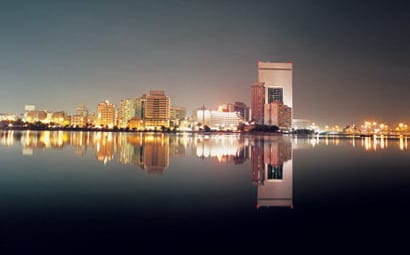
Jeddah is the Hijaz: the port of Makkah for thirteen centuries, a city of pilgrims, traders and sailors from every shore of the Indian Ocean, and the most relaxed, most cosmopolitan place in Saudi Arabia. Its old town of coral-stone houses leans over narrow lanes behind carved wooden balconies, its Corniche runs for thirty kilometres along the Red Sea, and the reef starts a few hundred metres offshore. Most of our readers pass through on the way to Umrah; this Jeddah guide is a case for staying two or three nights, before or after the Haram, and seeing a city that rewards slow evenings. Everything is halal and alcohol-free by law, and the Hijazi kitchen is one of the great cuisines of the Arab world.
When to go
November to March is the season: days of 24–30°C, sea breezes, warm water, and Al-Balad's lanes full every evening. April and October are hot but manageable with mornings and evenings outdoors. Summer is 38–40°C with the humidity of the Red Sea, which is harder than Riyadh's dry heat; the city lives at night, hotels are cheap, and the sea is bath-warm, so beach resorts still work if you accept a siesta. Two calendar notes: the Hajj season (a few weeks a year, dates shift) fills the airport and the roads to Makkah, and Ramadan turns Al-Balad into the most beautiful place in the kingdom, with the lanes lit until suhoor and the old mosques full.
Getting there and around
King Abdulaziz International Airport (JED) is the gateway for Umrah and has flights from every city in our region; its new terminal is one of the best in the Gulf. The Haramain High-Speed Railway has a station at the airport and in the city: Makkah is about half an hour, Madinah about two hours, so the three cities combine easily. In Jeddah itself, taxis, Uber and Careem are cheap and everywhere; distances are long (the city is a thin strip along the coast), so group your days: Al-Balad and the old centre, the Corniche and the waterfront, the sea and the north. GCC citizens enter freely; many nationalities get a tourist e-visa online, and Umrah visas now allow visiting the rest of the country, so check the official visa portal for your case. Our AI trip planner will arrange the days around prayer times and your Umrah dates.
Al-Balad: the old city
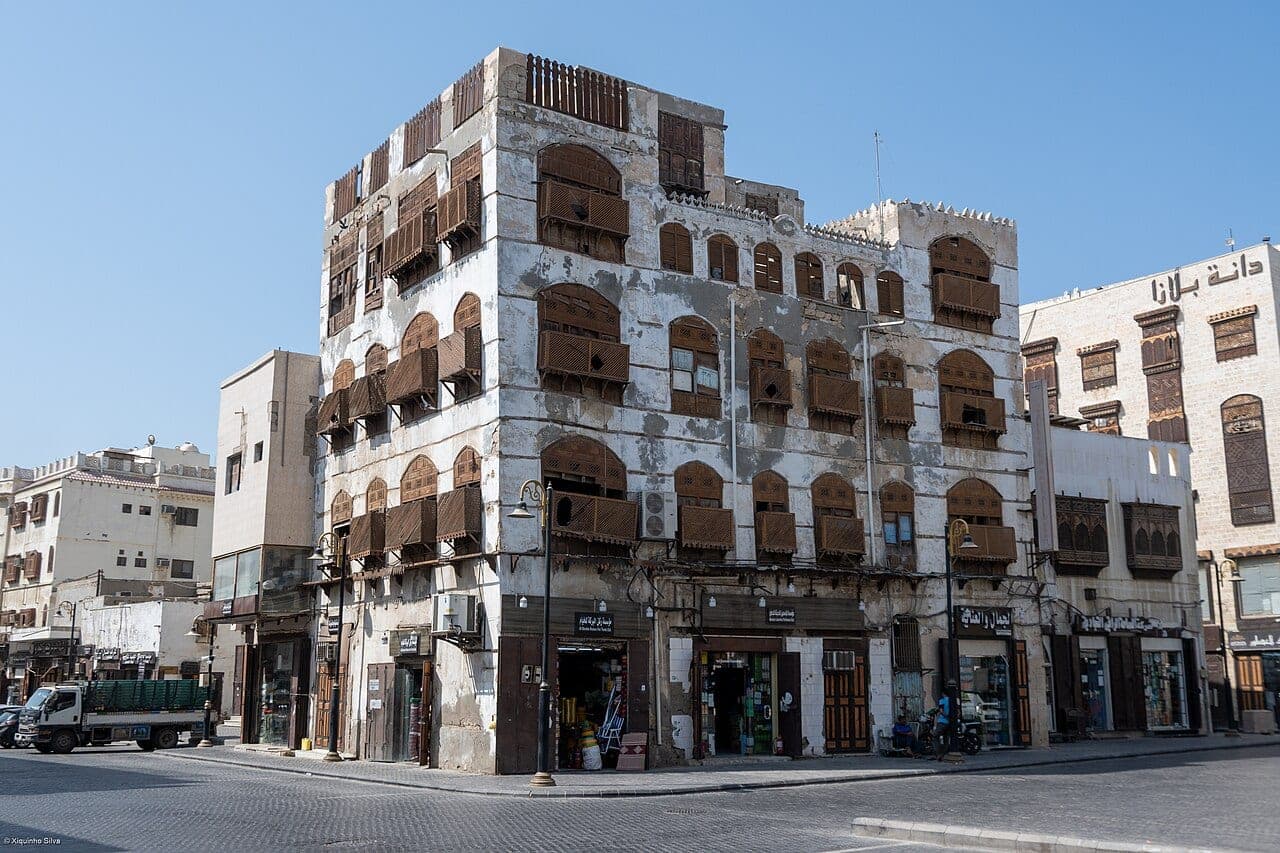
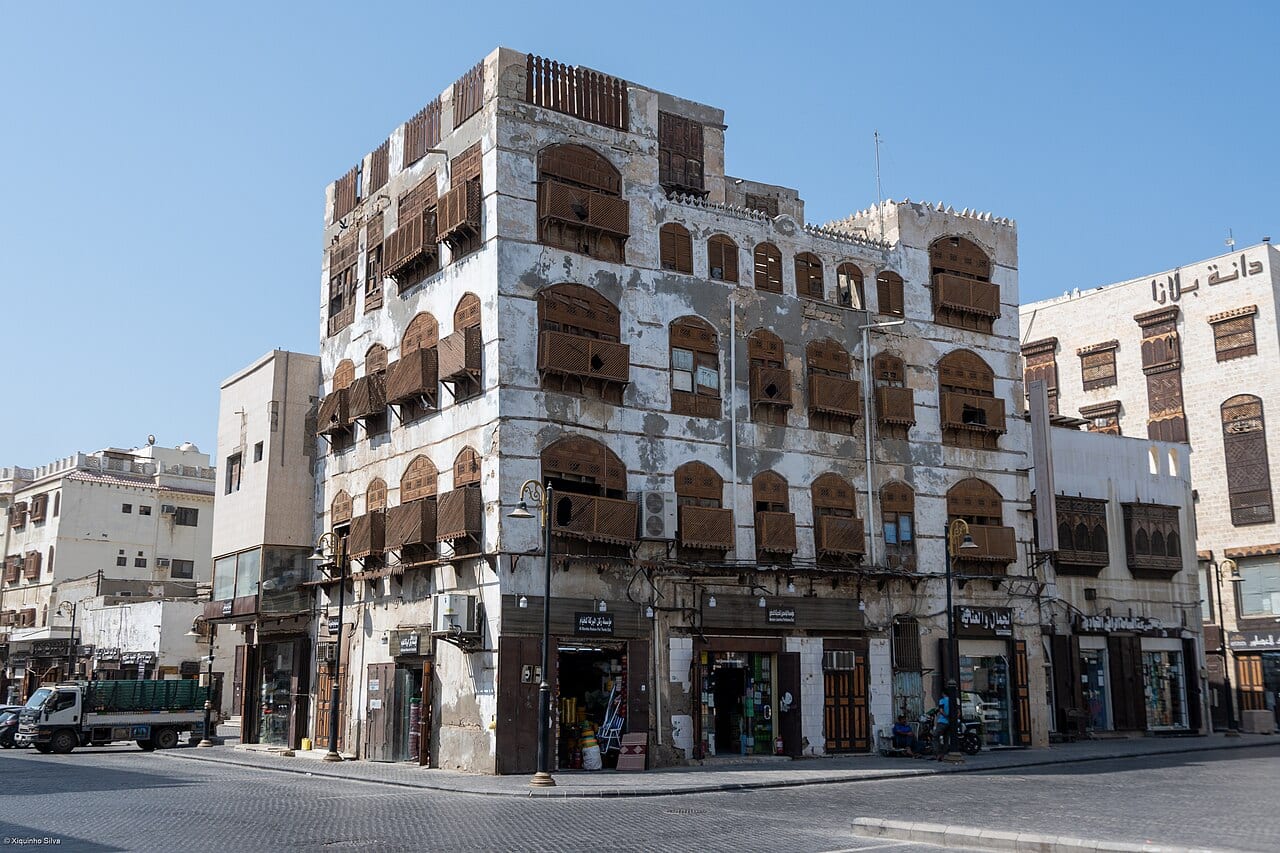
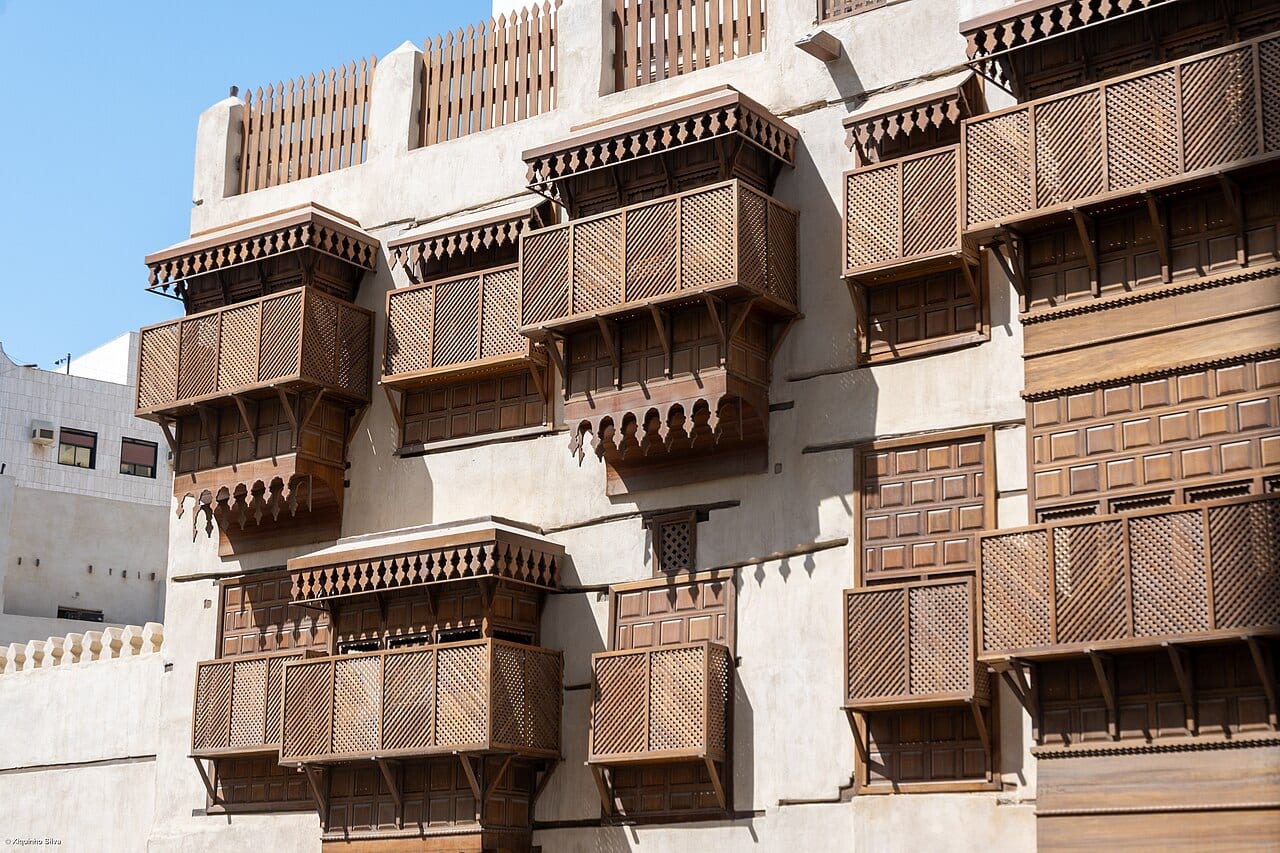
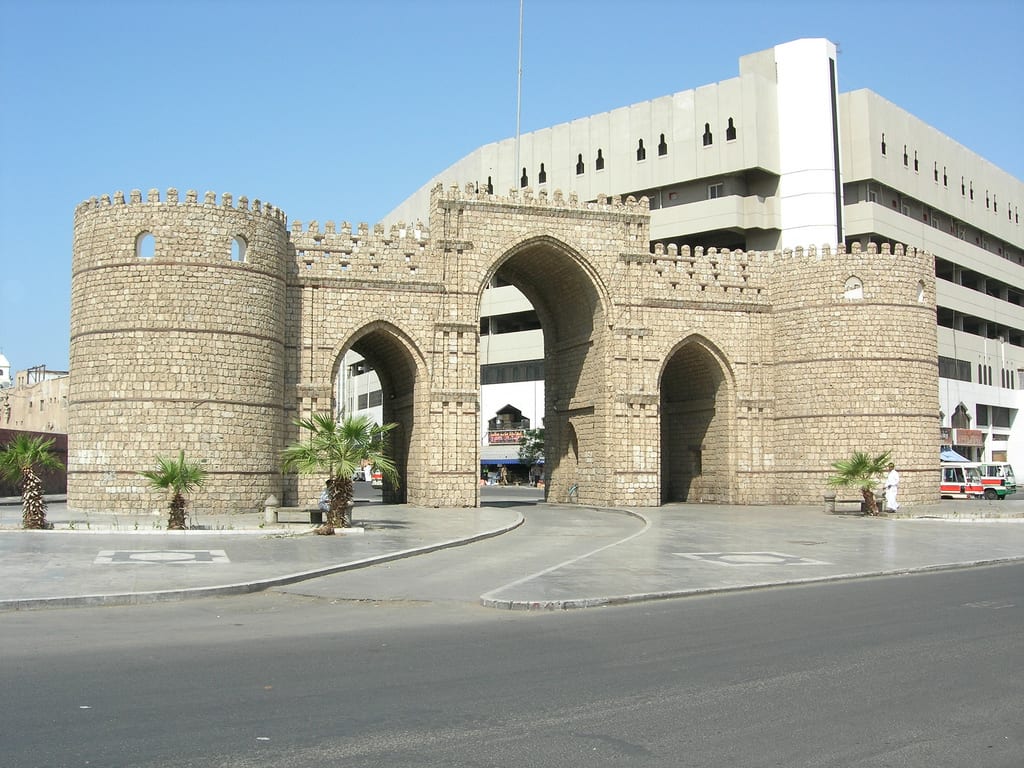
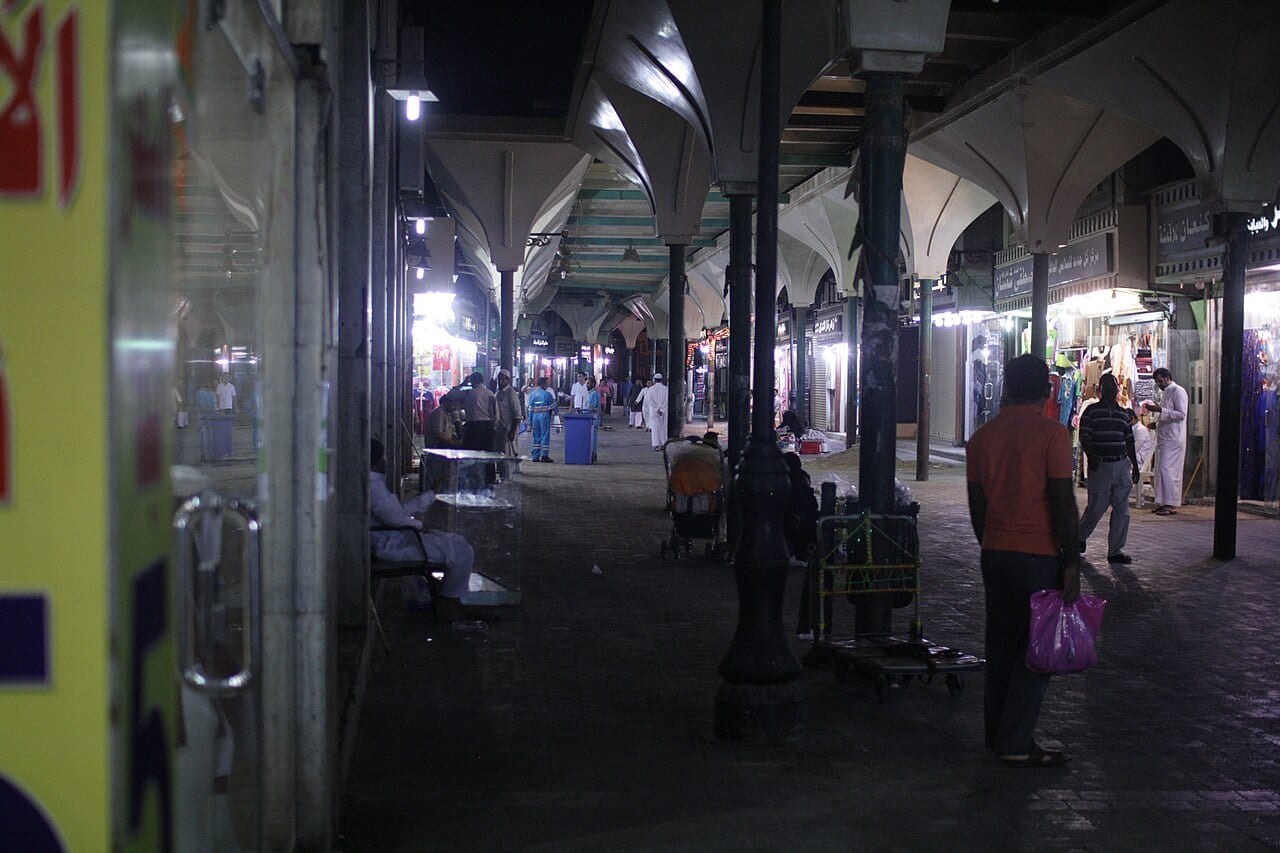
Al-Balad is a UNESCO World Heritage site and the heart of any visit. For centuries this was where pilgrims landed, rested and bought provisions before the road to Makkah, and the merchant houses show it: four and five storeys of coral stone cut from the reef, laced with roshan, the carved teak balconies that cooled rooms and shielded families from the street. Walk in from Bab Makkah, the restored city gate, through the Souq Al-Alawi, the oldest market in the city, past spice merchants, perfumers, textile shops and the sweet sellers who have fed pilgrims for generations. Nassif House, where King Abdulaziz stayed when he entered Jeddah in 1925, is a museum of the merchant life, with a ramp inside wide enough for a camel. The Al-Shafi'i Mosque, one of the oldest in the city, is the place to pray dhuhr. Come back after maghrib, when the lanes fill with families, cafés set out their chairs and the restored houses glow; the Ministry of Culture's revival has turned the district into the city's living room again.
The Corniche: the fountain, the floating mosque and the waterfront
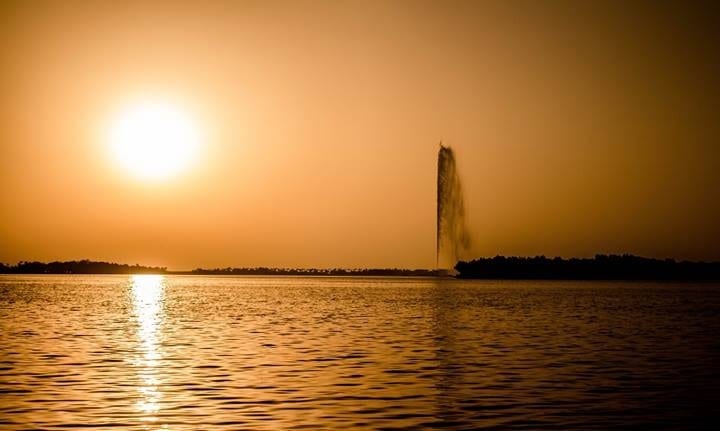
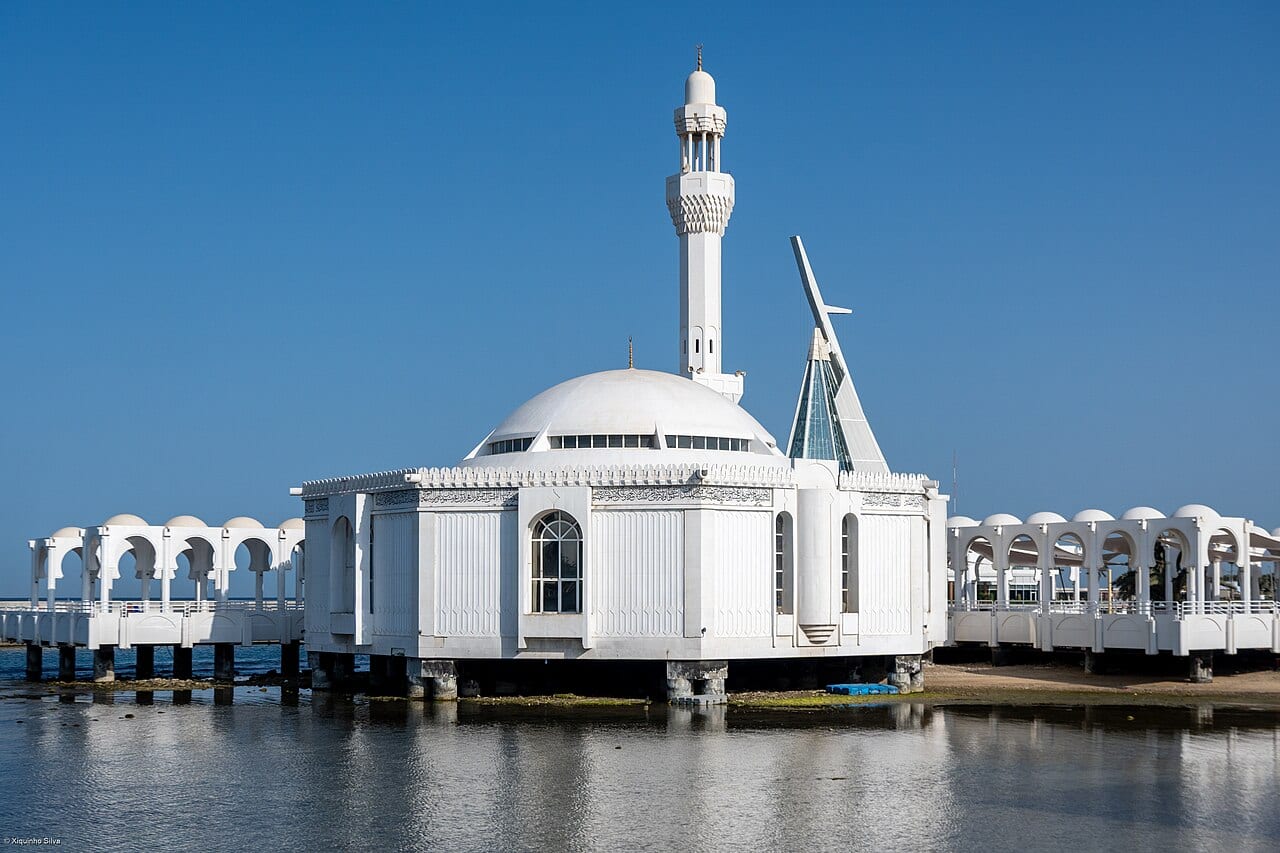
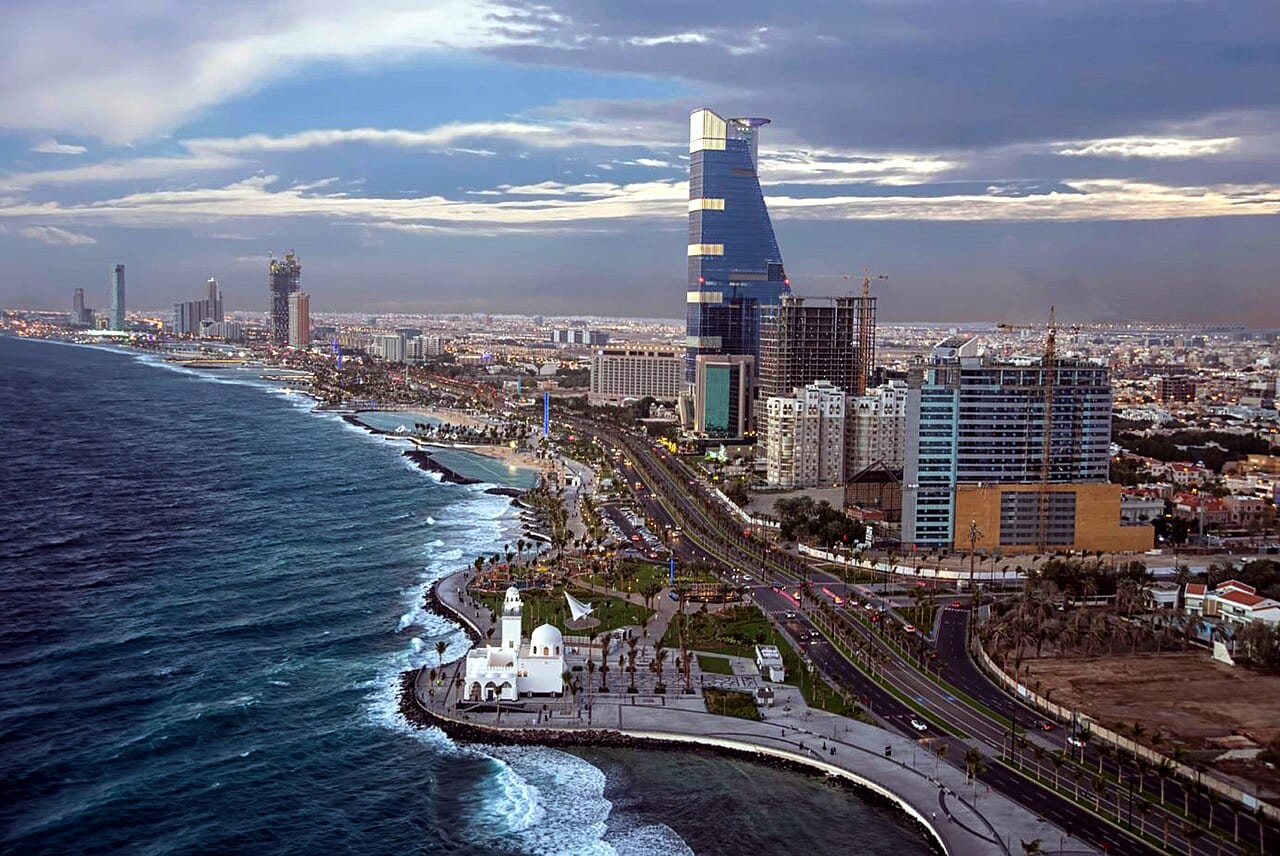
The Jeddah Waterfront, rebuilt in 2017, is the city's evening: thirty kilometres of promenade with playgrounds, prayer areas, cycle lanes, beaches for families and cafés, busiest from asr until well after isha. Two landmarks anchor it. The King Fahd Fountain throws seawater more than three hundred metres into the air, the tallest fountain in the world, lit at night and visible from most of the city; find a bench on the waterfront and watch it as the sun goes down behind it. The Al Rahma Mosque, the "floating mosque", stands on stilts over the water with a white dome and a slim minaret; pray maghrib there with the sea on three sides and the fountain behind. Along the way, the open-air sculpture park holds works by Henry Moore and Joan Miró that the city collected in the 1970s, and the marina and yacht club at the northern end are where boat days begin.
The Red Sea: reefs, beaches and boat days
Jeddah's reef is among the richest in the Red Sea and far less visited than Egypt's. Day boats leave from the marina and from Obhur, the creek north of the city, for snorkelling and diving on coral walls with turtles, rays and the occasional dolphin; family boats are alcohol-free as a matter of course and most include lunch. The private beach resorts along the Obhur creek and the northern coast sell day passes with pools, shaded family areas and calm, shallow water for children, and the beaches on the waterfront itself are free. Further north, the new Red Sea resorts are a different trip entirely. If your group wants a mountain afternoon, Taif is ninety minutes up the escarpment, ten degrees cooler, with rose gardens in spring and a cable car over the mountains.
Where to pray and what to eat
Prayer is the rhythm of Jeddah as it is everywhere in the kingdom; the adhan from the old mosques of Al-Balad, Al Rahma over the water and the great King Saud Mosque, the largest in the city, are the three to experience with the congregation. Shops and restaurants pause briefly at prayer times.
The Hijazi kitchen is the reason many Saudis fly to Jeddah for the weekend. Breakfast is foul with tamees bread baked in a clay oven, and mutabbaq, the folded stuffed pancake, from stalls in Al-Balad and across the city. Saleeg, the creamy milk rice with chicken from the Taif mountains, is the dish to seek out, with kabsa, mandi and balila (spiced chickpeas sold from carts on the Corniche) alongside. Seafood is the Red Sea's gift: the Bangalah fish market and the restaurants around it grill your chosen fish, and sayadieh (fish on spiced rice) is on every menu. And then there is Al Baik, the fried-chicken chain born in Jeddah that Saudis queue for at every branch; a box with garlic sauce is a rite of passage. Everything is halal; nothing anywhere is otherwise. Sweet tea, Hijazi coffee with cardamom and sobia, the chilled Ramadan drink, finish the day.
A three-day plan
- Day one, the old city. Foul and tamees for breakfast, Bab Makkah and Souq Al-Alawi in the morning, dhuhr at Al-Shafi'i Mosque, Nassif House, a siesta, then Al-Balad again from maghrib for dinner in the lanes.
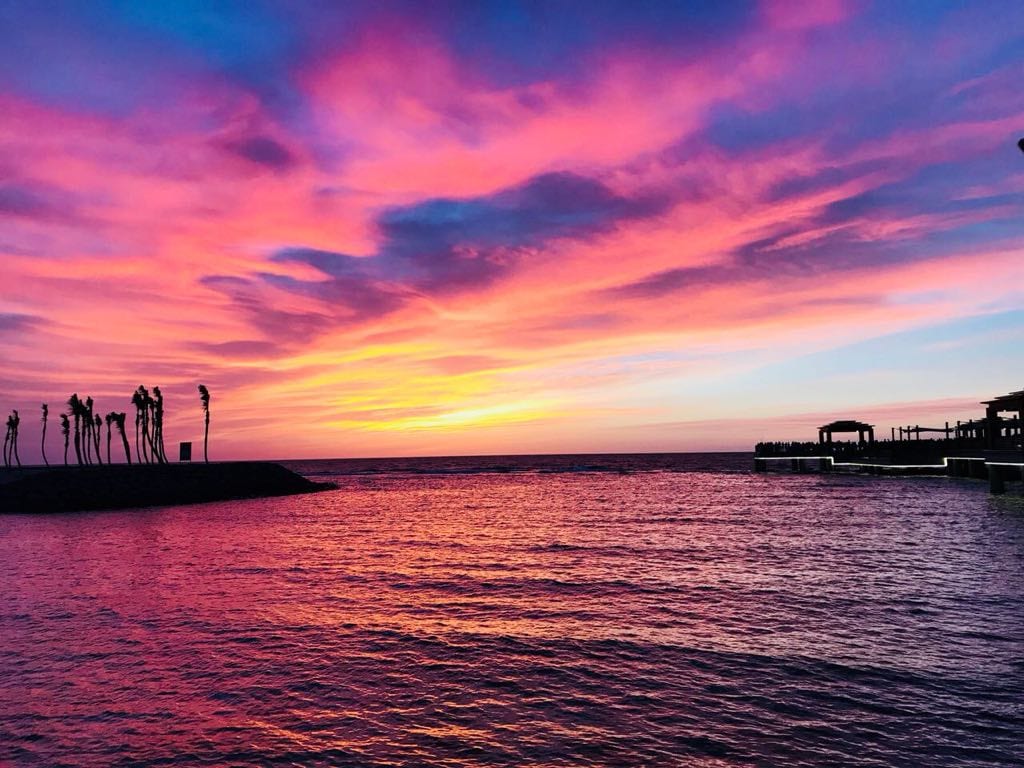
- Day two, the sea. A boat day or a resort day on the Obhur creek, back for asr, the Waterfront at sunset, maghrib at Al Rahma Mosque, the fountain lit, dinner of Red Sea fish.
- Day three, Makkah or Taif. The Haramain train to Makkah for Umrah and back in a day if you are not staying there; or the drive up to Taif for the gardens and the cool air, returning for a last evening on the Corniche.
Going on to the Haram? Our destination pages for Makkah and Madinah cover the holy cities, and the Riyadh guide covers the capital if you are crossing the kingdom.
Family tips
- Al-Balad is for the evening: the lanes are hot and quiet at noon and alive from maghrib. Strollers manage the main lanes; the side alleys are stepped.
- The Waterfront has free family beaches with lifeguards and prayer areas; bring modest swimwear and shade.
- Book boat days through the marina or your hotel; ask for a family boat and check the sea forecast, as the Red Sea gets choppy in winter winds.
- Umrah first or last? Many families do Umrah first and keep Jeddah as the gentle end of the trip.
- Friday is the day of prayer and Saturday the second day of the weekend; the old city is busiest on Thursday and Friday nights.
What it costs, honestly
Jeddah is mid-priced and cheaper than Riyadh in winter. Al-Balad, the Waterfront, the fountain and the mosques are free; Nassif House and the museums are small tickets; boat days and resort day passes are the paid items. Hotels range from pilgrim hostels near the old city to resorts on the creek, and prices spike only in Hajj season and on holiday weekends. Hijazi food in the old city and the fish market is excellent value. Compare live rates on our hotels page and flights on the flight search; Jeddah's airport is served by every budget carrier in the region.
FAQ
Is Jeddah worth more than a transit stop on the way to Umrah?
Yes. Two nights give you Al-Balad, the Corniche and a sea day, and the train makes Makkah a short hop, so the city fits before or after the Haram without stress.
Can visitors enter the old mosques?
Muslims pray in all of them. Al-Balad's mosques are working neighbourhood mosques, so dress modestly and visit between prayers if you are only looking.
Is the sea good for snorkelling?
Very: the reef is close, the water is clear, and family boats leave daily in season. Choose a licensed operator and a calm day.
What should we eat first?
Foul and tamees for breakfast in Al-Balad, saleeg for lunch, fish at the market for dinner, and an Al Baik box at least once.
Is Jeddah suitable for families?
Entirely: alcohol-free by law, family beaches and prayer areas along the Waterfront, playgrounds everywhere, and a relaxed, friendly city used to visitors from every country.